

Automated vehicle inspection is an AI-powered technology that scans vehicles using cameras, sensors, and computer vision to detect damage and evaluate vehicle condition automatically. Unlike traditional manual inspections, AI vehicle inspection systems provide fast, standardized digital reports that integrate with dealership, fleet, and auction platforms through SaaS systems and API connectivity.
As vehicle sales and fleet operations scale globally, vehicle inspection automation is becoming essential for improving efficiency, consistency, and transparency in vehicle condition reporting.
Overview of Automated Vehicle Inspection
An automated vehicle inspection system is designed to replace or assist traditional manual inspections by using AI and imaging technology to analyze vehicle conditions quickly and accurately.
These systems are increasingly adopted across the automotive ecosystem, including:
- Car dealerships
- Used car auctions
- Vehicle inspection centers
- Fleet management operations
- Rental and leasing companies
Traditional inspections often rely on human inspectors who visually examine vehicles and record results manually. While experienced inspectors can detect many issues, the process has several limitations:
- Inconsistent inspection standards betweeninspectors
- Time-consuming inspection processes
- Small dents or defects can be missed
- Lack of standardized digital documentation
Automated inspection systems solve these challenges by introducing drive-through vehicle inspection workflows, where vehicles can be scanned within seconds.

Technology Behind Automated Vehicle Inspection
Modern AI vehicle inspection platforms combine multiple technologies to analyze vehicle condition automatically.
Key technologies typically include:
High-Resolution Camera Systems
Multiple cameras capture detailed images of the vehicle exterior from different angles to detect scratches, dents, and body damage.
AI Computer Vision Algorithms
Artificial intelligence analyzes images to identify defects such as dents, scratches, paint damage, and misalignment.
Laser and High-Definition Scanning
Laser scanners and imaging technologies measure vehicle surfaces and identify subtle structural changes.
Body Scanning Systems
Body scanners capture high-resolution images of the vehicle exterior to detect scratches and dents damage.
AI-Driven Defect Quantization
We don't just 'detect' damage; we quantify it.
Intelligent Classification: The AI automatically distinguishes between dirt, debris, and actual paint damage, minimizing 'false positives' that plague lower-tier systems.
Automated Grading: Each dent and scratch is measured for size and severity, providing an objective Digital Condition Report (DCR) that serves as a single source of truth for appraisals.
Underbody Scanning Systems
Underbody scanners capture high-resolution images of the vehicle chassis to detect corrosion, leaks, or structural damage.
Tire Inspection Technology
Integrated tire inspection systems measure tread depth and detect sidewall damage.
Typical capabilities of an automated car inspection system include:
- Detecting dents and scratches
- Identifying tire wear and sidewall damage
- Capturing underbody conditions
- Generating standardized inspection reports
For example, inspection technologies such as those developed by Elscope Vision use AI-driven imaging and scanning systems to automate vehicle inspections in dealerships, fleet centers, and used car auctions.
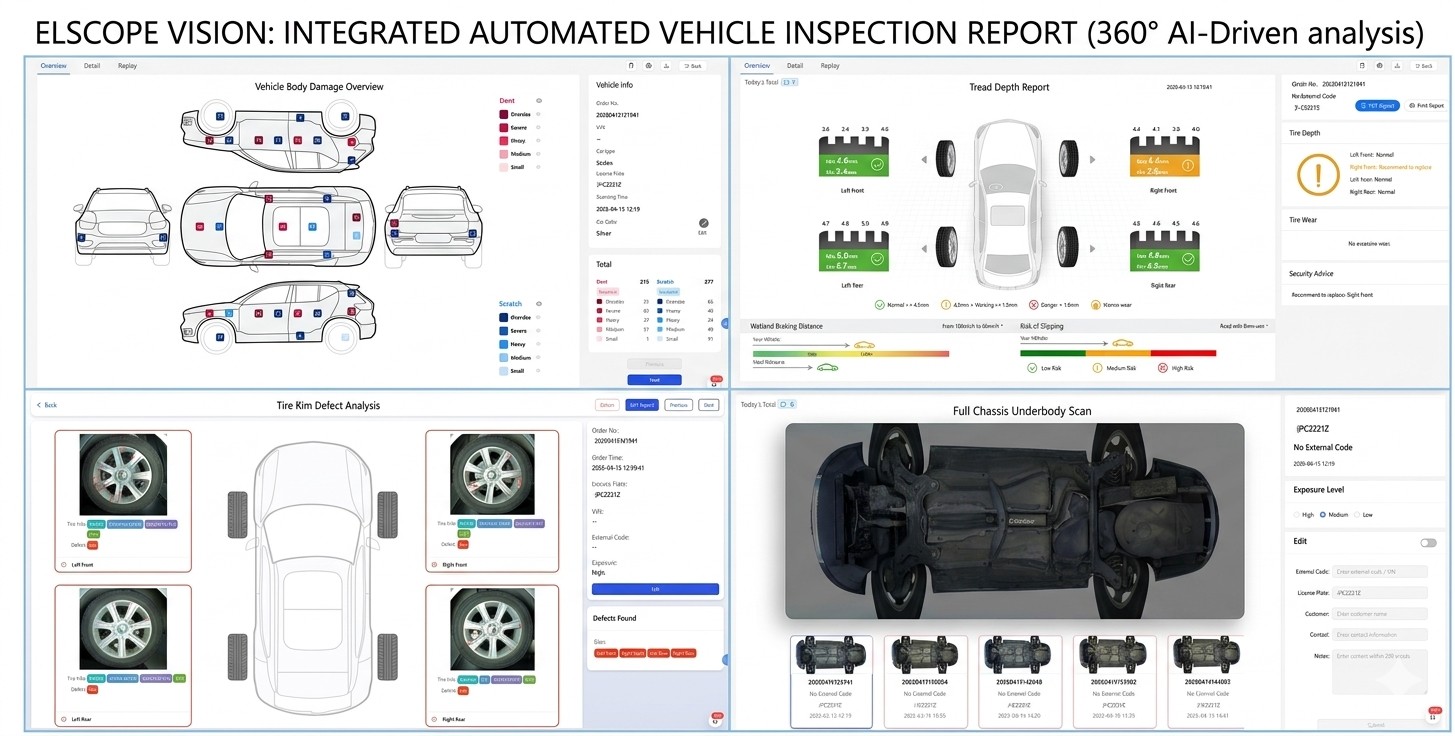
Automated Vehicle Inspection Workflow
A typical vehicle inspection workflow using automation follows several key steps.
1. Vehicle Drives Through the Inspection Lane
The vehicle passes through a dedicated inspection lane equipped with cameras and scanning sensors.
2. Cameras and Sensors Capture Vehicle Data
High-resolution cameras capture images of the vehicle body, while additional scanners capture tire and underbody data.
3. AI Analyzes Vehicle Condition
AI algorithms process the captured data and identify potential defects using AI vehicle damage detection models.
4. Tire, Body, and Underbody Data Are Processed
The system analyzes multiple inspection points simultaneously, including tires, body panels, and the vehicle undercarriage.
5. Digital Inspection Report Is Generated
A structured digital report is automatically created, showing detected damage and vehicle condition.
6. Data Integration via SaaS or API
Inspection results can be stored in cloud platforms or integrated with dealership, auction, or fleet software systems using APIs.
This automated workflow allows businesses to complete inspections much faster while improving accuracy and standardization.
Benefits of Automated Vehicle Inspection for Automotive Businesses
Automated inspection technologies bring significant operational benefits to automotive businesses.
Faster Inspection Processes
Vehicles can be inspected in seconds instead of several minutes, reducing inspection bottlenecks.
Standardized Vehicle Condition Reporting
AI ensures consistent inspection standards across all vehicles and locations.
Higher Detection Accuracy
AI-powered image analysis improves detection of small dents, scratches, and tire defects.
Reduced Labor Costs
Automation reduces reliance on manual inspections and minimizes human error.
Better Transparency for Customers
Digital inspection reports provide clear documentation of vehicle condition.
Improved Inventory Turnover
Used car auctions and dealerships benefit from faster inspection processes that accelerate vehicle processing.
Many used car auctions are adopting drive-through vehicle inspection systems to improve grading consistency and reduce inspection delays.
Ready to automate your vehicle inspection process?
Request a Demo from Elscope Vision.
Challenges of Traditional Vehicle Inspections and AI Solutions
Manual vehicle inspections remain widely used, but they present several operational challenges.
Common issues include:
- Human error and inconsistent inspections
- Time-consuming inspection procedures
- Limited documentation and reporting
- Difficulty detecting underbody damage
AI-powered inspection systems address these problems by introducing:
- Automated imaging and scanning technologies
- AI-powered damage detection algorithms
- Digital vehicle condition reports
- Real-time inspection analytics dashboards
- API integration with dealership or fleet systems
These technologies enable automotive businesses to create standardized, scalable inspection workflows.
Inspection technologies such as those developed by Elscope Vision are already deployed in inspection centers, dealerships, and fleet operations worldwide to automate vehicle condition assessments.
Automated Vehicle Inspection
Automated vehicle inspection is transforming how automotive businesses evaluate vehicle condition. By combining AI imaging, sensors, and automated workflows, these systems deliver faster inspections, higher accuracy, and standardized digital reporting.
For dealerships, fleets, and auctions, vehicle inspection automation improves operational efficiency while increasing transparency and trust in vehicle condition reporting.
Discover how automated vehicle inspection can transform your inspection workflow.
Request a Demo
Elscope Vision provides AI-powered vehicle inspection systems including tire tread scanners, sidewall scanners, underbody scanners, and arch scanners.
The technology is deployed in over 40 countries across dealerships, service centers, auctions, and fleet management facilities.
Through automation and API connectivity, Elscope Vision helps automotive businesses improve inspection efficiency, standardize vehicle condition reporting, and reduce human error.
FAQ
What is automated vehicle inspection?
Automated vehicle inspection is a technology that uses AI, cameras, and sensors to analyze vehicle condition automatically. The system captures images and scanning data to detect damage, tire wear, and underbody issues, generating digital inspection reports that improve accuracy and efficiency.
How does automated vehicle inspection work?
Automated inspection systems scan vehicles using cameras and sensors as the vehicle passes through an inspection lane. AI algorithms analyze the collected data to detect damage and generate digital vehicle condition reports that can be integrated into dealership or fleet management software.
What types of damage can AI vehicle inspection detect?
AI inspection systems can detect dents, scratches, paint damage, tire wear, sidewall defects, and underbody issues such as corrosion or leaks. Advanced computer vision algorithms analyze high-resolution images to identify even small defects that manual inspections may miss.
Where are automated vehicle inspection systems used?
Automated vehicle inspection systems are commonly used in car dealerships, used car auctions, fleet management centers, rental companies, and vehicle inspection stations. These systems help businesses standardize inspections, improve accuracy, and generate digital inspection records.
Internal Linking
For further reading, explore:
- AI VehicleInspection System – comprehensive pillar page on AI-poweredinspection
- AI Vehicle Inspection for Dealerships – step-by-step workflowguide
- AI Inspection forUsed Car Auctions – optimizing vehicle assessment in auctions
- AI Inspection for PDR Shops– optimizing vehicleassessment in auctions
Get a Custom Quote & ROI Analysis
· Official Website:https://en.smartautoscan.com/
· Technical Support & Sales:marketing@ntatchina.com
Book a Live Virtual Demo Today


 +
+


