

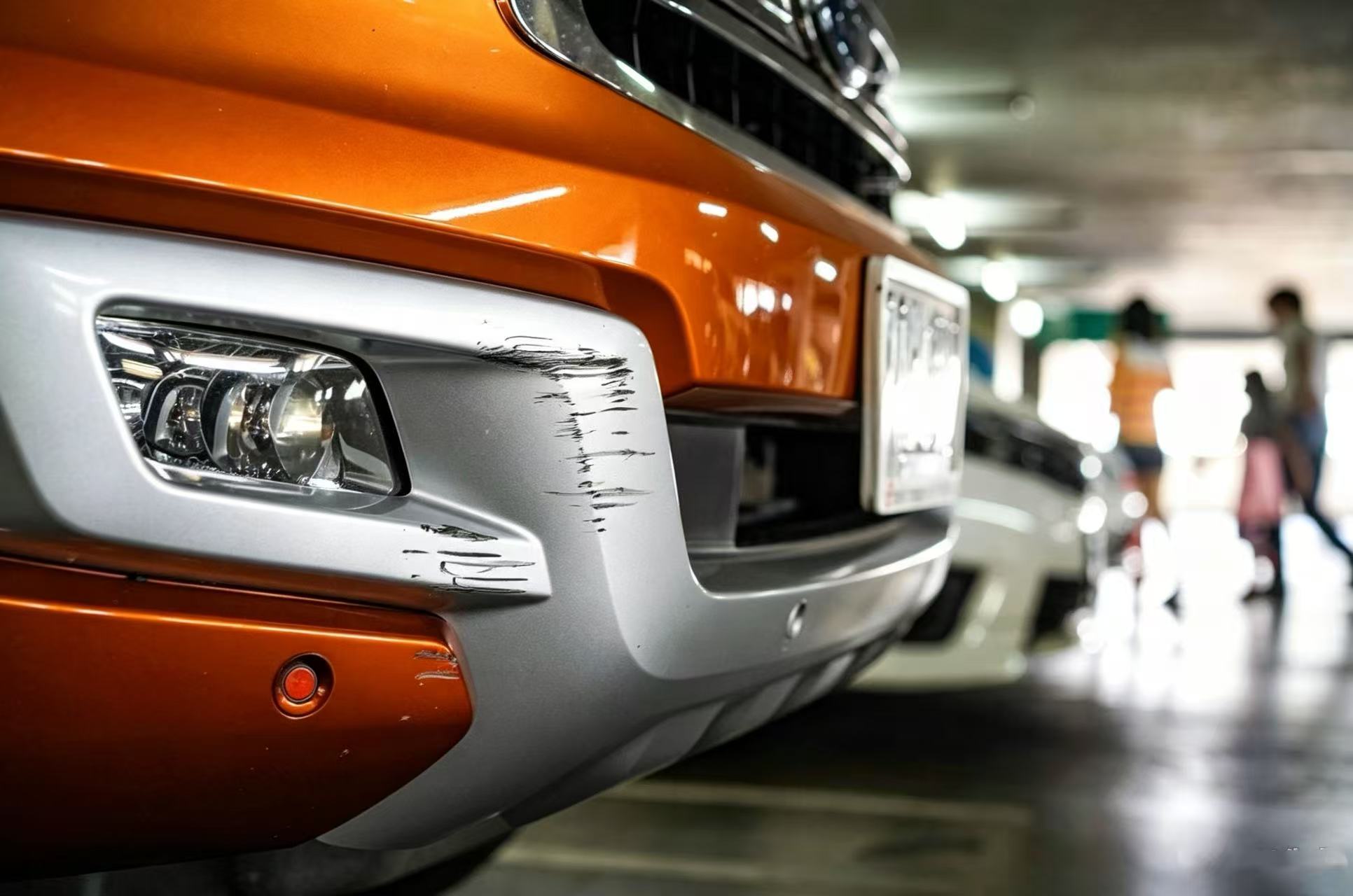
A hotel guest retrieves their car from the valet and discovers a scratch on the bumper. The guest believes it happened while the vehicle was in the hotel's care, but without a clear record of its original condition, the hotel struggles to determine when the damage occurred. What should be a routine parking service can quickly turn into a customer dispute.
This challenge extends beyond hotels to commercial parking garages, airport parking facilities, and unattended parking operations. AI-powered vehicle inspection offers a way to automatically document vehicle condition, reduce reliance on manual checks, and make parking management more transparent.
The Hidden Challenges of Traditional Parking Management
1. Vehicle Damage Disputes Are Difficult to Resolve
When drivers discover scratches, scuffs, or dents after collecting their vehicles, they may question whether the damage occurred during parking.
Without reliable records of the vehicle's condition upon arrival, operators may struggle to establish what happened. Conventional CCTV footage may help reconstruct events, but it does not always provide clear images of specific vehicle defects.
Standardized vehicle inspection reports can provide more objective evidence for reviewing incidents and communicating with customers.
2. Manual Inspections Are Difficult to Scale
Traditional vehicle checks often rely on staff visually examining vehicles or responding to complaints after an incident.
Inspecting every vehicle takes time and requires personnel. Inspection quality may also vary depending on staff experience, workload, lighting, and procedures. Damage in less visible areas, such as lower body panels and exposed underbody surfaces, may be overlooked.
For high-traffic parking facilities, manual inspection can become an operational bottleneck.
3. Unattended Parking Needs More Than Access Control
Modern parking facilities increasingly use license plate recognition, automated payments, and barrier-free entry to reduce human intervention.
However, automating vehicle access does not automatically provide a record of the vehicle's physical condition.
This leaves a gap in unattended parking operations: vehicles can enter and exit without anyone systematically documenting their exterior condition.
Automated vehicle inspection can extend parking automation beyond access and payment to include vehicle condition management.
4. Fragmented Records Complicate Incident Management
Photographs taken by different employees, handwritten notes, and incident reports created only after complaints can make it difficult to establish a consistent record.
Without standardized inspection data, retrieving historical information and comparing vehicle conditions across different visits can be time-consuming.
Digital inspection reports provide a more structured approach to recording vehicle condition and supporting subsequent investigations.
How AI Vehicle Inspection Improves Parking Operations
An AI vehicle inspection system can be installed along a suitable vehicle access lane, allowing vehicles to be inspected as they drive through the scanning area.
Using imaging technology and AI-based analysis, the system captures vehicle surfaces and identifies detectable exterior defects, including scratches, scuffs, dents, and other visible damage. Depending on the system's configuration and capabilities, it can also inspect exposed underbody surfaces for visible defects.
Unlike traditional inspections that depend on staff examining each vehicle, a fully automated system can perform the scan and generate a digital inspection report without requiring an operator to initiate or supervise each inspection.
This approach offers several advantages for parking facilities.
1. Automatic Vehicle Condition Documentation
Each vehicle passing through the inspection equipment can undergo an automated scan, followed by automatic report generation.
The resulting report provides a digital record of the vehicle's observed condition at that point in time, helping operators review reported incidents with more objective information.
When inspections are conducted at both entry and exit, the records can be compared to identify potential changes in vehicle condition, provided the reports can be reliably associated with the same vehicle.
This can support damage verification and dispute resolution, although inspection records alone do not automatically establish when or where damage occurred.
2. Reduced Dependence on Manual Inspections
A fully automated inspection workflow eliminates the need for staff to initiate each scan or visually examine every vehicle.
Once the system is installed and configured, vehicles simply drive through the scanning area, and inspection reports are generated automatically.
This can reduce routine inspection workloads, support unattended operations, and help maintain a consistent inspection process during busy periods and overnight operations.
For parking operators, the benefit is not just faster inspection, but also less dependence on manual labor for routine vehicle condition checks.
3. Greater Transparency and Customer Confidence
Vehicle damage disputes can undermine trust between parking operators and customers.
Time-stamped inspection reports and visual evidence can help operators respond to complaints using documented information rather than relying solely on verbal accounts or incomplete surveillance footage.
For hotels offering valet parking, this can help create a more transparent vehicle handover process. For commercial parking facilities, it provides a more structured basis for reviewing incidents and communicating with customers.
The objective is not to assign responsibility automatically, but to make the available evidence clearer and easier to review.
4. Digital Records for More Efficient Management
Digitized inspection results can support more structured vehicle condition records.
Where vehicle identification, timestamps, and historical reports can be linked, operators may retrieve previous inspections and compare vehicle conditions over time.
These records can also provide a foundation for integration with parking management platforms, incident management systems, or other operational software, depending on system compatibility and available interfaces.

Where Can Automated Vehicle Inspection Be Used?
AI vehicle inspection can be particularly useful in parking environments where vehicle protection, high throughput, or minimal human intervention is important.
Hotel valet parking
Automated inspections can document vehicle condition during drop-off and collection, helping hotels handle damage-related complaints with clearer records and improving transparency in valet operations.
Airport parking facilities
Vehicles may remain parked for several days, and customers may discover damage only when they return. Automated inspection records can help operators investigate complaints more efficiently.
Commercial parking garages and shopping centers
High vehicle turnover makes manual inspection impractical. Automated scanning can document vehicle condition without requiring staff to inspect every car individually.
Premium parking facilities
Vehicle condition documentation can complement premium parking services by providing greater transparency and a more structured approach to incident handling.
Unattended and robotic parking facilities
As parking operations move toward reduced human intervention, automated vehicle inspection can complement existing access control and parking automation systems by adding vehicle condition documentation to the workflow.
The suitability of each application depends on traffic flow, available installation space, scanning requirements, and integration needs.
Elscope Vision: Fully Automated AI Vehicle Inspection for Parking Facilities
Elscope Vision develops AI-powered vehicle inspection solutions designed to make vehicle condition assessment more efficient and consistent.
For parking applications, Elscope Vision's AI Vehicle Inspection System focuses on detecting visible exterior and underbody surface defects, including scratches, scuffs, and other detectable damage.
Its fully automated operating mode makes it suitable for facilities seeking to reduce manual intervention and improve inspection efficiency.
The process is straightforward:
1. Drive through
A vehicle passes through the inspection equipment.
2. Automatic scanning
The system captures relevant vehicle surfaces and analyzes the images using AI.
3. Automatic report generation
A digital vehicle inspection report is generated after the scan, without requiring staff to initiate or supervise the individual inspection.
By integrating automated vehicle inspection into parking operations, Elscope Vision helps operators reduce routine inspection workloads, improve vehicle condition documentation, and establish a more transparent basis for reviewing damage-related incidents.
Where the system and parking workflow support vehicle identification and entry/exit record comparison, these inspection records can also help operators track potential changes in vehicle condition over time.
Making Parking Management More Transparent and Efficient
The future of parking management is not just about finding spaces, processing payments, or controlling vehicle access. It is also about creating a more reliable experience for drivers and a more manageable operating environment for facility owners.
AI-powered vehicle inspection brings vehicle condition documentation into the parking process. By automatically scanning vehicles and generating digital inspection reports, operators can reduce reliance on manual checks and improve the information available when damage-related questions arise.
For hotels, commercial parking operators, and unattended parking facilities, this represents a practical step toward more efficient, transparent, and digitally managed operations.
Discover how Elscope Vision 's AI Vehicle Inspection System can support smarter parking management through fully automated vehicle exterior and underbody surface inspection.


 +
+


