
Autor: NTA Time: 2026-07-25 12:03:12 Click:
A buyer-focused rubric for testing whether a vehicle damage report preserves understandable evidence, capture context, uncertainty, processing history, human review, revisions, and portable relationships.
A review team opens a vehicle damage report with several findings, annotated images, and a severity scale. Nobody can say which image was the source, whether the annotation changed, or who revised one finding. At that point, a visually polished report is not yet a reliable review record. This guide defines the evidence relationships, states, and acceptance tests buyers can require before operational approval. Evidence standards for explainable vehicle damage reports should let a reviewer trace every finding to labeled source evidence, capture context, uncertainty, processing version, human state, revisions, and a portable record. An explanation is useful only when those relationships remain understandable outside the original screen. Four filters keep the standard testable: • Provenance: source and derived assets remain distinguishable and linked. • Context: the inspection event, vehicle, place, view, time, and capture conditions remain connected. • Interpretability: defect boundaries, uncertainty, processing limits, and review states are visible. • Portability: exports preserve identifiers, relationships, versions, decisions, and transfer outcomes. Elscope Vision publishes image-based damage findings and report views that can support this workflow, while the buyer still needs to specify and test the complete evidence record. A source image represents the captured observation. A processed image may be enhanced, cropped, annotated, or otherwise derived for interpretation. The interface and export should label both classes and preserve their relationship. Each derived image should identify its source, processing activity or configuration, generation time, and related finding. Recapture or correction should update the current report without erasing the prior relationship. This follows the conceptual pattern in W3C PROV-O: entities can be generated, attributed, derived, located, and revised. Using those relationships as an acceptance model does not require a PROV-O implementation. The inspection event needs a stable identity and a vehicle status such as matched, corrected, or unresolved. Capture, processing, review, and export times should remain distinct, with a declared time zone or offset and documented time source. Location evidence should identify the site and lane or station, then map each asset to a camera, view, vehicle side, panel, or agreed position. Lighting limits, obstruction, motion, contamination, missed views, recapture, and out-of-scope conditions should produce visible states. These are buyer requirements, not assumptions about every system. A finding should identify the defect class, panel or area, region reference, and linked image. Coordinates, a region, or a visible overlay should make the claimed boundary understandable without obscuring the underlying evidence. Confidence, evidence quality, and verified correctness are different concepts. Confidence describes a particular system output. Evidence quality describes whether the observation is usable. Correctness is established through validation and review, not by displaying a high score. NISTIR 8312 separates explanation accuracy from decision accuracy and addresses knowledge limits. A report should expose low-confidence, insufficient-evidence, and out-of-scope states for human review rather than use a universal threshold. Every derived result should identify the model, rule set, or configuration version that produced it. That reference should remain connected after review, correction, export, and report regeneration. Version evidence supports reproducible testing and comparison between configurations; it does not establish correctness. Buyers still need representative validation, documented limitations, and repeatable evaluation, consistent with the NIST AI Risk Management Framework. A report should distinguish generated, queued, reviewed, confirmed, corrected, rejected, and insufficient-evidence states as applicable. Human actions should record reviewer identity or role, time, resulting state, and a reason for override or correction. The workflow should define who may change each state and how incomplete review is shown. Revision history should connect current and prior report or finding versions. It should show who changed what, when and why, plus the evidence supporting the revised state. This is version traceability, not proof that a record cannot change or a substitute for access and retention controls. The digital vehicle lifecycle record guide covers continuity across events; this page covers changes within one report workflow. The following schema is a procurement and acceptance rubric, not a claim that every product exposes every element. Elscope Vision's current Dragate product page publishes automatic identification of dents and scratches, report views of defect totals, locations, and severity, plus shading for different defect degrees. It also publishes 17 cameras and approximately 2,000 to 3,000 images per vehicle. The page also publishes cloud storage with remote access and traceability, API docking, and a local-base server option. These statements do not establish project architecture, report fields, evidence relationships, retention, interface behavior, or export completeness. The Hail and PDR page publishes report views and image evidence of defect location, while buyers should still test the configured project. An on-screen report is not portable until the receiving workflow preserves its relationships. The vehicle inspection API guide covers wider interface governance; this sequence tests the report. 1. Export one approved inspection and reconcile the record count and event identity. 2. Open a source asset and each linked derived asset from the exported record. 3. Verify that vehicle, site, lane, view, and panel or position references survive transfer. 4. Reconcile capture, processing, review, and export times with their time semantics. 5. Transfer a low-confidence or insufficient-evidence finding and confirm that its state remains distinct. 6. Transfer reviewed, corrected, and rejected examples and preserve reviewer role, time, status, and reason. 7. Revise one finding and verify that prior and current versions remain linked. 8. Repeat or correct a transfer and observe the documented duplicate or correction behavior. 9. Attempt retrieval with an unauthorized identity and confirm the agreed denial evidence. 10. Interrupt or delay a transfer and verify that failure, pending state, retry outcome, and incomplete receipt remain visible. The project should define the exact schema, authorization, errors, and receiving system before testing. Passing an API availability check alone does not pass this sequence. No. It documents observed condition and capture context. Timing, cause, and responsibility require separate review, comparison evidence, and operating policy. No. Confidence applies to a specific output and must be interpreted with evidence quality, operating limits, and validation results. It does not replace measured performance or human verification. Source and derived assets should remain distinguishable and linked. The buyer should define availability, retention, and export requirements for each asset class rather than assuming one universal storage rule. No. Completeness must be tested relationship by relationship and state by state, including source links, context, uncertainty, review, revisions, denials, and failed transfers. Bring representative inspections, edge cases, reviewer roles, and a receiving-system test environment to the acceptance review. Ask Elscope Vision to map the configured report to E1 through E10, then run the export sequence with your own reviewers before approving the workflow.Make Every Finding Traceable

Keep Source and Processed Images Distinct
Map the Event, Vehicle, Time, and Capture Context
Separate Defect Location, Confidence, and Evidence Quality
Record the Processing Version Behind Each Result
Make Human Review a Visible State
Preserve Revisions Without Overstating the Record
Use a Ten-Requirement Evidence Schema
ID Requirement Required relationship Acceptance evidence E1 Source asset Source image to event Reviewer opens the labeled source with event identity intact. E2 Derived asset Processed image to source and activity Export identifies the source for each derived image. E3 Vehicle identity Vehicle record to event Matched, corrected, and unresolved states follow the approved path. E4 Time semantics Capture, processing, review, and export times to event Timestamps retain meaning, offset, and source. E5 Capture location Site, lane, view, and vehicle position to asset Reviewer locates where each observation was captured. E6 Capture condition Quality or scope state to asset and finding Obstruction, recapture, and insufficient evidence remain visible. E7 Finding boundary Defect class and region to asset Reviewers locate the same claimed region from the record. E8 Uncertainty Confidence and evidence-quality state to finding Low-confidence and unusable-evidence cases route as specified. E9 Processing and review Configuration version and reviewer action to finding Corrected results retain processing and human-state context. E10 Revision and transfer Prior and current versions to transfer outcome Receiver reconstructs changes and detects incomplete transfer. 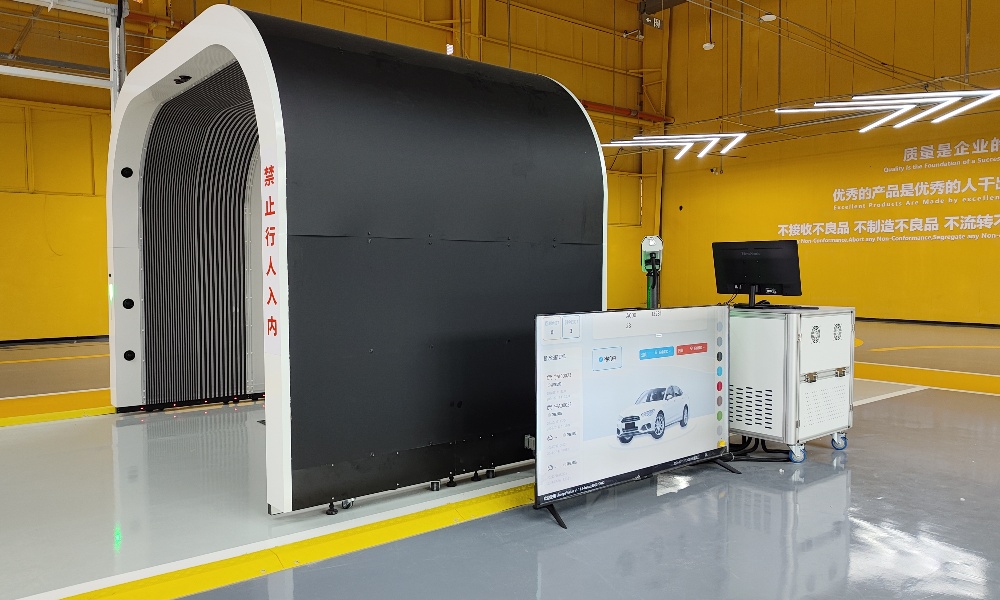
Bound Published Product Scope to Published Evidence
Run Export and API Acceptance Tests
Report Evidence Questions
Does an explainable report prove when or where damage occurred?
Is model confidence the same as detection accuracy?
Can a processed image replace the original source image?
Does an API export make the report complete?
Test the Record Before Operational Approval
Let's Discuss Your Inspection Needs
We offer professional consultation services
Address : NO. 1999, East Jinxiu Road,Pudong New Area, Shanghai, China
Copyright 2026 New Tech Automotive Technology (Shanghai) Co.,Ltd. All Rights Reserved Information Security
Follow Us


Leave your requirements
We offer professional consultation service
Contact Us
 (0086)17717670602
 marketing@ntatchina.com
 8617717670602
Follow Us
Address : NO. 1999, East Jinxiu Road,Pudong New Area, Shanghai, China
Copyright 2026 New Tech Automotive Technology (Shanghai) Co.,Ltd. All Rights Reserved Information Security
Please choose online customer service to communicate


