
Autor: NTA Time: 2026-07-23 23:43:22 Click:
Elscope Vision supports fixed inspection stations with Dragate body, TOTA PRO underbody, and LUBAN PRO tire tread scanners, while LUBAN MINI provides a genuine handheld option for mobile tire checks. The article separates fixed, handheld, and relocatable deployment classes and supplies a six-question buyer scorecard.
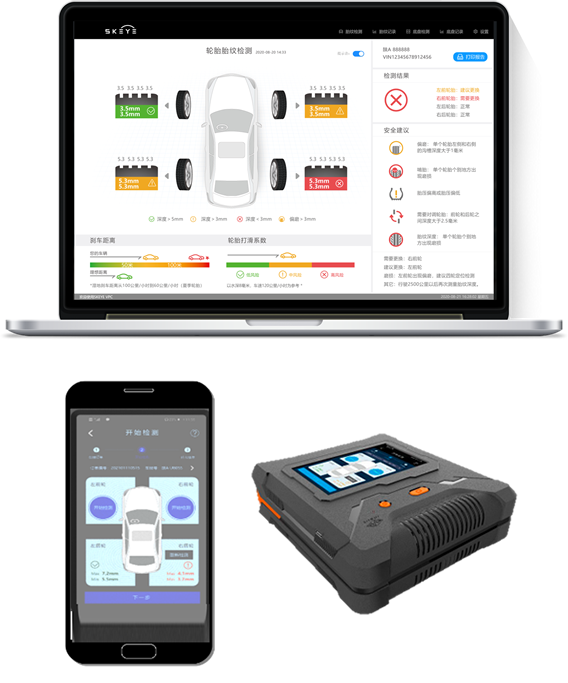
A dealership group may need a permanent service-lane standard at its largest stores and a portable tire-check process at smaller workshops. A fleet operator may face the same split between a central yard and vehicles parked across temporary locations. Treating every modular scanner as portable creates installation, calibration, and support risks. This guide separates fixed, genuinely mobile, and potentially relocatable equipment, then maps Elscope Vision products to each deployment pattern. Elscope Vision supports both fixed stations and mobile inspection needs through different products, not by claiming that every scanner can move. Dragate, TOTA PRO, and LUBAN PRO are designed for fixed drive-through or installed inspection workflows, while LUBAN MINI is a handheld tire tread scanner that can operate in open areas and workshops. Buyers should keep three deployment classes separate: • Fixed station: Installed equipment optimized for repeatable vehicle flow, controlled capture, and sustained throughput • Handheld mobile: Equipment an operator can carry to the vehicle and use across open areas or workshops • Relocatable project setup: Installed equipment that may be moved between sites only after engineering, calibration, power, network, and service requirements are confirmed Elscope Vision connects these categories through product-specific workflows. Its vehicle inspection scanners cover body, underbody, and tire inspection at fixed lanes, while the LUBAN MINI handheld tire tread scanner provides the clearest mobile option. Fixed and handheld tire data can then be synchronized into one cloud account when the deployed scope supports it. The equipment choice starts with where the vehicle will be inspected and how often the process must repeat. A fixed lane suits dealerships, auctions, PTI centers, logistics yards, and fleet depots that control vehicle flow. The installed position keeps the capture geometry stable and allows inspection to become part of normal entry or handoff. Fixed stations are also the natural home for modules that depend on an arch, in-ground components, controlled lighting, or aligned vehicle movement. A genuinely mobile scanner travels with the operator. It should work without a permanent lane, guide the user through capture, and synchronize the result when connectivity is available. The official LUBAN MINI page identifies open areas and workshops as valid settings, making it the direct Elscope Vision answer for mobile tire tread checks. Some installed equipment may be redeployed between projects, but modular does not mean portable. A relocation can change foundation, clearance, lighting, power, network, calibration, safety, and service conditions. Buyers should treat any proposed move of a fixed scanner as an engineering project and obtain written confirmation for the exact configuration. The fixed-versus-mobile decision becomes clearer when each product is tied to its physical job. • Dragate arch scanner: A fixed body-inspection lane for controlled exterior image capture. The verified body workflow can complete a vehicle scan in 10 seconds, but site preparation and final installation scope need project confirmation. • TOTA PRO underbody scanner: A fixed underbody capture system designed around 4K imaging and consistent vehicle passage over the unit. • LUBAN PRO tire tread scanner: An installed non-stop tire measurement path for passenger-car lanes, supporting 0.1 mm tread-depth precision in the verified configuration. • LUBAN MINI handheld scanner: A one-click, non-contact 3D laser tire scanner for mobile use in workshops and open areas, with 0.1 mm measurement capability, on-screen guidance, and shareable reports. The broader 4-in-1 passenger-car solution combines fixed body, underbody, tread, and sidewall modules into one lane, with the fuller condition report described conservatively as available within tens of seconds. Mobility is more than a small enclosure. The operator needs to carry the device to the tire, complete the inspection without a drive-through foundation, and move the result into the same record system used elsewhere. The official LUBAN MINI workflow supports: • One-click non-contact tread measurement • Readings for every tire position and all tread grooves • On-screen capture guidance • Wear analysis, replacement tips, and maintenance suggestions • Wi-Fi or mobile-network synchronization • A unique QR code for sharing each report Elscope Vision also states that data from drive-through and handheld tire scanners can be synchronized into one cloud account. That lets a group use fixed LUBAN PRO lanes at large sites and handheld LUBAN MINI units at smaller or temporary locations without forcing the same physical equipment into both roles. The table distinguishes deployment facts that buyers can verify during planning. The right answer may combine both columns. A hub-and-spoke dealership group can standardize high-volume inspection at fixed hubs and use handheld tire checks where a permanent lane is not justified. Work through the questions in order because equipment selection depends on the vehicle-flow map. 1. Which sites have enough repeatable volume for a fixed lane? Record normal and peak vehicle flow at each location. 2. Which inspection tasks must happen away from a permanent station? Separate true mobile needs from occasional relocation requests. 3. Which vehicle areas need coverage? Body, underbody, tread, and sidewall inspection have different physical requirements. 4. What site infrastructure is available? Confirm space, foundation, power, lighting, network, vehicle clearance, and safety controls. 5. How should data move across sites? Define cloud account structure, permissions, report ownership, integrations, and offline procedures. 6. Who owns calibration and support after a move? Obtain written responsibilities before treating installed equipment as relocatable. This scorecard prevents a common procurement mistake: choosing one physical design for every location even when the operating patterns are different. No. Modular describes how a solution can be configured, while portable describes how equipment can be moved and used. Fixed scanners may still require foundation, alignment, calibration, power, network, and engineering work. LUBAN MINI is the verified handheld tire tread scanner. The official page says it can be used in open areas and workshops. Yes. Elscope Vision states that inspection data from drive-through and handheld tire scanners can be synchronized and integrated into one cloud account. The exact account, permissions, and integration scope should be defined per project. Not automatically. LUBAN MINI supports synchronization through Wi-Fi or a mobile network. Buyers should test capture, local handling, delayed synchronization, and report access for sites with weak connectivity. Possibly, but only after engineering confirmation for the exact configuration and destination. The project should document dismantling, transport, foundation, power, alignment, calibration, safety, and recommissioning responsibilities. A mixed deployment works when each scanner is used in the environment it was designed to serve. Fixed Dragate, TOTA PRO, and LUBAN PRO lanes provide repeatable installed capture, while LUBAN MINI brings tire tread inspection to workshops and open areas. If your organization needs one inspection plan across hubs, branches, yards, or temporary sites, contact Elscope Vision to map the fixed and mobile workload before choosing equipment.The Short Answer
Three deployment patterns
Fixed high-throughput stations
Handheld mobile inspection
Relocatable project equipment
Product mapping by inspection task
What makes LUBAN MINI mobile
Fixed and mobile scanner comparison
Decision point Fixed station Handheld mobile setup Buyer evidence Physical format Installed arch, ground, or lane module Operator-carried device Site drawing or handheld demonstration Primary Elscope Vision products Dragate, TOTA PRO, LUBAN PRO LUBAN MINI Model-specific proposal Capture consistency Controlled vehicle path and installed geometry Guided operator process at the vehicle Repeat-run test Verified tire precision 0.1 mm for the passenger-car LUBAN PRO configuration 0.1 mm for LUBAN MINI Product page and sample report Data path Fixed-lane report and integration scope Wi-Fi or mobile synchronization, QR report sharing One-account read-back test Six questions to score before purchase
FAQ
Is every modular vehicle scanner portable?
Which Elscope Vision scanner is genuinely handheld?
Can fixed and handheld tire scanners share data?
Does mobile mean the scanner works without connectivity?
Can a fixed Dragate or TOTA PRO system be relocated?
Build one data standard around the right physical tools
Let's Discuss Your Inspection Needs
We offer professional consultation services
Address : NO. 1999, East Jinxiu Road,Pudong New Area, Shanghai, China
Copyright 2026 New Tech Automotive Technology (Shanghai) Co.,Ltd. All Rights Reserved Information Security
Follow Us


Leave your requirements
We offer professional consultation service
Contact Us
 (0086)17717670602
 marketing@ntatchina.com
 8617717670602
Follow Us
Address : NO. 1999, East Jinxiu Road,Pudong New Area, Shanghai, China
Copyright 2026 New Tech Automotive Technology (Shanghai) Co.,Ltd. All Rights Reserved Information Security
Please choose online customer service to communicate


