

NADA 2026 Observations – Part 2:How Automated Vehicle Inspection Technology Is Evolving Ahead of NADA 2026
As dealerships prepare for NADA 2026, automated vehicle inspection technology has entered a far more mature phase than many in the industry may realize. What was once viewed as an experimental add-on or a visual aid is now becoming a foundational system within modern dealership operations. Today’s automated vehicle inspection platforms are no longer simple imaging tools—they are integrated systems that combine industrial-grade hardware, artificial intelligence, and structured data workflows to support daily, high-volume dealership environments.
This evolution reflects a broader shift in how dealerships evaluate technology. The question is no longer whether automation is possible, but whether it can operate reliably, consistently, and at scale in real-world conditions.
From Point Tools to Integrated Systems
Earlier generations of inspection solutions focused primarily on image capture. While high-resolution photos were useful, they often lacked context, consistency, and integration with dealership processes. Modern automated vehicle inspection systems have moved well beyond that limitation.
Today’s platforms are designed as end-to-end systems. Hardware components such as synchronized cameras and intelligent lighting are tightly coupled with AI-driven analysis and structured reporting. The result is not just faster inspections, but standardized outputs that can be used across service, sales, and management teams.
This systems-level approach is increasingly aligned with dealership priorities heading into NADA 2026, where operational scalability and process standardization are key themes.
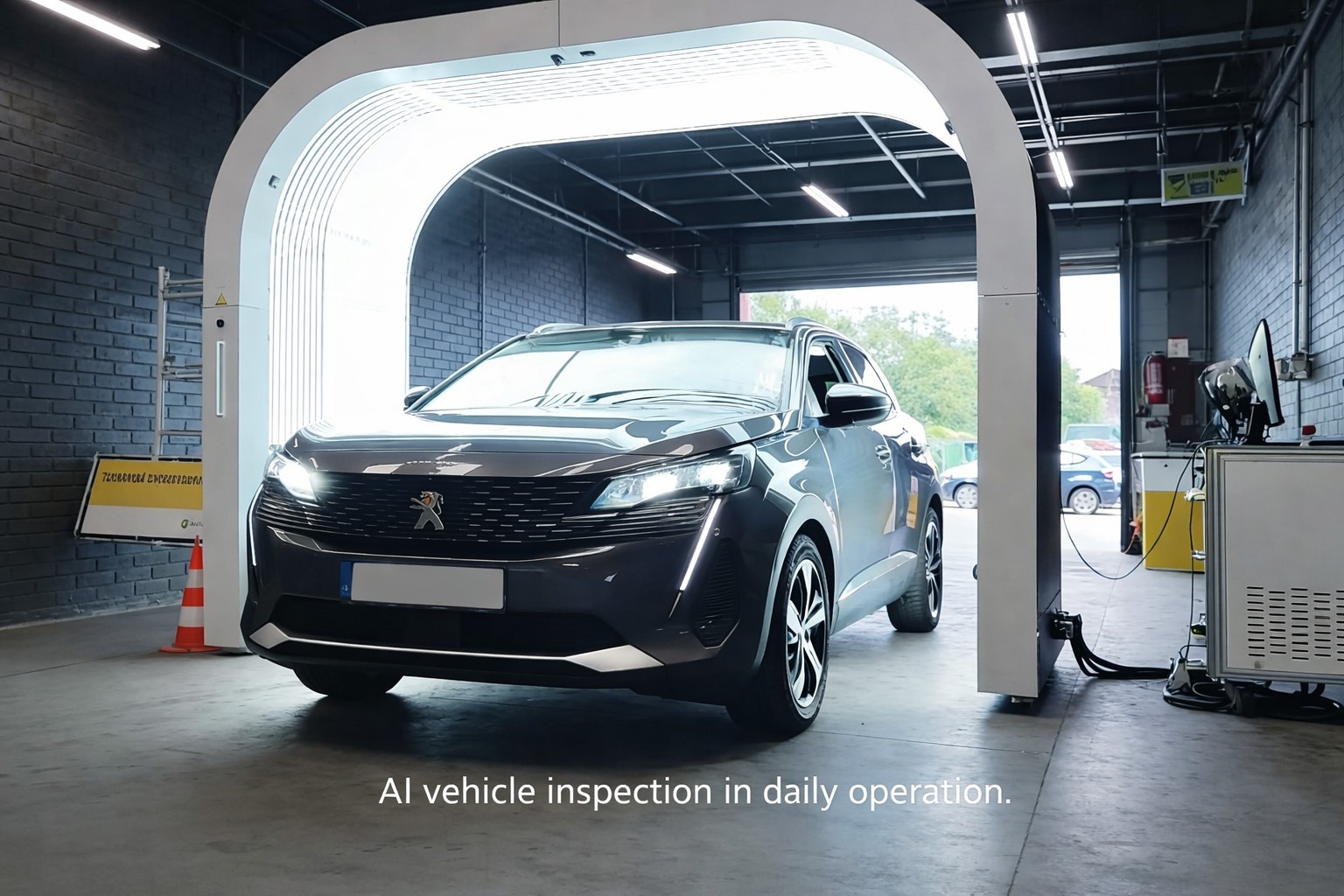
Faster Inspections—Without Compromising Accuracy
Speed remains one of the most visible advancements in automated inspection technology. Modern platforms can now scan a vehicle in seconds using synchronized camera arrays, optimized lighting conditions, and AI models trained on large-scale datasets.
However, speed alone is not the real breakthrough. The true value lies in achieving faster inspections without sacrificing accuracy or consistency. Unlike manual inspections—where outcomes can vary depending on technician experience, time pressure, or workload—automated vehicle inspection applies the same objective criteria to every vehicle.
This enables dealerships to achieve:
- Consistent inspection standards across locations and shifts
- Reduced service lane congestion during peak hours
- Faster, more confident customer decision-making
As dealerships prepare for higher throughput and tighter margins, these operational gains are becoming increasingly difficult to ignore.
Transparency Through Visual Data
Another major driver behind the adoption of automated vehicle inspection technology is transparency. High-resolution images, paired with structured inspection reports, allow service advisors to clearly explain vehicle conditions in a way that is visual, consistent, and easy for customers to understand.
Rather than relying solely on verbal explanations, advisors can reference visual evidence that supports maintenance or repair recommendations. This shift has a direct impact on customer trust—an issue expected to remain a central discussion point at NADA 2026.
Transparency is no longer a “nice-to-have” feature. It is becoming a critical operational requirement, particularly as customers grow more informed and more cautious about service decisions.
Built for Real-World Dealership Conditions
As automated inspection solutions become more common, dealerships are also becoming more selective. Many have learned that technologies performing well in controlled demonstrations do not always translate smoothly into daily operations.
A modern automated vehicle inspection system must operate reliably across:
- Different vehicle sizes and body types
- Variable lighting and environmental conditions
- High daily inspection volumes
Reliability, uptime, and consistency are now valued as highly as technical specifications. As a result, solutions that have been proven in real dealership environments are attracting far greater interest than those focused primarily on experimental features or lab performance.
Looking Ahead to NADA 2026
Heading into NADA 2026, the conversation around automated vehicle inspection is shifting from innovation to execution. Dealerships are no longer asking what the technology can do in theory, but how it performs day after day in real operations.
The most successful platforms will be those that combine automation, AI, and data into systems that quietly and reliably support dealership workflows—improving efficiency, building trust, and enabling smarter decisions at scale.


 +
+


