

NADA 2026 Observations – Part 1: Why Automated Vehicle Inspection Is Becoming Essential for Dealerships
As NADA 2026 approaches, automotive dealerships are facing mounting pressure to improve inspection efficiency, consistency, and customer trust. What was once considered an acceptable inspection process is now being challenged by higher vehicle volumes, tighter margins, and increasingly complex dealership operations. Manual inspection methods—largely dependent on human experience and time availability—are struggling to meet today’s operational demands.
One of the clearest trends emerging around NADA 2026 is the shift toward automated vehicle inspection as a foundational capability rather than an optional upgrade. Dealerships are recognizing that inspection automation is no longer about showcasing technology, but about building scalable, repeatable, and data-driven dealership operations.
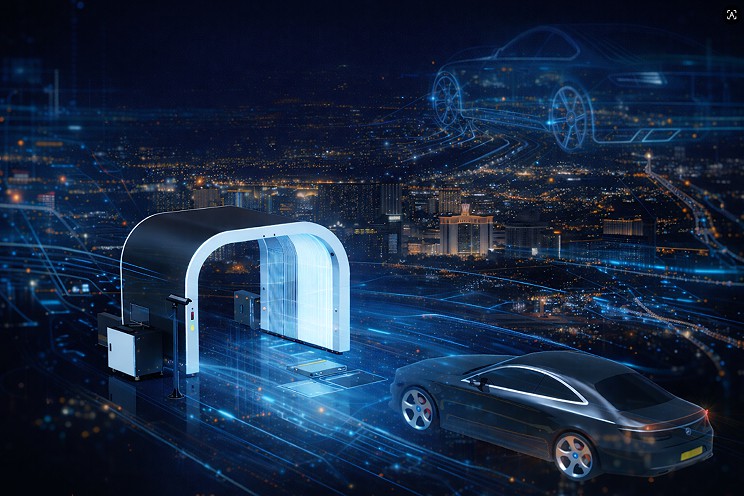
Rising Operational Pressure in Dealership Operations
Across service lanes and used-car departments, operational pressure is intensifying. Service throughput must increase, technician availability is tightening, and customer expectations continue to rise. Today’s customers demand faster check-ins, clearer inspection results, and transparent explanations they can trust.
Traditional walk-around inspections are inherently limited. They are time-consuming, heavily reliant on individual technician experience, and prone to inconsistency. Two technicians inspecting the same vehicle may produce different results, creating internal inefficiencies and potential trust issues with customers. As dealership operations scale, these inconsistencies become increasingly difficult to manage.
For many dealerships attending NADA 2026, the question has shifted decisively. They are no longer asking whether automated vehicle inspection is necessary—but rather how it can be integrated into daily dealership operations without disrupting existing workflows.
Why Automation Is Becoming Non-Negotiable
Modern automotive retail is driven by speed, accuracy, and standardization. Automated vehicle inspection systems address these needs by providing consistent inspection outputs regardless of operator, time of day, or workload conditions. By automating key inspection steps, dealerships can significantly reduce vehicle check-in and check-out time while maintaining high inspection quality.
From a dealership operations perspective, automation reduces dependency on individual skill levels and minimizes training bottlenecks. Inspections become repeatable processes rather than subjective judgments. This shift allows service advisors and managers to make faster, more confident decisions based on standardized data rather than fragmented observations.
As a result, automated vehicle inspection is increasingly viewed as infrastructure—similar to DMS systems or CRM platforms—rather than a standalone piece of equipment.
Automation as a Competitive Advantage
Dealerships that adopt automated inspection technologies gain a clear operational advantage. Faster inspections translate directly into higher throughput, allowing service lanes to handle more vehicles without adding staff. Consistent inspection results also reduce internal disputes and rework, improving overall operational efficiency.
More importantly, automation enhances customer trust. Visual, data-backed inspection reports help customers clearly understand vehicle conditions, reducing skepticism and shortening approval cycles. Transparency is no longer a “nice-to-have”—it is becoming a baseline expectation across dealership operations.
In a competitive retail environment, dealerships that can combine speed, consistency, and transparency will be better positioned to retain customers and increase lifetime value.
A Shift in Evaluation Criteria at NADA 2026
Another notable trend around NADA 2026 is how dealerships evaluate new technology solutions. Flashy demonstrations and theoretical capabilities are losing appeal. Decision-makers are prioritizing systems that have proven they can operate reliably in real-world dealership operations.
Speed, consistency, and operational transparency are no longer differentiators—they are minimum requirements. Dealerships are looking for automated vehicle inspection solutions that integrate seamlessly into daily workflows, deliver measurable efficiency gains, and scale across multiple locations.
This shift reflects a broader industry mindset: technology must serve operations, not disrupt them.
Looking Ahead: Inspection as a Core Operational System
As NADA 2026 draws closer, it is becoming increasingly clear that inspection automation will play a central role in the future of dealership operations. Automated vehicle inspection is evolving from a technical upgrade into a strategic asset—supporting higher throughput, better customer experiences, and more resilient operations.
For forward-thinking dealerships, the question is no longer about adopting automation someday. The focus is on selecting solutions that can deliver real operational value today, while supporting long-term scalability tomorrow.


 +
+


