

What is PDR Shop Vehicle Inspection?
PDR shop vehicle inspection is the process of evaluating the condition of a vehicle, specifically focusing on detecting and documenting damage before and after repairs. In PDR shops, inspections are crucial for identifying issues such as hail damage, dents, and other body imperfections that can be addressed using paintless dent repair (PDR) methods. Traditional inspections are often time-consuming and subjective, but AI-powered vehicle inspection systems provide objective, consistent, and efficient damage detection.
AI-powered inspection systems, such as the AI Vehicle Inspection System, provide PDR shops with automated, real-time assessments of vehicle condition, ensuring accurate damage detection and enhancing operational efficiency.
To learn more about how these systems work and their broader applications across various industries, visit our AI Vehicle Inspection System page
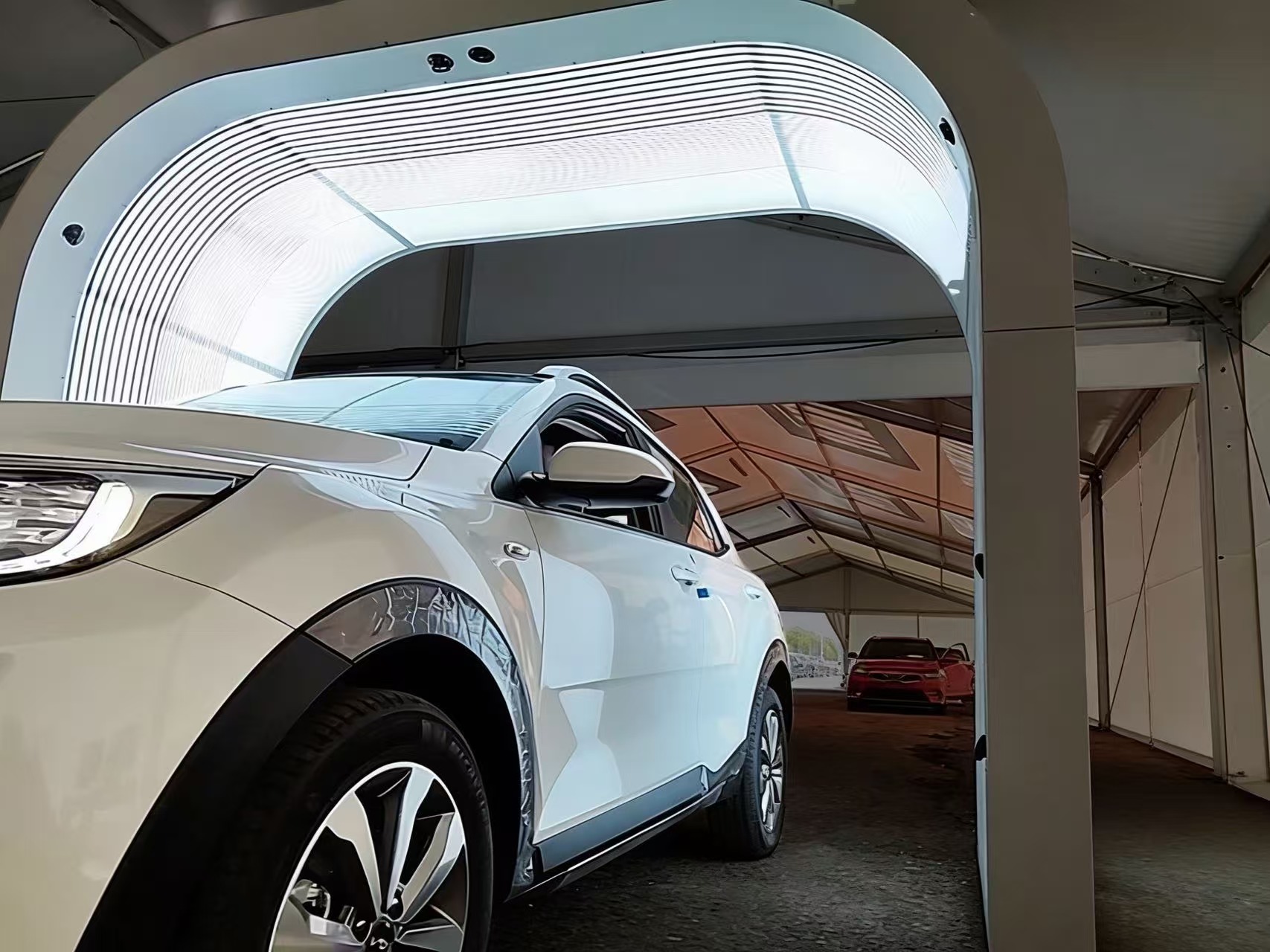
Overview of PDR Shop Vehicle Inspection
In PDR shops, vehicle inspections are integral to determining the extent of damage and ensuring that repairs are done correctly. These inspections cover exterior and interior assessments, with a special focus on the bodywork and structural integrity of the vehicle. AI-driven technology takes these inspections a step further by automating the detection of dents, scratches, and other deformities in real-time, providing highly accurate reports.
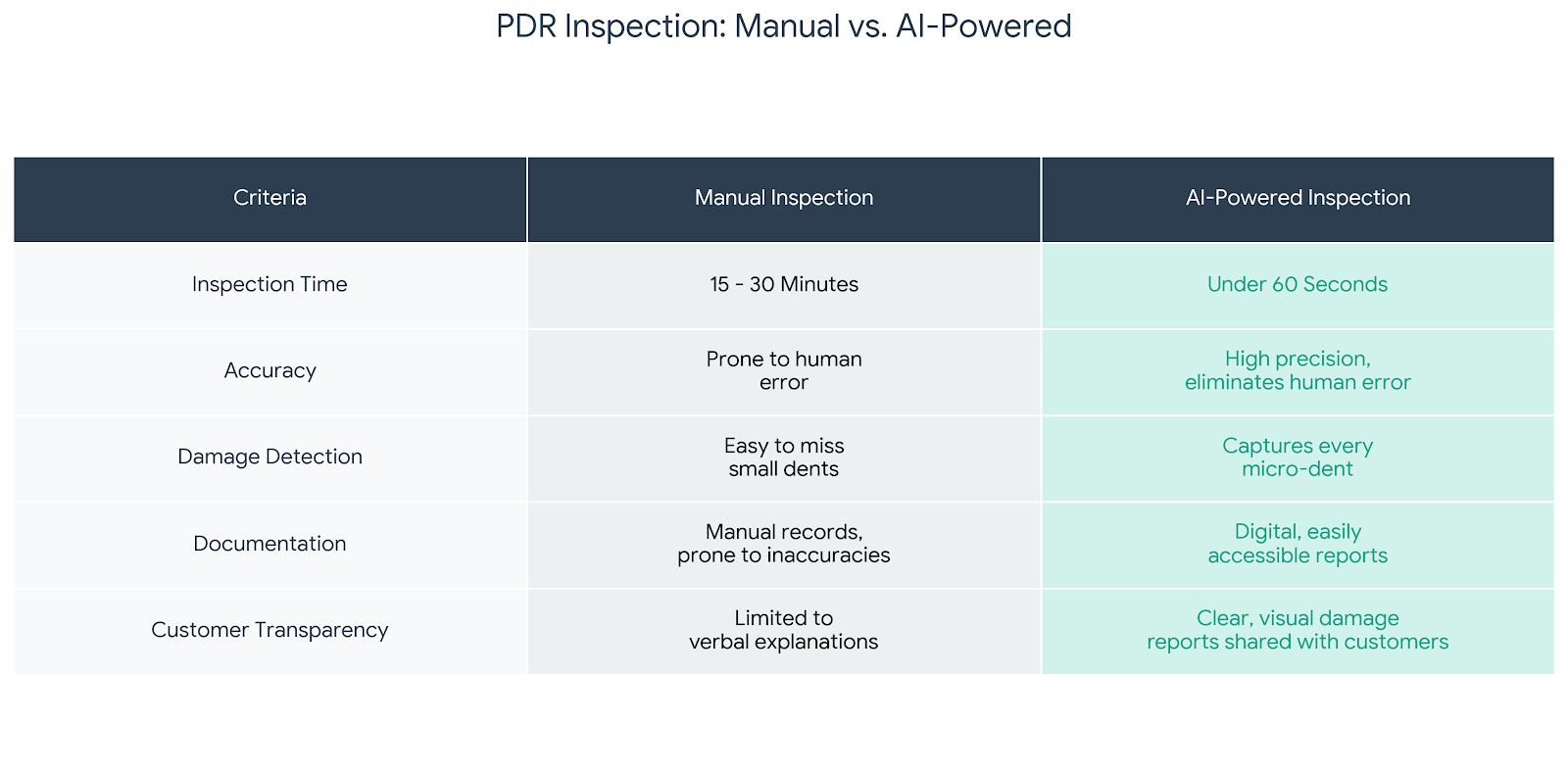
These AI-powered systems offer several advantages, including faster processing times, reduced human error, and enhanced transparency for both the service team and the customer.
Key Benefits:
- Efficiency: AI systemssignificantly reduce inspection time, allowing PDR shops to process morevehicles in less time.
- Consistency: Automatedinspections ensure that every vehicle is evaluated with the same level ofprecision and detail.
- Transparency: Detailed,digital inspection reports foster trust by providing customers with clearevidence of their vehicle’s condition.
Key Technologies Used in AI Vehicle Inspection for PDR Shops
AI vehicle inspection technology involves a combination of several advanced scanning methods, all designed to improve the accuracy and speed of vehicle assessments in PDR shops. These technologies include:
1. AI Vehicle Body Scanning
AI-powered body scanning systems utilize high-resolution cameras, structured lighting, and computer vision algorithms to detect even the smallest dents and imperfections on a vehicle's surface. This system creates a digital model of the vehicle, which can then be compared against a reference model to identify damage.
Practical Application:
For example, a PDR technician can instantly access a detailed damage report, pinpointing the exact locations of dents on the vehicle. This speeds up the estimation and repair process.
For more detailed insights on this technology, see our article on AI Vehicle Body Scanning Technology.
2. Vehicle Underbody Scanning
The underbody of a vehicle can be difficult to inspect manually, especially for hidden damages like rust, oil leaks, or frame issues. AI-driven underbody scanning uses advanced cameras and lighting systems to capture detailed images of the vehicle's undercarriage.
Practical Application:
This helps technicians identify issues that might otherwise go unnoticed, allowing for quicker repairs and more accurate service recommendations.
Learn more about the underbody scanning process in our Underbody Scanning Technology article.
3. Tire Tread Depth Scanning
Although PDR focuses on body damage, tire condition is still important. AI-powered tire tread depth scanning uses laser technology to measure the remaining tread on each tire, ensuring vehicles are roadworthy before repairs.
Practical Application:
With tire tread reports available at the time of inspection, technicians can suggest necessary tire replacements, leading to more upsell opportunities.
4. Tire Sidewall Scanning
Tire sidewall scanning is essential for identifying defects such as cracks, bulges, or punctures. The AI system also captures additional details such as tire brand, size, and production date.
Practical Application:
This feature is particularly useful for detecting issues caused by minor collisions or road debris, which can sometimes go unnoticed in traditional inspections.
Discover more about this technology in our Tire Tread Depth Scanning and Tire Sidewall Scanning Technology article.
How AI Streamlines PDR Shop Vehicle Inspection Workflow
AI-powered inspections dramatically enhance the efficiency and accuracy of the PDR workflow. The process begins when a vehicle enters the shop and is scanned by AI systems that quickly assess its condition. The digital reports generated provide immediate feedback on the vehicle's damage, streamlining the process of creating repair estimates. This automation reduces the need for manual checks, saving time and improving service speed.
Practical Application:
Instead of waiting for a manual inspection to be completed, technicians receive instant, actionable data, enabling them to begin repairs without unnecessary delays. The system also integrates with the PDR shop's management software, facilitating seamless workflow and record-keeping.
Practical Benefits and ROI for PDR Shops
1. Service Technician Efficiency
By automating the inspection process, AI frees up technicians to focus on more complex tasks, like actual repairs. PDR shops that adopt AI-powered inspections have seen significant improvements in operational efficiency, reducing inspection time from several minutes to just seconds.
Example:
An Elscope Vision-powered inspection system can process a vehicle in under a minute, allowing technicians to inspect a greater volume of vehicles in a shorter period.
2. Transparency with Customers
Customers are more likely to trust PDR shops that can provide clear, visual reports of their vehicle's condition. Digital reports from AI systems provide proof of vehicle damage, reducing disputes and fostering customer loyalty.
Example:
PDR shops using Elscope Vision can share detailed visual reports with customers, ensuring they fully understand the extent of repairs needed and why certain services are recommended.
3. Upsell Opportunities
AI vehicle inspections also offer PDR shops an opportunity to upsell additional services such as repainting or tire replacement. With accurate reports detailing every issue, technicians can confidently recommend services based on the real needs of the vehicle.
4. Documentation of Vehicle Condition
Every AI-powered inspection is automatically logged, providing an accurate, digital record that can be accessed later. This documentation is invaluable for insurance claims, warranty claims, or when a customer returns for future service.
Common Challenges and How AI Inspection Systems Address Them
1. Inconsistent Manual Inspections
Manual inspections are subjective and prone to human error. AI vehicle inspection systems remove this inconsistency by providing objective, data-driven reports that accurately capture vehicle damage.
2. Time Constraints in High-Volume Environments
PDR shops often face pressure to complete inspections quickly, especially during peak seasons. AI-powered systems streamline the process, allowing for faster vehicle intake and repair estimates.
3. Documentation Accuracy
Manual records can lead to missing or inaccurate documentation. AI systems automatically generate digital reports that are precise and easily accessible.
How AI-Powered PDR Shop Vehicle Inspection Boosts Hail Damage Repair Efficiency
AI-powered inspections are a critical tool for handling the aftermath of hail damage in PDR shops. During hail storms, vehicles often suffer widespread damage, making it challenging for technicians to assess and repair the vehicles promptly. AI systems, like Elscope Vision, streamline hail damage inspections by providing quick, accurate reports, drastically reducing the time needed for vehicle evaluations and allowing PDR shops to process more vehicles. This leads to faster insurance claim processing, better customer satisfaction, and increased revenue during peak demand times.
Traditional Manual Inspection vs. AI-Powered Inspection
The Future of PDR Shop Vehicle Inspection with AI
PDR shop vehicle inspection is undergoing a revolution, thanks to AI-powered technology. These systems not only improve the efficiency and accuracy of vehicle assessments but also enhance customer satisfaction by providing clear, transparent reports. The ability to detect and document damage quickly results in faster repairs, improved operational efficiency, and increased revenue through upsell opportunities.
For further understanding of the overall benefits of AI-powered vehicle inspection systems, please refer to our Future of AI Vehicle Inspection Technology Explained article.
About Elscope Vision
Elscope Vision is a provider of AI-powered vehicle inspection systems, including arch scanners, underbody scanners, tire sidewall scanners, and tire tread scanners.
Global Deployment: Over 40 countries, including dealerships, PDR shops, workshops, and auction houses.
Impact: API integration and automation have significantly improved operational efficiency, standardizing vehicle inspections and reducing human error.
FAQ
Q1: What is PDR shop vehicle inspection?
A: PDR shop vehicle inspection is the process of evaluating a vehicle's damage before and after paintless dent repairs, using AI-powered systems for fast, accurate assessments.
Q2: How does AI improve PDR shop vehicle inspections?
A: AI systems automate the inspection process, providing precise, objective damage reports, reducing manual errors, and speeding up the workflow.
Q3: Can AI vehicle inspections integrate with existing PDR shop management software?
A: Yes, AI vehicle inspection systems can integrate with existing PDR shop software to streamline operations and improve documentation accuracy.
Q4: What benefits does AI vehicle inspection offer to PDR shops?
A: AI-powered inspections increase efficiency, transparency, upsell opportunities, and provide accurate, digital documentation for insurance claims and future repairs.
Get a Custom Quote & ROI Analysis
· Official Website: https://en.smartautoscan.com/
· Technical Support & Sales: marketing@ntatchina.com
Book a Live Virtual Demo Today


 +
+


