

Vehicle inspection is evolving beyond the traditional task of identifying defects. As inspection centers face growing demands for operational efficiency, consistent results, and digital recordkeeping, the challenge is no longer simply how to inspect a vehicle, but how to make the entire inspection process more integrated and effective.
For Periodic Technical Inspection (PTI) centers, this raises an important question: How can multiple vehicle inspection tasks be completed more efficiently without compromising inspection quality?
One emerging approach is to integrate vehicle body damage detection, tire tread depth measurement, underbody scanning, and tire sidewall inspection into a single drive-through workflow. This shift reflects a broader evolution in PTI vehicle inspection: moving from separate inspection tasks toward a more connected, automated, and data-driven process.
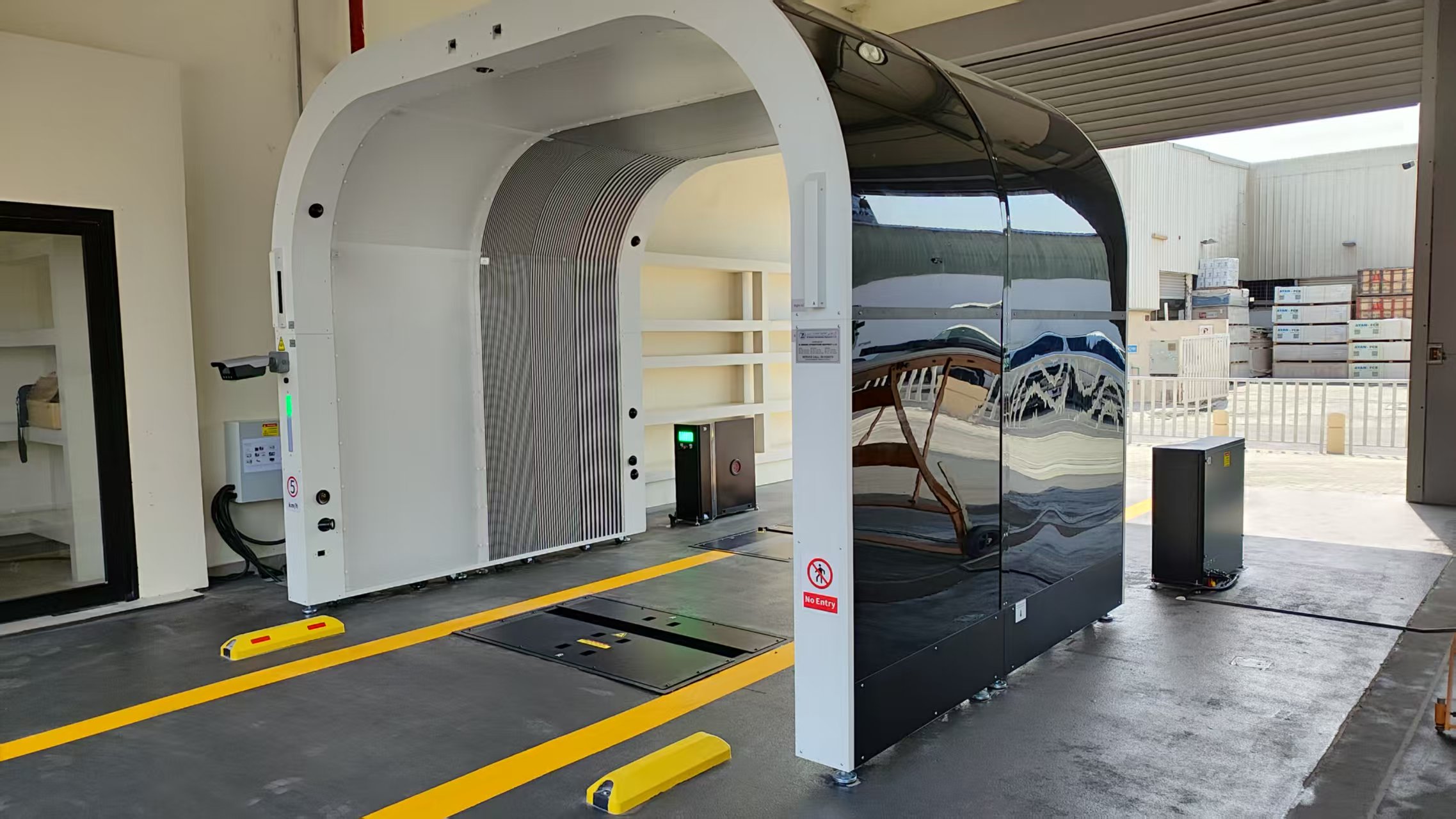
This month, Elscope Vision deployed another intelligent vehicle inspection system at a major PTI center in the Middle East, providing a real-world example of how integrated scanning technology can support this transition.
1. Beyond Inspection Speed: Rethinking PTI Efficiency
Inspection speed is an important consideration for busy PTI centers, but it is only one part of overall operational efficiency.
When vehicle body, tires, and underbody conditions are checked through separate processes, the time required to coordinate different inspection steps can affect the overall workflow. Manual inspection and recordkeeping may also introduce variations in how defects are identified and documented.
An integrated approach addresses these challenges by bringing multiple inspection functions into one process.
Elscope Vision's 4-in-1 AI-powered vehicle inspection system combines vehicle body inspection, tire tread depth measurement, underbody inspection, and tire sidewall inspection. As a vehicle drives through the system, these inspection functions operate within the same scanning workflow, with a scanning time of approximately 10 seconds per vehicle.
The significance of this approach goes beyond the scanning time itself. By consolidating multiple inspection tasks, PTI centers have an opportunity to simplify inspection workflows and reduce the need to organize each function as an entirely separate step.
However, actual throughput depends on the complete inspection process, including vehicle positioning, result review, additional checks, and report handling. The real measure of efficiency is therefore not just how quickly a scanner captures data, but how effectively it fits into the inspection center's overall operations.
2. From Individual Checks to More Consistent Inspection Results
Traditional inspection processes rely heavily on personnel observing vehicle conditions, carrying out measurements, and recording findings. Although professional judgment remains essential, differences in inspection practices can affect the consistency of records.
An AI vehicle inspection system can help standardize parts of this process by automatically capturing vehicle information, identifying potential defects, and generating structured digital reports.
For example, Elscope Vision's vehicle body inspection function uses AI to identify damage and produces reports showing defect type, location, and severity. Instead of relying entirely on written descriptions or manually recorded observations, inspection personnel can refer to digital results when reviewing detected damage.
Automated tire tread depth measurement provides another example. By capturing tire data during the scanning process, the system helps reduce dependence on manual measurement for supported inspection tasks.
These capabilities do not eliminate the need for professional judgment or additional examination where necessary. Rather, they provide inspection personnel with more structured information to support their decisions.
For PTI operators, the broader opportunity is to establish a more repeatable inspection process in which data collection and defect documentation become less dependent on fragmented manual workflows.
3. Why Integrated Inspection Creates More Value Than Separate Functions
The value of an integrated scanning solution lies not simply in combining multiple technologies, but in connecting inspection activities that would otherwise be performed separately.
Consider the four inspection functions offered by the Elscope Vision system.
Vehicle body inspection uses AI to identify damage and organize findings by defect type, location, and severity.
Tire tread depth measurement provides automated measurements that help personnel assess tire wear and identify tires that may require further attention.
Underbody inspection captures images of visible underbody conditions, giving inspection personnel visual information to review for potential abnormalities.
Tire sidewall inspection uses AI to detect sidewall and wheel defects while identifying tire brand, model, and DOT date codes.
Together, these functions provide a broader view of vehicle condition within one scanning process. They also create opportunities to consolidate information from different inspection areas into a more organized digital workflow.
This is particularly relevant when inspection centers need to manage high vehicle volumes while maintaining clear records of inspection findings.
The principle is straightforward: the more effectively inspection functions are integrated, the easier it becomes to organize the inspection process around a unified workflow rather than a collection of disconnected tasks.
4. From Inspection Results to Digital Vehicle Data
Another important development in intelligent vehicle inspection is the growing role of digital information.
A conventional inspection primarily produces a result: a vehicle passes, fails, or requires further examination. An automated scanning process can also generate supporting information, including images, measurements, identified defects, and structured reports.
This information can improve the traceability of inspection findings and make records easier to review. Depending on the system configuration and data management processes, it may also support quality audits, historical comparisons, and operational analysis.
Tire inspection illustrates this potential. Combining tread depth measurements with tire brand, model, and DOT date code identification provides more detailed tire information than tread measurement alone.
Similarly, digital records of vehicle body damage and underbody images can give inspection personnel a clearer reference when reviewing findings.
Over time, consistently collected inspection data may become a valuable operational resource. Its usefulness, however, depends on how the data is stored, organized, accessed, and incorporated into subsequent workflows. Digital inspection should therefore be viewed not only as a way to produce reports, but also as a foundation for more structured information management.
For PTI centers exploring digital transformation, this represents an important opportunity: turning individual inspection results into organized information that can support broader operational needs.
5. How Should PTI Centers Evaluate Inspection Automation?
As automated inspection technology becomes part of the modernization discussion, PTI operators need to look beyond individual equipment specifications when evaluating potential solutions.
Scanning time is one useful metric, but it should be considered alongside the performance of the entire inspection process.
Several factors deserve attention:
- Overall vehicle throughput: Howdoes the solution affect the time required to complete the full inspectionworkflow?
- Inspection consistency: Canautomated data collection help standardize measurements and defectdocumentation?
- Review and reporting: How easilycan personnel access inspection results, review potential defects, andcomplete reports?
- System integration: Can inspectiondata be incorporated into the center's existing software and managementprocesses where required?
- Operational requirements: Whatinstallation conditions, maintenance arrangements, and staff training areneeded?
- Long-term value: Does the solutionaddress the center's actual operational challenges and provide benefitsthat justify its investment?
These considerations are important because automation does not automatically eliminate every bottleneck. If report handling, manual review, or downstream procedures remain time-consuming, improvements in scanning speed alone may not translate into equivalent gains in total throughput.
The most effective approach is to evaluate automation against the inspection center's actual operating conditions and establish clear performance measures before and after deployment.
6. A Real-World Application: Elscope Vision in the Middle East
The latest deployment at a major PTI center in the Middle East demonstrates the practical application of integrated vehicle scanning technology in an operational inspection environment.
By bringing vehicle body damage detection, tire tread depth measurement, underbody scanning, and tire sidewall inspection into one drive-through process, Elscope Vision's 4-in-1 solution addresses a central challenge in PTI modernization: how to combine multiple inspection functions within a more unified workflow.
With a scanning time of approximately 10 seconds per vehicle, the system provides an opportunity to streamline the data collection stage while generating inspection information for personnel to review.
The deployment also reflects a broader shift in how vehicle inspection technology can be positioned. Rather than treating automation as a standalone feature, PTI centers can consider how integrated scanning fits into their inspection procedures, reporting systems, and longer-term digital management plans.
The actual operational impact will depend on the center's existing processes, system configuration, and implementation. Nevertheless, integrated scanning offers a practical framework for exploring how automation can support inspection efficiency, consistency, and more structured data collection.
Looking Ahead: Building a More Integrated PTI Process
The future of PTI is not simply about inspecting vehicles faster. It is about building a more integrated process in which multiple inspection functions, standardized data collection, and digital reporting work together.
For inspection centers, the transition involves more than adopting new equipment. It requires evaluating existing workflows, identifying operational bottlenecks, and determining how automated inspection data can support daily decision-making.
As an integrated AI vehicle inspection system, Elscope Vision brings together vehicle body inspection, tire tread depth measurement, underbody scanning, and tire sidewall inspection within one drive-through solution. Its application at a major PTI center in the Middle East provides a practical example of how these functions can be combined in a real-world inspection environment.
For PTI operators considering their next stage of modernization, the key question is not simply which defects a scanner can identify. It is how integrated inspection technology can help create a more efficient, consistent, and data-driven operation.
Discover how Elscope Vision can support the evolution of your vehicle inspection process.


 +


