
Autor: NTA Time: 2026-08-20 18:05:44 Click:
Explains how operators can preserve a traceable evidence chain from capture through human review and downstream delivery.
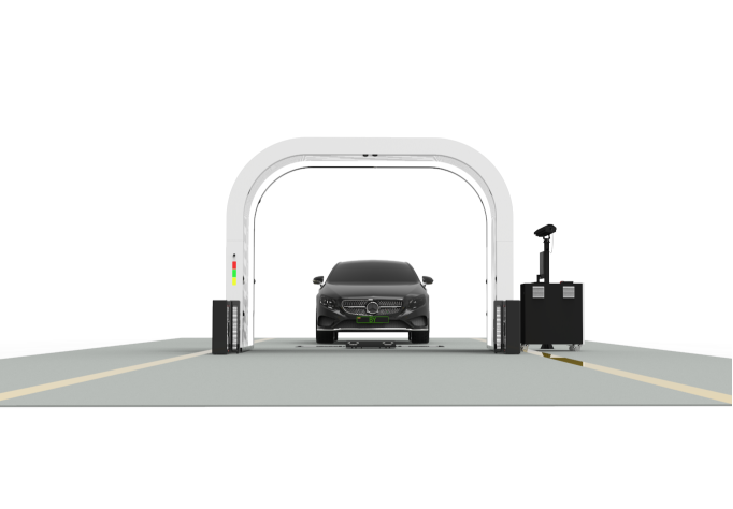
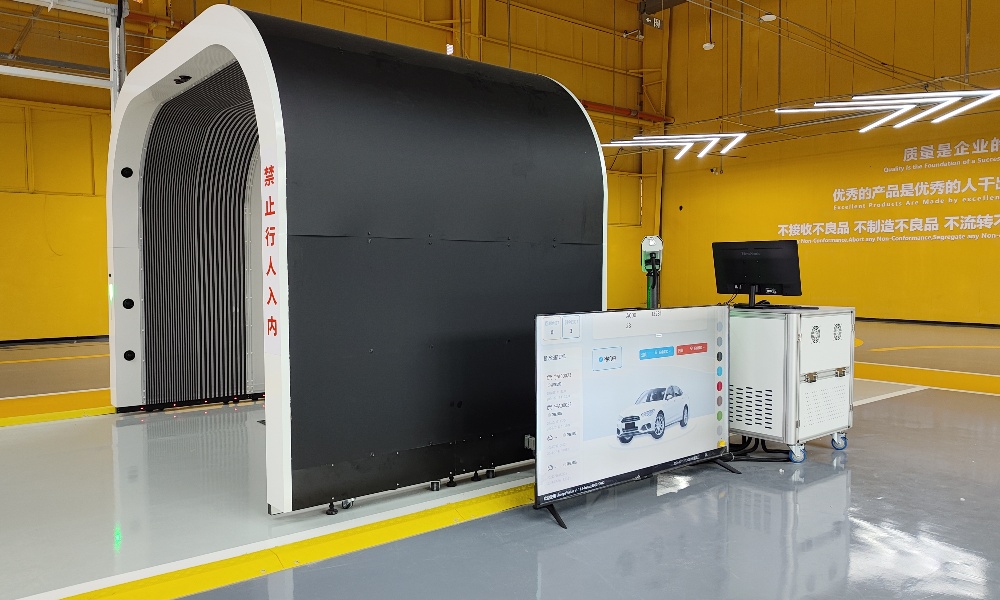
A damage dispute that surfaces three months after a vehicle changed hands does not ask what the inspector thought at the time; it asks what the data shows. Many operations capture scan results, but fewer structure the record so a reviewer can trace each finding back to its source evidence, system version, and human decision. That gap becomes visible only after the vehicle has left the lane. This article explains the evidence chain and practical controls that make an AI inspection report retrievable and reviewable months later. An AI vehicle inspection report is auditable when every finding connects to the raw capture that produced it, a timestamp and scan identity, the model or rule version used to classify it, and a log showing whether a human reviewed or changed the result. Without that chain, a report is only a summary. Four controls are essential: • A unique scan identity tied to one vehicle event • Timestamped source images stored separately from the summary • A stable finding taxonomy and versioned decision logic • Human review and override records showing who changed what and why The Elscope Vision Passenger Vehicle 4-in-1 Solution combines body, underbody, tread, and sidewall inspection modules in one coordinated workflow. That modular structure can supply the evidence streams for an auditable record, but retention, access, review, and change-control policies still belong to the operator. Every inspection event needs an identifier that cannot be confused with a later scan of the same vehicle. The identifier should link the vehicle reference, site, lane, capture time, and module status. Use a generated UUID or another collision-resistant key and never reuse it. The record should also keep the identifiers used to match the vehicle, such as VIN, plate, or an internal asset number. Because those identifiers can be corrected, preserve the original value, the corrected value, who made the change, and the reason. A silent overwrite breaks the audit trail. If a module is skipped or offline, retain the scan event and mark that module as incomplete. An auditor must be able to distinguish a clean result from a condition that was never observed. The PDF or dashboard view is not the source record. It is a presentation layer. Preserve the original or approved source image reference, capture timestamp, module name, vehicle area or tire position, and file integrity metadata for every finding. The Dragate Arch Scanner uses a 17-camera configuration for exterior capture. The underbody scanner provides 4K imagery and supports AI recognition of cracks, rust, scratches, and oil leaks. The tire tread scanner produces tread measurements, while the tire sidewall scanner identifies tire brand, model, and DOT date information and recognizes sidewall or wheel findings such as bulges. Each module produces a different evidence type. Keep those types separate and join them through the scan identity instead of flattening them into a generic defect list. This layered structure follows a basic risk-management principle: decisions should remain traceable to the information and process that produced them. The NIST AI Risk Management Framework is a useful neutral reference for documenting AI context, measurement, monitoring, and governance, even though each operator must adapt controls to its own regulatory and contractual environment. An audit months later must interpret a finding under the rules in force when the scan occurred. Store the taxonomy version, AI model or service version, software build, and any configurable threshold relevant to the decision. Do not recalculate an old report with a new model and silently replace the original. If reprocessing is needed, create a new record version that links back to the source event and explains why it was generated. Keep the original result available for comparison. The same principle applies to severity. If a dealership changes the threshold between Human review improves accountability only when it is recorded. For every accepted, rejected, corrected, or overridden finding, retain: • reviewer identity and role; • review timestamp; • original system output; • final disposition; • reason code or concise explanation; • supporting evidence added by the reviewer. An operator should also define which roles may change different fields. A service advisor may add a recommendation, while a trained reviewer may be required to change a defect classification. Permissions and review rules should match the operational risk. When a report moves to a DMS, CRM, fleet platform, auction system, or other application, the transfer becomes part of the audit record. Store the destination, event ID, delivery time, response status, retry count, and final result. If the receiving system acknowledges only the event and retrieves the payload later, record both steps. Avoid treating a successful HTTP response as proof that every field was accepted correctly. Reconcile identifiers and required fields in the receiving system, and keep a process for failed, duplicate, or delayed events. Retention is not proven by a policy document. Test it by retrieving an older record and confirming that the source evidence, metadata, review history, and delivery state are complete and readable. Local or cloud storage does not automatically make a workflow auditable. The operator must define access permissions, backup responsibilities, recovery tests, retention periods, legal holds where relevant, and deletion procedures. Choose the retention period according to applicable law, contracts, dispute windows, and business needs rather than copying a generic number. 1. Confirm the unique scan identity. Match the event to the vehicle, site, lane, date, and time. 2. Verify every expected module state. Mark complete, skipped, offline, or incomplete explicitly. 3. Check source evidence. Confirm images and measurements open independently of the summary. 4. Record version context. Store the taxonomy, model, software, and rule-set versions. 5. Review significant findings. Log the reviewer, decision, time, and reason. 6. Verify API delivery. Reconcile the event in the receiving system and record any retry. 7. Apply the correct retention class. Use the operator's approved policy for the record type. 8. Test retrieval. Pull the full record and confirm that the evidence chain is complete. How long should an AI vehicle inspection record be retained? There is no universal period. Set it from applicable law, customer contracts, claim windows, operational needs, and the organization's approved retention policy. Can Elscope Vision inspection data integrate with existing management systems? The Passenger Vehicle 4-in-1 Solution supports API-based integration. The operator and software vendors still need to agree on the payload, identifiers, permissions, error handling, and version policy. Does the system automatically guarantee an audit trail? No. The inspection modules can supply structured findings and evidence, while the operator must configure review logs, access control, retention, backup, and downstream reconciliation. What happens if a module is offline? Keep the scan identity and mark the module The difference between a scan and an auditable inspection record is the evidence chain that survives after the vehicle leaves. Teams evaluating a multi-module system should test retrieval, version history, human review, and API reconciliation alongside capture performance. Contact Elscope Vision to review how the Passenger Vehicle 4-in-1 Solution can fit into your evidence and integration workflow.Direct Answer: Preserve the Evidence Chain, Not Just the PDF
Define an Immutable Scan Identity
Store Source Evidence Independently of the Summary
Build the Audit Record in Layers
Evidence layer What to retain Audit question answered Scan identity Session ID, vehicle reference, site, lane, time Which event produced this record? Source capture Image or measurement reference, module, position What evidence existed before interpretation? Finding taxonomy Defect type, location, severity, taxonomy version How was the condition classified? Model and rule context Model ID, software version, threshold or rule-set version Which system logic produced the result? Human review Reviewer, action, time, reason, linked evidence Who accepted or changed the finding? API delivery Destination, event ID, time, response, retry state Did the receiving system obtain the record? Retention and retrieval Policy class, retention date, storage location, access log Can the complete record still be retrieved? Version the Taxonomy, Model, and Report
advisory and action_required, older reports should continue to show the rule-set version that produced their status.Log Human Review and Overrides
Record API Delivery as Part of the Evidence Chain
Test Retention by Retrieving a Complete Record
Run the Post-Scan Audit Checklist
FAQ
offline or incomplete. Do not allow missing evidence to appear as a clean result.Pick the Record That Survives the Claim
Let's Discuss Your Inspection Needs
We offer professional consultation services
Address : NO. 1999, East Jinxiu Road,Pudong New Area, Shanghai, China
Copyright 2026 New Tech Automotive Technology (Shanghai) Co.,Ltd. All Rights Reserved Information Security
Follow Us


Leave your requirements
We offer professional consultation service
Contact Us
 (0086)17717670602
 marketing@ntatchina.com
 8617717670602
Follow Us
Address : NO. 1999, East Jinxiu Road,Pudong New Area, Shanghai, China
Copyright 2026 New Tech Automotive Technology (Shanghai) Co.,Ltd. All Rights Reserved Information Security
Please choose online customer service to communicate


