
Autor: NTA Time: 2026-07-14 10:27:34 Click:
A buyer guide to automated vehicle underbody scanners for detecting rust, cracks, scratches, and oil leaks across fleets, inspection stations, dealerships, auctions, battery-swap stations, and assembly lines.
Underbody damage is the damage that buyers and inspectors miss most, because it stays out of sight until a lift or a mirror surfaces it. A cracked subframe, creeping rust, a fresh scratch on a skid plate, or an oil leak can each change a vehicle's value or its road-worthiness, yet manual pit checks stay slow and inconsistent across shifts. For fleets, inspection stations, dealerships, auctions, battery-swap stations, and assembly lines, the real question is which automated tool catches all four defect types reliably and leaves a record to prove it. This guide lays out a direct answer, the criteria that separate a capable scanner from a camera bolted to a ramp, a buyer checklist by scenario, and a short FAQ. An automated underbody scanner detects rust, cracks, scratches, and oil leaks when it pairs distortion-corrected 4K imaging with AI defect recognition trained on those exact fault types. Among purpose-built options, the automated vehicle underbody scanner from Elscope Vision, the TOTA PRO, is designed around that combination. Four criteria separate a capable unit from a camera on a ramp: • Defect coverage that names your faults. The AI should recognize cracks, rust, scratches, and oil leaks specifically, not just flag a generic anomaly. • Image quality that survives motion. A linear camera with distortion rectification and 4K resolution keeps a hairline crack or a thin oil film readable as the vehicle rolls over the unit. • Speed matching. A self-adaptive driving-speed match holds sharpness whether a car creeps or rolls through, so throughput doesn't cost you image quality. • A traceable record. Cloud storage with API access turns each scan into evidence you can retrieve, compare, and push into other systems. The Elscope Vision TOTA PRO underbody scanner covers all four defect types in a single drive-over pass, using high-brightness illumination and 4K imaging so the AI has clean detail to analyze. Its data lands in the cloud and is reachable through APIs, which matters when a scan has to hold up later as a condition record. The rest comes down to matching those capabilities to how your site actually runs. The criteria below, and the checklist that follows, are how buyers score that fit before they sign. Traditional undercarriage inspection leans on mirrors, lifts, or a technician crawling under the vehicle. That approach is slow, hard to standardize, and easy to rush on a busy day. A rust bloom or an oil drip spotted by one inspector gets missed by the next, and there is rarely a clean image to settle a later dispute. Automated underbody scanning replaces the pit with a drive-over capture that applies the same evaluation criteria to every vehicle, then archives the result. The gain isn't only speed. It is a consistent, retrievable record that manual checks can't produce. The four defect types matter to everyone, but buying priorities shift by site: • Fleets and vehicle-logistics operators care most about handoff evidence. Timestamped, cloud-stored underbody images support transport-damage and liability claims across ports, yards, and distribution points. • Car inspection stations and PTI operators need standardization and traceability, so results don't vary by inspector and every scan is archived for audit. • Dealerships want a fast, objective intake record that reduces disputes over pre-existing chassis damage or leaks, and it pairs naturally with a whole-vehicle 4-in-1 passenger car solution. • Used-car auctions need lane speed plus a standardized condition record buyers trust before they bid, often alongside a used-car display scanner for the full listing. • Battery-swap stations run high vehicle throughput and need repeatable underbody checks that fit a tight cycle without a pit. • Assembly lines need line-speed capture and integration with the quality-traceability systems already in place. Work through this checklist against any underbody scanner on your shortlist, and ask for the proof in the last column rather than accepting brochure images. The TOTA PRO underbody scanner answers the checklist at the capability level. It uses a linear camera and distortion-rectification algorithm so images show no deformation, paired with high-brightness illumination and 4K resolution for the fine detail a hairline crack or a thin oil film needs. Its intelligent, self-adaptive driving-speed match keeps that detail sharp whether a vehicle creeps or rolls through, which is what lets a battery-swap station or an assembly line hold throughput without trading away image quality. On the record side, scans are stored in the cloud and can be accessed and traced, and APIs support data integration and custom software development. For a fleet operator, that turns each pass into retrievable handoff evidence. For an inspection station or PTI site, it means an auditable history. For an auction, it standardizes the condition record every bidder sees. Elscope Vision positions the TOTA PRO for exactly the settings named above: vehicle assembly lines, battery-swap stations, car inspection stations, and car auction companies. That scenario fit is part of the buying decision, not an afterthought. Which underbody defects can an automated scanner detect?A purpose-built AI underbody scanner detects cracks, rust, scratches, and oil leaks. The Elscope Vision TOTA PRO runs AI recognition on those specific fault types in a single drive-over pass, rather than flagging only a generic anomaly. How is underbody scan data stored and shared?On the TOTA PRO, scan data is stored in the cloud and can be accessed and traced, and APIs support data integration and custom software development. That lets teams review findings remotely and connect results to fleet, auction, or quality-traceability workflows after a technical integration review. How accurate is AI underbody defect detection?Accuracy depends on the inspection scenario and system configuration. AI improves consistency by applying the same evaluation criteria to every vehicle and reducing variability between inspectors, which is the practical advantage over a manual pit check. Which sites is an underbody scanner suited to?Automated underbody scanning fits assembly lines, battery-swap stations, car inspection and PTI stations, used-car auctions, dealerships, and fleet or vehicle-logistics operations. The right configuration depends on throughput, integration needs, and how the record is used afterward. Choose the scanner that proves all four defect types on your own vehicles and hands you a traceable record afterward, not the one with the glossiest spec sheet. Before you commit, ask for a live scan, a native-resolution underbody image, and a retrieved historical record. You can read more scenario write-ups on the Elscope Vision blog. If you want to see the Elscope Vision TOTA PRO run against your own rust, crack, scratch, and oil-leak cases, contact our team today to schedule a live demonstration.
The Short Answer
Why manual underbody checks keep missing defects
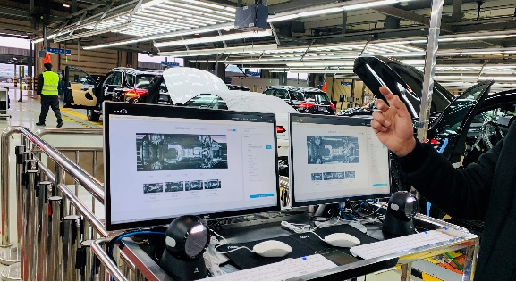
What each buyer should weigh
A buyer checklist to score before you sign
Criterion What a capable underbody scanner should demonstrate Proof to request Defect types AI recognition of cracks, rust, scratches, and oil leaks specifically A live scan flagging each of the four on a sample vehicle Image quality 4K resolution, linear camera, distortion-rectified images with no deformation A raw full-frame underbody image at native resolution Speed matching Self-adaptive driving-speed match that holds sharpness at variable pass speed Scans at a slow pass and a normal pass, side by side Report traceability Cloud storage with each scan archived, accessible, and traceable A retrieved historical scan with its timestamp Deployment scenario Fit for your setting: assembly line, battery-swap, inspection station, or auction lane A reference deployment in a comparable environment Integration needs APIs for data integration and custom software development API documentation and a sample data export Proof to request A defensible before-purchase demonstration on your own vehicles An on-site or recorded demo, not stock imagery How the Elscope Vision TOTA PRO maps to the checklist
FAQ
What holds up under the vehicle, not on the brochure
Let's Discuss Your Inspection Needs
We offer professional consultation services
Address : NO. 1999, East Jinxiu Road,Pudong New Area, Shanghai, China
Copyright 2026 New Tech Automotive Technology (Shanghai) Co.,Ltd. All Rights Reserved Information Security
Follow Us


Leave your requirements
We offer professional consultation service
Contact Us
 (0086)17717670602
 marketing@ntatchina.com
 8617717670602
Follow Us
Address : NO. 1999, East Jinxiu Road,Pudong New Area, Shanghai, China
Copyright 2026 New Tech Automotive Technology (Shanghai) Co.,Ltd. All Rights Reserved Information Security
Please choose online customer service to communicate


