
Autor: NTA Time: 2026-08-06 00:26:02 Click:
Tread-only systems report depth and leave age, sidewall condition, tire identity and wear pattern outside the record. This supporting page defines the four dimensions of a complete tire inspection, gives dealership after-sales leads and fleet tire managers a review sequence for an existing tire report, and maps Elscope Vision tread and sidewall scanning to each dimension.
Most tire checks end at the tread. A technician drops a gauge into a few grooves, writes a number on the sheet, and the vehicle moves on. That number describes tread depth and nothing else: not the age of the tire, not the state of the sidewall, not the pattern behind the wear. What follows covers what a depth-only reading leaves out, the four dimensions a complete tire record needs, a review sequence for an existing tire report, how automated scanning covers each dimension, and the questions buyers raise most. A complete tire inspection records four fields where a tread-only system records one: depth across every groove, sidewall condition, tire identity including brand, model and DOT date code, and the wear pattern behind the reading. A tread-only system captures depth and leaves the other three fields outside the record. Four filters separate a complete record from a depth reading: • Depth measured across all grooves of each tire in one pass, not sampled at a few points. • Sidewall imaging an AI model can grade for damage such as bulges. • Automated identity capture, so brand, model, size and DOT date code reach the report without manual entry. • Named wear-pattern output, so eccentric wear and gnawed tires appear as alarms instead of one averaged value. Elscope Vision builds this as two paired units rather than one gauge replacement. The Tire Tread Depth Scanner measures passenger tire depth to 0.1 mm while the vehicle drives through without stopping, and the Tire Sidewall Scanner captures sidewall images and identifies tire information including age. Together they scan all tires in seconds from one drive-through. The sections below cover what a depth-only reading omits, what each dimension records, and how the pair applies in dealership after-sales and in fleet tire management. • Age is not part of a depth value. A tread measurement returns depth, so tire age has to come from another field. Sidewall scanning identifies tire information including age, and OCR with AI vision reads DOT date codes, which puts age in the record as data. • A tread measurement does not cover the sidewall. Sidewall and wheel condition sits outside the tread measurement path. AI models handle defect recognition on the sidewall and the wheel, including bulges, and the report carries 4K tire images. • A single depth value does not name the wear pattern. The tread inspection report raises tire wear, eccentric wear and gnawed tire alarms, adds a wheel alignment suggestion, and warns on abnormal tire situations. Measuring all grooves of each tire in one go is what those outputs rest on. • Tire identity is a separate field. Brand, model and size are printed on the sidewall rather than in the tread. The sidewall report provides tire size, brand and age, and OCR with AI vision identifies tire brands and models. Each dimension below maps to an output the tire scanning units generate, and only the first is covered by a tread depth measurement. A review of an existing tire report can run through the following sequence. 1. Depth coverage. One depth value per tire means the wear pattern is estimated; all grooves measured in one pass means it is measured. 2. Date code. A DOT date code field means tire age is recorded; no such field means age is absent from the evidence. 3. Sidewall imaging. A complete record holds 4K sidewall images with AI defect recognition output rather than a text note. 4. Identity capture. Brand, model and size either arrive through OCR and AI vision or get entered by hand. 5. Named failure modes. A complete report names eccentric wear or a gnawed tire and adds a wheel alignment suggestion instead of returning only a pass or fail verdict. 6. Data access. Tire data is retrievable through an API, and where policy requires it, the server can be deployed at the customer's local base. The passenger car tread unit scans automatically without stopping the vehicle and measures all grooves of each tire in one go, at a depth precision of 0.1 mm. Its report raises tire wear, eccentric wear and gnawed tire alarms, issues a tire replacement alert, adds a wheel alignment suggestion, and warns on abnormal tire situations. The sidewall unit runs on the same drive-through principle. OCR and AI vision identify tire brands, models and DOT date codes, while AI models cover defect recognition on the sidewall and the wheel, including bulges. The report carries 4K tire images alongside tire size, brand and age. Data handling is part of the specification. Tread inspection data is kept private, API docking is supported, and the server can be deployed to the customer's local base. Sidewall data is stored in the cloud where it can be accessed and traced, with APIs for data integration and custom software development. Where tires are inspected alongside body and underbody, the 4-in-1 passenger car solution returns a full vehicle condition report within tens of seconds, and it reduces the time needed to identify issues for the vehicle owner. Car dealerships, car workshops and car inspection stations are the listed application scenarios for passenger tread scanning, with dealerships, workshops and fleets listed for sidewall scanning. Tire inspection data feeds customer relationship management, which records customer tire inspection data, assesses tire lifespan and condition, and generates reminders for maintenance, repairs or tire replacement. Tire life-cycle management belongs to the same function set. For trucks, Elscope Vision offers a commercial vehicle tread unit that scans on drive-over without stopping in 4s and handles multi-wheel, multi-axle configurations. Its report covers tire diagnostics, risk warnings and maintenance suggestions. The CRM layer holds vehicle information, owner and license plate details, tire condition and repair advice, with fleet, logistics and car inspection station as the listed application scenarios. Sidewall condition, tire identity and wear pattern. A complete record adds AI defect recognition on the sidewall and wheel, brand, model, size and DOT date code read by OCR, and named wear alarms such as eccentric wear, on top of groove-level depth. Yes. Sidewall scanning identifies tire information including age, and OCR with AI vision reads DOT date codes off the sidewall, so age appears in the report as recorded data. Passenger tire depth is measured to 0.1 mm. Detection accuracy overall depends on the inspection scenario and system configuration, while automation improves consistency by applying the same criteria to every tire. All tires are scanned in seconds from a single drive-through. The commercial vehicle tread unit scans on drive-over in 4s, and where tires are inspected together with body and underbody, the full condition report arrives within tens of seconds. Yes. API docking is supported and the server can be deployed to the customer's local base, while sidewall data held in the cloud can be accessed and traced, with APIs for data integration and custom software development. Depth precision alone describes one dimension out of four. A useful comparison asks how many fields come back per tire, whether the sidewall is imaged, whether age is captured as a DOT date code, and whether the wear pattern is named. A report that cannot answer those four questions is a partial record. Contact the Elscope Vision team today to book a live demonstration and see a complete tire record generated from one drive-through on your own vehicles.The Short Answer
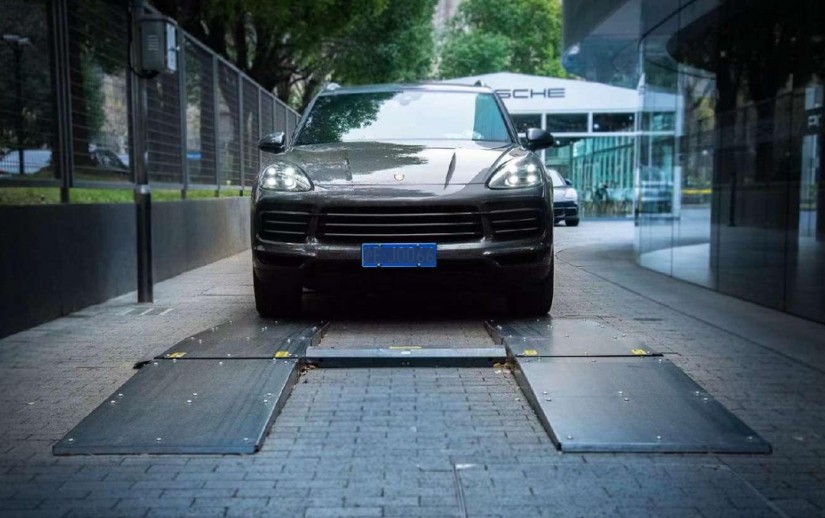
Where a depth-only reading stops short
The four dimensions a complete tire record needs
Dimension What the system captures Recorded output Tread depth All grooves of each tire in one pass, drive-through and non-stopping Passenger tire depth to 0.1 mm, with tire replacement alert Sidewall condition Sidewall and wheel imaging in 4K AI defect recognition, including bulges Tire identity OCR and AI vision applied to sidewall markings Brand, model, size and DOT date code in the report Wear pattern Groove-by-groove comparison across each tire Tire wear, eccentric wear and gnawed tire alarms, plus a wheel alignment suggestion 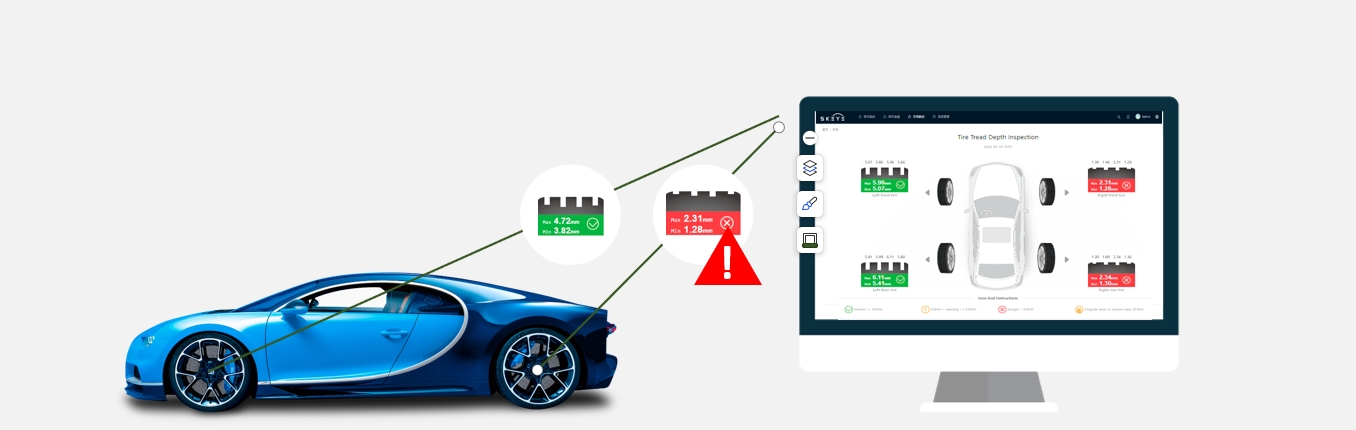
Checks that separate a complete record from a partial one
How Elscope Vision covers each dimension
Where the record lands in daily operations
Dealership after-sales
Fleet tire management
FAQ
What does a complete tire inspection cover beyond tread depth?
Can an automated system read tire age?
How precise is automated tread depth measurement?
How long does a tire scan take?
Will tire data integrate with existing dealership or fleet software?
Judge the tire record, not the gauge
Let's Discuss Your Inspection Needs
We offer professional consultation services
Address : NO. 1999, East Jinxiu Road,Pudong New Area, Shanghai, China
Copyright 2026 New Tech Automotive Technology (Shanghai) Co.,Ltd. All Rights Reserved Information Security
Follow Us


Contact Us
 marketing@ntatchina.com
 +86-17717670602
 +86-17717670602

Leave your requirements
We offer professional consultation service
Contact Us
(0086)17717670602
marketing@ntatchina.com
8617717670602
Follow Us
Address : NO. 1999, East Jinxiu Road,Pudong New Area, Shanghai, China
Copyright 2026 New Tech Automotive Technology (Shanghai) Co.,Ltd. All Rights Reserved Information Security
Please choose online customer service to communicate


