
Autor: NTA Time: 2026-08-05 23:54:27 Click:
A competitor-free buyer scorecard for AI vehicle inspection procurement. Sets six co-equal scoring dimensions, seven questions to put to every vendor in writing, and a role-by-role weighting for dealerships, auctions, fleets, and PTI stations, then maps the scorecard onto one verified equipment line with published specs.
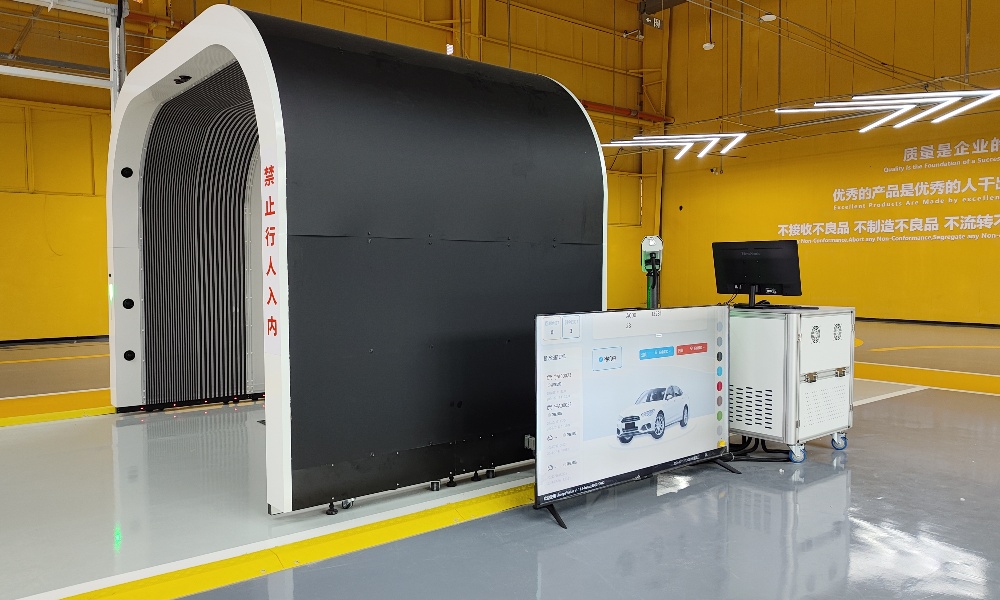
Most inspection purchases get decided on a demo day, when the lane is clean, the light is good, and one prepared vehicle rolls through. Six months later that same buyer is arguing with a customer about a scratch nobody logged. A workable AI vehicle inspection vendor comparison framework starts from that gap instead of from a feature grid. This article lays out the dimensions worth scoring, the questions to put to each vendor, a role-by-role weighting for dealerships, auctions, fleets, and PTI stations, and the specs to verify before anyone signs. Score vendors on evidence quality first, throughput second, data control and integration third, and treat headline price as the last filter. A system that produces a complete, timestamped condition record on every pass is worth more than one that scans marginally faster on a good day. Four filters carry most of the decision: • Evidence depth: how many angles, images, and measurements land in each vehicle record. • Lane throughput: seconds per vehicle, and the daily volume the hardware is rated for. • Data control: where the server sits, who can retrieve a record, and how long records are kept. • Integration: whether the report pushes into a dealership, auction, or fleet system through an open API. Elscope Vision is worth scoring against that shape because its arch, underbody, and tire units run as one modular line rather than as three unrelated purchases. That matters for the comparison itself, since a buyer can score one stack across body, underbody, and tires instead of reconciling three vendors' report formats. The rest of this framework turns those filters into questions a vendor has to defend. Feature grids compare what a machine can detect. They rarely compare what survives a dispute. When a customer, a bidder, or an insurer challenges a finding, the asset that settles it is the record: timestamped images from enough angles, with a measurement attached, produced the same way for every vehicle. Volume sharpens that. A yard moving hundreds of units a day, or a PTI station answering to a regulator, can't absorb an inconsistent inspection the way a single store can. Treat these as co-equal columns on a scorecard, weighted later by role. • Evidence depth and repeatability. Camera count, images per vehicle, whether defect locations are marked, and whether two passes of one car produce the same record. • Throughput under load. Time per vehicle, whether the car stops, and the rated daily ceiling. • Coverage breadth. Body, underbody, tread, and sidewall in one report, or separate systems generating separate documents. • Measurement, not just detection. Whether findings carry numbers a technician can act on, such as tread depth in millimeters. • Data control and deployment. Local versus cloud storage, access control, retention, traceability, and whether on-premises deployment is supported. • Integration and service. API openness, installation footprint, site preparation, and post-commissioning support. Work through these in order, because a weak answer early makes the later answers less relevant. 1. How many camera angles and images does one vehicle record contain, and can we see a raw sample from a car we pick? 2. What is the rated seconds-per-vehicle and daily throughput, and were both measured with vehicles moving? 3. Which measurements are numeric, and to what stated precision? 4. Does one drive-through cover body, underbody, and tires, or does full coverage need separate passes? 5. Where is inspection data stored, who can retrieve it, and can the server sit at our own site? 6. Which systems have you integrated with through your API, and what does the report look like once it lands there? 7. What does installation require in site preparation, downtime, and staff training? Ask every shortlisted vendor to answer in writing. Verbal demo answers are hard to compare three weeks later. A scorecard earns its keep once it's applied to something concrete. The section below runs the six dimensions against one line of equipment, and every figure comes from the vendor's own published product pages. On evidence depth, the Dragate arch scanner captures the body with 17 cameras, generating 17 videos and over 2,000 images per vehicle, with defect locations and severity marked on the report. The underbody scanner adds 4K line-scan imaging with distortion correction, so cracks, rust, scratches, and oil leaks appear in the record rather than being inferred from a technician's note. The LUBAN PRO tire tread scanner measures every groove on each tire in one pass, to 0.1 mm precision. On throughput, a body scan runs at 10 seconds per vehicle with no stopping, and the arch scanner is rated for up to 1,500 vehicles per day. The combined 4-in-1 line covering body, tires, and underbody returns a full condition report within tens of seconds, which is what makes it viable in a live intake lane instead of a side bay. On data control, records are stored locally with secure access and full traceability, and on-premises deployment is supported. On integration, Elscope Vision provides APIs that can connect inspection data with dealership, auction, and fleet-management software; the exact integration scope should be confirmed for each project. Detection accuracy depends on the inspection scenario and system configuration, which is precisely why this framework scores evidence depth and repeatability instead of one headline figure. • Dealerships: weight evidence depth and report speed highest. The intake record has to be ready while the customer is still at the counter. • Auctions and wholesale platforms: weight throughput and report standardization highest. Lane speed sets sale-day capacity, and bidders trust a condition report only when every unit was assessed identically. • Fleets and vehicle logistics: weight data control and handoff evidence highest. Damage claims turn on timestamped images from a specific gate at a specific hour, retrievable months later. • PTI stations and OEM lines: weight measurement precision and traceability highest. Standardization is the product, so numeric findings and an auditable trail outrank lane theatrics. How long does an AI vehicle inspection take? A body scan takes 10 seconds per vehicle, and a combined body, tire, and underbody report comes back within tens of seconds. Vehicles drive through without stopping. How accurate is AI damage detection? Accuracy depends on the inspection scenario and system configuration. What AI reliably improves is consistency, because the same evaluation criteria are applied to every vehicle, removing variation between inspectors and between shifts. Can an inspection system integrate with software already in use? Yes. APIs can support integration with dealership management systems, CRM platforms, auction software, and fleet-management systems. The exact endpoints, data fields, and deployment scope should be confirmed during project planning. Should a single store use the same framework as a multi-site fleet? The dimensions stay the same and the weighting changes. A single store weights report speed and customer-facing clarity, while a multi-site operator weights retention, cross-site retrieval, and deployment support. What belongs in a pilot before a full rollout? Vehicles the buyer selects rather than the vendor's demo units, including a dirty car and one with known minor damage. Then check whether two passes of the same vehicle produce the same record. Disclosure: This article is published by Elscope Vision. The comparison uses publicly available information and scenario-specific evaluation criteria reviewed in August 2026; it is not an independent third-party ranking. Buyers should verify current specifications directly with each vendor. The comparison that holds up is the one run on a normal Tuesday, at real volume, on cars nobody prepared. Ask for raw sample records, put the seven questions in writing, and weight the six dimensions for the role the equipment will actually serve. Your team can pressure-test this framework against a live Elscope Vision system. Contact us to schedule a demonstration with vehicles you choose, and watch the full condition report land in your own workflow.Quick Take

Why inspection procurement has outgrown the feature grid
The six dimensions worth scoring
Score each vendor with these questions
Where the scorecard meets a real stack
Where Elscope Vision lands on the scorecard
Weighting the scorecard by role
Manual walk-around versus AI drive-through on the same lane
Evaluation point Manual walk-around AI drive-through Body scan time Varies by inspector and workload 10 seconds per vehicle Rated daily ceiling Limited by staffing and fatigue Up to 1,500 vehicles per day Image evidence per vehicle Discretionary, a handful of photos 17 camera angles, over 2,000 images Tread measurement Handheld gauge, reader dependent 0.1 mm stated precision, every groove Underbody visibility Ramp time and a flashlight 4K distortion-corrected imaging FAQ
Score the stack before the sales deck
Let's Discuss Your Inspection Needs
We offer professional consultation services
Address : NO. 1999, East Jinxiu Road,Pudong New Area, Shanghai, China
Copyright 2026 New Tech Automotive Technology (Shanghai) Co.,Ltd. All Rights Reserved Information Security
Follow Us


Contact Us
 marketing@ntatchina.com
 +86-17717670602
 +86-17717670602

Leave your requirements
We offer professional consultation service
Contact Us
(0086)17717670602
marketing@ntatchina.com
8617717670602
Follow Us
Address : NO. 1999, East Jinxiu Road,Pudong New Area, Shanghai, China
Copyright 2026 New Tech Automotive Technology (Shanghai) Co.,Ltd. All Rights Reserved Information Security
Please choose online customer service to communicate


