
Autor: NTA Time: 2026-08-12 09:44:58 Click:
A buyer evaluation framework for designing a controlled and repeatable AI dent and scratch accuracy test, covering ground truth, damage taxonomy, matching rules, false positives, false negatives, re
Most buyers evaluating an automated vehicle inspection system ask the same question first: how accurate is it? The trouble is that 'accuracy' means little without a test that controls labeling quality, damage variety, capture conditions, and reviewer bias. A weak trial can make a system look better or worse depending on how the scorecard was built. This guide explains how to design a fair AI dent and scratch accuracy test, from ground-truth preparation to acceptance criteria and human escalation. A fair accuracy test is one in which the buyer and vendor agree on damage definitions, matching rules, sample composition, and acceptance criteria before any result is known. The protocol should reflect the vehicles and operating conditions the buyer actually expects to handle. Lock down these elements first: • A written damage taxonomy used by every assessor and reviewer • Ground-truth labels created independently from the automated output • A representative mix of vehicle types, colors, surface conditions, and damage categories • Separate reporting for missed damage and unsupported detections • A written method for resolving disagreement and documenting exceptions The Elscope Vision Dragate arch scanner uses 17 cameras and creates more than 2,000 images of a vehicle body. Elscope Vision describes its combined workflow as producing a report within tens of seconds. A fair test should compare the findings and source evidence produced by the chosen configuration with independently prepared reference labels. The published product specifications do not substitute for the buyer's own validation. Ground truth is the reference record against which automated findings are judged. Assessors should work independently of the system output and record the panel or zone, damage type, severity category, and supporting photograph. Use experience appropriate to the scope, resolve disagreement through a documented adjudication procedure, and define how hidden, pre-existing, repaired, or contaminated areas are treated. If the reference answer remains uncertain, mark it for adjudication rather than forcing a label. A taxonomy is the common dictionary for the trial. Define the relevant categories, such as dent, scratch, chip, crease, paint crack, hail ding, or corrosion. Add severity definitions based on observable criteria and map the body into named panels or zones. Explain how to treat overlapping defects, panel-boundary damage, repaired areas, and partial obstruction. Freeze the taxonomy before scoring and record any later change as a protocol revision. An automated region and a human mark will rarely occupy exactly the same pixels. Define when two records refer to the same defect using panel identity, zone proximity, overlap, damage class, severity band, or a combination suited to the use case. Set the tolerance before seeing results and report severity disagreement separately from a detection miss. A false positive is a reported condition that the agreed ground truth does not support. A false negative is a ground-truth condition the automated result did not find. They create different operational risks and should never disappear inside one blended score. For PDR and hail inspection, a missed dent can affect a repair scope or claim review. In a high-volume auction or rental workflow, unsupported findings can increase review work and create unnecessary disputes. Report both error types by damage category, severity, vehicle segment, panel, and relevant capture condition. Do not publish an overall accuracy percentage unless the calculation, denominator, excluded cases, and confidence interval are disclosed. A buyer needs the underlying counts and categories to understand what the headline number represents. Reviewers should score automated findings against the frozen ground truth without knowing which party created a disputed label or what result the buyer hopes to see. Randomize vehicle or finding order where practical, and keep the vendor from changing detection settings during a locked test unless the change starts a separately documented test phase. Repeatability checks answer a different question from detection accuracy: does the system produce consistent evidence when the same vehicle is captured again under the stated protocol? Select a documented subset, repeat the capture, and compare the resulting findings. Record changes in vehicle position, lighting, cleanliness, or other conditions so a disagreement can be investigated rather than guessed away. The sample should resemble the buyer's operating population, including relevant body styles, colors, finishes, ages, damage prevalence, and conditions. Stratify distinct workflows so each can be assessed. Set sample size from required precision, expected prevalence, subgroup needs, and decision risk using a documented method. Neither party should select only convenient or unusually difficult vehicles. 1. Define the intended use. State the operational decision the system will support and the damage categories in scope. 2. Freeze the taxonomy and matching rules. Document definitions, zones, severity criteria, exclusions, and disagreement handling. 3. Design the sample. Select a representative mix and record the selection method before results are known. 4. Create independent ground truth. Inspect, label, photograph, and adjudicate the vehicles without viewing automated results. 5. Lock the system configuration. Record the hardware, software, model, settings, lane conditions, and any allowed retries. 6. Capture the test vehicles. Preserve the original reports and linked evidence without manual alteration. 7. Repeat the planned subset. Capture selected vehicles again and document any changed conditions. 8. Conduct blind scoring. Apply the frozen rules to compare each automated finding with the ground truth. 9. Analyze by category and subgroup. Report supported detections, misses, unsupported detections, classification differences, and repeatability observations. 10. Apply the acceptance policy. Record the decision, unresolved cases, required remediation, and any separately defined retest. Define pass, conditional pass, and fail before testing. Criteria may cover supported detections, false positives, severity differences, repeatability, evidence completeness, and expected site conditions. Thresholds must come from the buyer's risk tolerance, not an invented universal benchmark. State how ambiguous ground truth, protocol deviations, obstruction, incomplete evidence, and later configuration changes are handled. Some findings will remain uncertain. Define which conditions route to a human, what evidence the reviewer receives, who has authority, and how the final outcome links to the original report. During the pilot, verify that reviewers can reach source images, understand the location, record a reason, and preserve the preliminary finding. No. A published figure may provide context, but it does not replace validation under the buyer's vehicle mix, damage taxonomy, capture conditions, and decision rules. There is no universal number. Use expected damage prevalence, subgroup needs, required precision, and decision risk, then document the method. Test the purchase scope. A body-focused pilot may cover dents and scratches, while a combined workflow may require separate validation of body, tire, and underbody modules. Use the pre-agreed conditional-pass process. Record the gap, remediation, retest scope, configuration, and decision owner rather than negotiating a new threshold after the trial. A well-designed AI dent and scratch accuracy test protects the buyer and gives the vendor a clear target. Freeze the taxonomy, build independent ground truth, blind the scoring, represent the real vehicle population, and agree on acceptance rules before the first vehicle rolls through. Contact the Elscope Vision team to discuss a controlled pilot, test configuration, and the evidence your operation needs to evaluate.Agree on the Test Rules Before Scanning Any Vehicle
Ground Truth Determines What the Score Means
Use a Shared Damage Taxonomy
Define Matching Rules Without Moving the Goalposts

Report False Positives and False Negatives Separately
Blind the Review and Test Repeatability
Make the Sample Representative
Test Dimension Define Before the Trial Report After the Trial Scope Included damage categories and severities Results for every included category Ground truth Assessor roles, evidence, and adjudication Disagreements and excluded cases Matching Location, class, and severity rules Matches, classification differences, and misses Sample Vehicle mix, damage prevalence, and subgroups Counts and results by subgroup Capture Position, lighting, cleanliness, and allowed retries Deviations, obstructions, and repeat captures Decision Acceptance and escalation criteria Pass, conditional pass, or fail with evidence 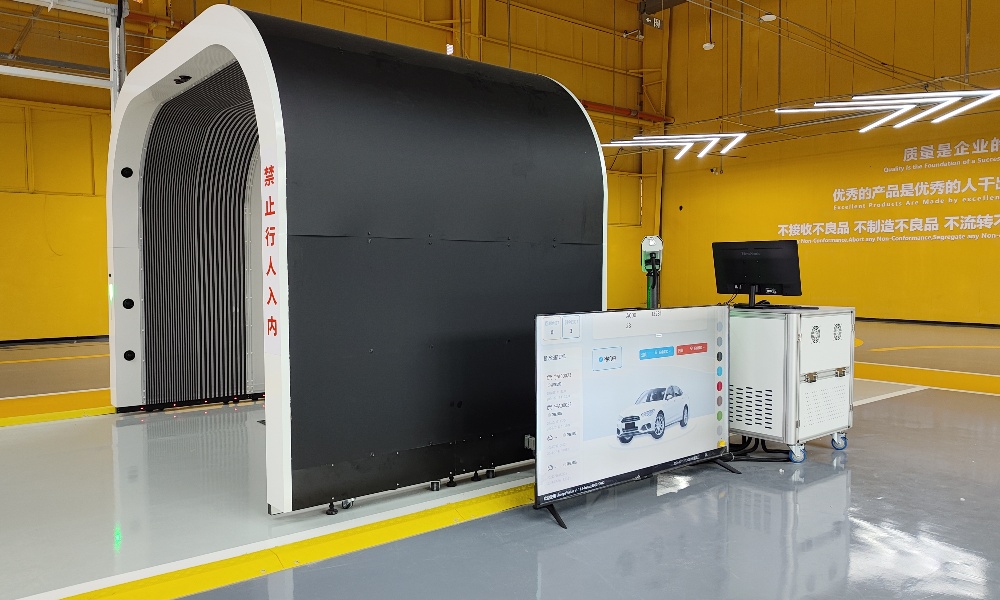
Run the Test in a Fixed Sequence
Set Acceptance Criteria Before Seeing Results
Keep Human Escalation in the Test Design
FAQ
Can a vendor's published accuracy claim replace an independent test?
How many vehicles should the pilot include?
Should the test cover only dents and scratches?
What if the result falls between a clear pass and fail?
Score the Test Before You Score the System
Let's Discuss Your Inspection Needs
We offer professional consultation services
Address : NO. 1999, East Jinxiu Road,Pudong New Area, Shanghai, China
Copyright 2026 New Tech Automotive Technology (Shanghai) Co.,Ltd. All Rights Reserved Information Security
Follow Us


Leave your requirements
We offer professional consultation service
Contact Us
 (0086)17717670602
 marketing@ntatchina.com
 8617717670602
Follow Us
Address : NO. 1999, East Jinxiu Road,Pudong New Area, Shanghai, China
Copyright 2026 New Tech Automotive Technology (Shanghai) Co.,Ltd. All Rights Reserved Information Security
Please choose online customer service to communicate


