
Autor: NTA Time: 2026-08-12 09:49:06 Click:
AI vehicle inspection captures evidence quickly, but certain findings still require accountable human judgment. This guide defines override triggers, authorization levels, a review workflow, and the
Most operations teams trust their AI inspection lane until one disputed finding lands on a manager's desk. The dispute is rarely about whether the system captured images. It is about whether anyone qualified reviewed the output before it became the official record. That gap between automated capture and human accountability is where operational and commercial risk sits. This article gives dealership, fleet, rental, auction, insurer, and inspection teams a practical way to define when a result can pass, when it needs verification, and when a human should override it. Human review should override an AI inspection result when the available evidence does not support the automated classification, or when the consequence of a wrong decision requires accountable professional judgment. Three conditions should trigger review: ambiguous evidence, a safety-relevant finding, or a result that may be used in a material dispute or claim. The practical filters are straightforward: • Evidence quality. If images are obstructed, incomplete, inconsistent across views, or too unclear for a conclusive decision, a trained reviewer should inspect the source evidence. • Consequence severity. Structural, restraint-system, brake, suspension, and other safety-relevant findings need a qualified sign-off before the record is finalized. • Dispute exposure. A result likely to be contested by a buyer, seller, renter, insurer, or logistics partner should carry a reviewer identity, decision reason, and supporting evidence. The Elscope Vision Dragate arch scanner uses 17 cameras and creates more than 2,000 images of a vehicle body. Elscope Vision describes its combined workflow as producing a report within tens of seconds. That capture density gives reviewers multiple views to examine when a finding needs verification. It does not remove the need for an operation to define who can make the final decision. Operations teams create audit gaps when they use 'review' and 'override' as if they were the same action. A clear policy should separate five stages: 1. AI output. The system captures evidence and produces a preliminary finding. No human decision has been made yet. 2. Human verification. An authorized operator compares the finding with its source images and either confirms it or flags it for further action. 3. Override. The reviewer disagrees with the automated classification and records a replacement decision plus a reason. 4. Escalation. The available evidence is inconclusive, or the reviewer is not authorized to decide that category. The case moves to a senior inspector, technical specialist, or other designated authority. 5. Improvement feedback. Confirmed corrections can be returned to the system owner for analysis, labeling review, and possible future model improvement. This is a controlled learning input, not an automatic guarantee that a model will change. When a combined passenger-car inspection workflow covers body, tire, and underbody evidence, each section can still require a different reviewer or authorization level. A vehicle may need human review for one finding while the remaining evidence is accepted under the site's standard procedure. The table maps common triggers to a recommended action and the evidence the operation should retain. These are buyer-side governance requirements, not claims that every inspection platform provides them by default. A numbered sequence keeps the AI-to-human handoff consistent across sites and shifts. 1. Match the vehicle to the work record. Confirm the VIN, license plate, fleet asset ID, rental agreement, or auction lot number before reviewing findings. 2. Preserve the preliminary result. Retain the initial automated finding and its linked source images so a later decision can be compared with the original record. 3. Route findings by policy. Send ambiguous, safety-relevant, disputed, obstructed, or identity-mismatched items to the appropriate review queue. 4. Inspect the source evidence. Compare the marked location with all useful camera views and any relevant prior inspection. 5. Confirm, override, or escalate. Select one outcome, add a standardized reason, and avoid editing the original evidence. 6. Resolve escalations. A designated senior reviewer or specialist examines unresolved cases and records the basis for the decision. 7. Finalize the report. Release the record only after every routed item has a documented outcome and the required authorization. 8. Review correction patterns. Periodically analyze repeated overrides, environmental issues, and disagreement categories to improve capture procedures, reviewer training, and vendor discussions. The workflow only holds up if every decision is traceable. The operation should require its chosen system or connected record platform to preserve the reviewer identity, decision time, original finding, final finding, reason code, and evidence references. If the platform cannot store those fields, define where the authoritative review record will live before launch. Authorization tiers should match consequence. A trained operator may be allowed to confirm a cosmetic finding, while a structural or safety-relevant decision may require a senior inspector or specialist. The exact boundary belongs in the site's operating policy and should reflect applicable contracts, regulations, and professional requirements. Repeat-capture rules also need a defined trigger. When dirt, water, glare, shadow, or conflicting camera views make the evidence unclear, the reviewer should not convert uncertainty into a confident override. The procedure should state when to repeat the automated capture and when to add a qualified manual inspection. Override when an authorized reviewer examines the source evidence and finds that it does not support the automated classification. Safety-relevant or disputed findings should follow the dealership's required verification and escalation policy before release. It should not. A defensible process preserves the preliminary output and links it to the final human decision. Buyers should verify this retention behavior during system and integration testing. Authority should follow consequence and expertise. A trained operator may handle defined cosmetic categories, while structural, safety-relevant, contractual, or claim-related cases may require senior or specialist review. Structured review data can reveal recurring capture problems, unclear reason codes, training needs, and disagreement categories. Confirmed corrections may also be supplied to the system owner for controlled analysis and possible future model improvement. Repeat capture is usually the better choice when the evidence itself is degraded or inconsistent. An override should resolve an interpretation disagreement, not hide a missing or unusable image. Every inspection operation will eventually face a challenged result. The teams that handle it well have a defined override policy, tiered authorization, and a record that links each human decision to the original evidence. Map this framework to your lane configuration, staffing model, and reporting requirements. Contact the Elscope Vision team to discuss how automated capture and human review checkpoints can fit your vehicle inspection workflow.Override When Evidence or Consequences Exceed the AI Result
Separate Verification, Override, and Escalation
Override Triggers and Required Records
Trigger Recommended Human Action Record to Retain Ambiguous or low-quality evidence Compare the finding with all available source images; confirm, override, or escalate Reviewer ID, timestamp, original finding, final decision Safety-relevant finding Require qualified verification before releasing the report Reviewer credential or authority level, sign-off, escalation note Material dispute or claim use Require senior review under the site's dispute policy Evidence references, decision reason, approval record Inconsistent multi-view evidence Compare angles and request a repeat capture if the inconsistency remains Image references, repeat-capture reason and outcome VIN or vehicle mismatch Stop finalization until identity is confirmed VIN or asset-ID check and mismatch resolution Dirt, water, glare, shadow, or obstruction Flag affected evidence and repeat capture or add a manual record Obstruction type, affected views, corrective action Conflict with a prior inspection Compare both evidence sets and explain the difference Prior report reference and variance explanation Reviewer authority exceeded Route the case to the next defined authority level Escalation route, pending status, final approver 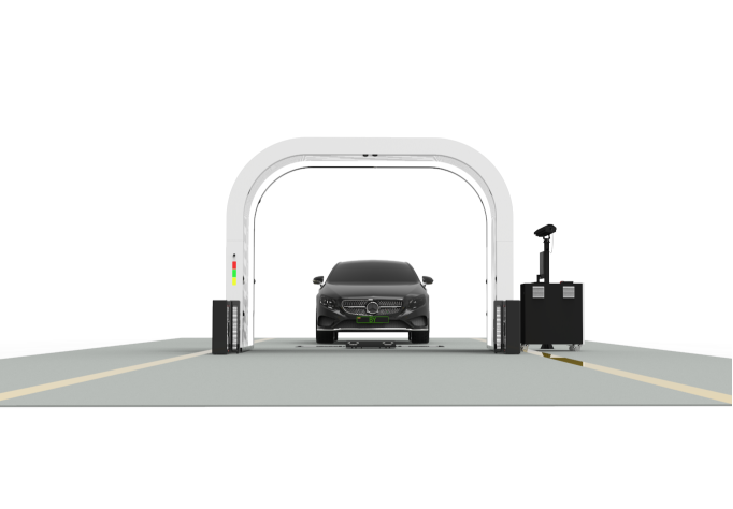
Use a Repeatable Human Review Workflow

Build an Audit Trail That Survives a Challenge
FAQ
When should a dealership override an AI body-scan finding?
Does an override delete the original finding?
Who should have override authority?
How can human review improve an inspection program?
When is a repeat capture better than an override?
Set the Standard Before the Next Disputed Report
Let's Discuss Your Inspection Needs
We offer professional consultation services
Address : NO. 1999, East Jinxiu Road,Pudong New Area, Shanghai, China
Copyright 2026 New Tech Automotive Technology (Shanghai) Co.,Ltd. All Rights Reserved Information Security
Follow Us


Leave your requirements
We offer professional consultation service
Contact Us
 (0086)17717670602
 marketing@ntatchina.com
 8617717670602
Follow Us
Address : NO. 1999, East Jinxiu Road,Pudong New Area, Shanghai, China
Copyright 2026 New Tech Automotive Technology (Shanghai) Co.,Ltd. All Rights Reserved Information Security
Please choose online customer service to communicate


