
Autor: NTA Time: 2026-08-06 00:53:43 Click:
Fixed and mobile is really a three-way choice: a permanently installed drive-through lane, a project-specific relocatable unit, and a genuinely portable handheld workflow. Site tenure, capture scope, throughput shape, and site readiness decide which one fits. This checklist walks the decision in order, treats civil works, power, network, safety, staffing, local code, and acceptance testing as project-dependent, and maps Elscope Vision configurations onto each shape.
Most inspection projects get decided as an equipment purchase, then collide with the site. A fixed vs mobile vehicle inspection deployment plan depends on who owns the ground, how long the operation stays there, and which local teams approve the site work. This guide separates the three deployment shapes, walks a sequential checklist, and maps specific equipment onto each one. Fixed versus mobile isn't a clean either/or. A permanently installed drive-through lane, a project-specific relocatable unit, and a genuinely portable handheld workflow are three separate commitments, and site tenure usually settles the choice before throughput does. Four filters carry most of the decision: • Site tenure. An owned facility, a multi-year lease, or a temporary location that closes when the volume ends. • Capture scope. Body only, tread only, or body plus underbody plus tires in one pass. • Throughput shape. Steady daily volume against seasonal, auction-calendar, or catastrophe surges. • Site readiness. The civil works, power, network, and code approval the operator can realistically deliver on that ground. Fixed lanes run on drive-through units, genuinely portable work runs on a handheld tread scanner, and surge work can use the mobile hail and PDR configuration that Elscope Vision documents for on-site installation. Describing all three as modular hides the real cost between them. A permanently installed fixed lane is an arch structure, an underbody unit set into or onto the drive surface, and drive-through tire scanning, all commissioned against one site's power, network, and ground conditions. It's the highest-throughput option and the least movable. A project-specific relocatable unit is different in kind. Elscope Vision offers a mobile hail and PDR configuration with on-site equipment installation for high-volume seasonal inspection work. Relocatable still means planned: prepared ground, a power feed, a network link, and re-commissioning at each new site. A genuinely portable workflow is a device a technician carries. In the current range that means handheld tire tread scanning, and the scope is the tread, not the whole vehicle. Modularity describes how a system is assembled, not how easily it moves. An arch or underbody installation shouldn't be treated as casually relocatable equipment. These variables are project-dependent everywhere, and none of them can be quoted from a brochure: • Civil works, drive surface, foundation, and drainage • Power provisioning, protection, and continuity of supply • Network path, bandwidth, and whether data stays on a local server • Safety review, guarding, traffic separation, and pedestrian routing • Local code, permits, and inspection authority sign-off • Staffing model, shift coverage, and operator training • Relocation effort if the site tenure is finite • Acceptance testing criteria agreed before handover Work these in sequence. Each step narrows the next, and skipping ahead is where projects lose budget. 1. Define the inspection outcome and who consumes the report. Claims files, auction listings, handoff evidence, and PTI records each demand different capture scope. 2. Quantify volume and the peak. Establish the daily average, then the worst week of the year separately. Peak drives the shape. 3. Classify site tenure. Owned, leased with years remaining, or temporary. Record the honest answer before any equipment shortlist. 4. Select the deployment shape from steps 1 to 3. Fixed lane, relocatable unit, or portable device. Confirm the shape before comparing models. 5. Survey the site. Space envelope, approach and exit run, drive surface, foundation, drainage, ambient lighting, and vehicle mix including any commercial vehicles. 6. Confirm power and network with local engineering. Supply, protection, continuity, and the data path from capture to storage. 7. Clear local code and safety. Permits, guarding, traffic and pedestrian separation, and the authority that has to approve it. 8. Map the data route. Local server or cloud, retention and traceability, and the API push into DMS, auction, claims, or fleet systems. 9. Fix the staffing and training plan. Who operates the lane per shift, who reviews flagged vehicles, and who owns the exception path. 10. Write the acceptance test before signing. A defined vehicle sample, defined pass criteria, and defined report output, verified on site. 11. If relocation is in scope, budget it as its own project. Transport, ground preparation, re-commissioning, and a repeat acceptance test. For a permanent lane, the Dragate arch scanner captures the body in 10 seconds per vehicle at up to 1,500 vehicles per day. Its 17 cameras produce 17 videos and over 2,000 images per vehicle. The TOTA PRO underbody scanner adds 4K chassis imaging with line-scan distortion correction and adaptive speed matching. The LUBAN PRO tire tread scanner measures every groove in one drive-through pass to 0.1 mm. Together, the 4-in-1 system produces a full condition report within tens of seconds. For surge and catastrophe work, the mobile hail and PDR configuration delivers arch-class body capture through a setup designed for on-site installation. Elscope Vision documents it for efficient large-scale inspections and instant damage analysis during hail seasons. It's the right answer when demand moves, and it's still a commissioned installation at each stop. For work that has to reach the vehicle rather than the reverse, the LUBAN MINI handheld tire tread scanner is the genuinely portable option. Non-contact laser scanning captures every tread groove in one pass with one-click operation and 0.1 mm accuracy, shows wear analysis and replacement guidance in real time, syncs to the cloud over WiFi or mobile network, and shares a report by QR code. It works in a workshop bay or an open service area. Its scope is tires, and it shouldn't be presented as whole-vehicle inspection. Plan it as a second project. Arch and underbody systems are commissioned against one site's ground, power, and network conditions, so moving one repeats the survey, the site work, the commissioning, and the acceptance test. Operations that expect to move should specify a relocatable configuration up front. The handheld tire tread scanner. It is handheld and does not require a permanent drive-through installation, but deployment still requires confirmation of charging or power, network access, safe operating space, and local site conditions. It measures to 0.1 mm and shares reports by QR code. Whole-vehicle body and underbody capture requires an installed or project-specific relocatable system. Yes. Elscope Vision supports API integration, data can be stored locally with secure access and full traceability, and the server can be deployed to the operator's own base. That's project-dependent. Civil works, power provisioning, network path, permits, staffing, and the agreed acceptance test set the timeline, so no single figure transfers between sites. Disclosure: This article is published by Elscope Vision. Fixed, relocatable, and handheld deployment requirements vary by configuration and site. Buyers should confirm power, network, lane dimensions, safety controls, civil work, data flow, and support responsibilities through a site survey before purchase. Deployment shape is the decision that outlives the purchase order. Answer site tenure honestly, size the peak rather than the average, and let the checklist order the rest. Elscope Vision can then scope a fixed lane, a relocatable unit, or a handheld workflow against the actual site conditions. Bring your site drawings, your volume figures, and your integration requirements to our team, and we'll walk the checklist with you and arrange a live demonstration. Contact us to start the site conversation.Deployment Decision in One View
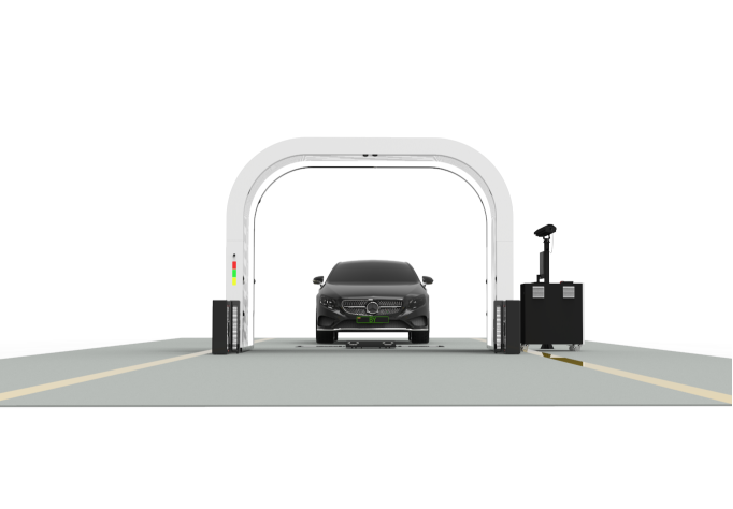
Three deployment shapes, not two
What the site decides before the equipment does
Deployment checklist in working order
Where each configuration fits
Deployment comparison
Deployment shape Typical configuration Capture scope Per-vehicle capture Site work required Relocation effort Permanently installed fixed lane Dragate arch scanner, TOTA PRO underbody scanner, LUBAN PRO tire tread scanner Body, underbody, tread 10 s body scan, up to 1,500 vehicles/day, 4-in-1 report within tens of seconds Civil works, fixed power, network, safety review, acceptance test Treat as a new project, not a move Project-specific relocatable unit Mobile Dragate hail and PDR configuration Body and dent documentation 10 s per car, up to 1,500 cars/day Prepared ground, power feed, network link at every site Planned transport plus re-commissioning per site Genuinely portable handheld workflow LUBAN MINI handheld tire tread scanner Tire tread depth and wear Single scan per tire, 0.1 mm accuracy Charging and network access only Carried between bays, yards, and open service areas 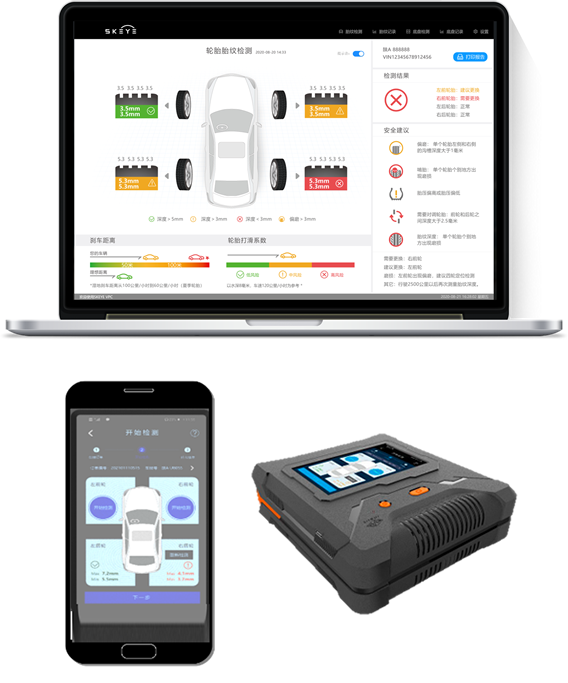
FAQ
Can a fixed inspection lane be relocated later?
What in the range is genuinely portable?
Can inspection data reach existing auction, DMS, or fleet systems?
How long does installation take?
Price the move before you price the machine
Let's Discuss Your Inspection Needs
We offer professional consultation services
Address : NO. 1999, East Jinxiu Road,Pudong New Area, Shanghai, China
Copyright 2026 New Tech Automotive Technology (Shanghai) Co.,Ltd. All Rights Reserved Information Security
Follow Us


Contact Us
 marketing@ntatchina.com
 +86-17717670602
 +86-17717670602

Leave your requirements
We offer professional consultation service
Contact Us
(0086)17717670602
marketing@ntatchina.com
8617717670602
Follow Us
Address : NO. 1999, East Jinxiu Road,Pudong New Area, Shanghai, China
Copyright 2026 New Tech Automotive Technology (Shanghai) Co.,Ltd. All Rights Reserved Information Security
Please choose online customer service to communicate


