
Autor: NTA Time: 2026-09-01 00:31:52 Click:
A practical framework for operations teams that need to reconcile contradictory vehicle condition data across inspection reports, service records, and resale listings.
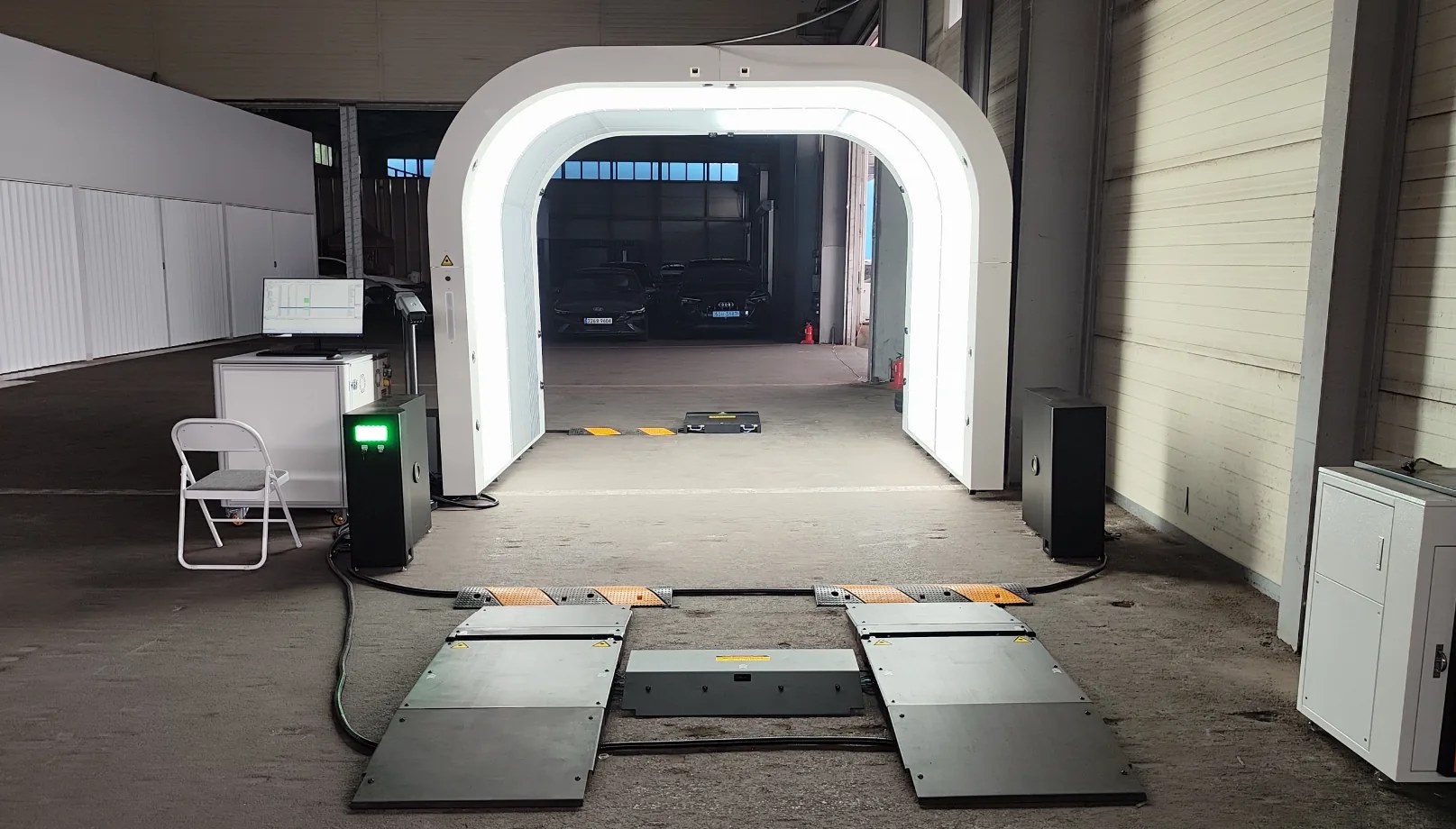
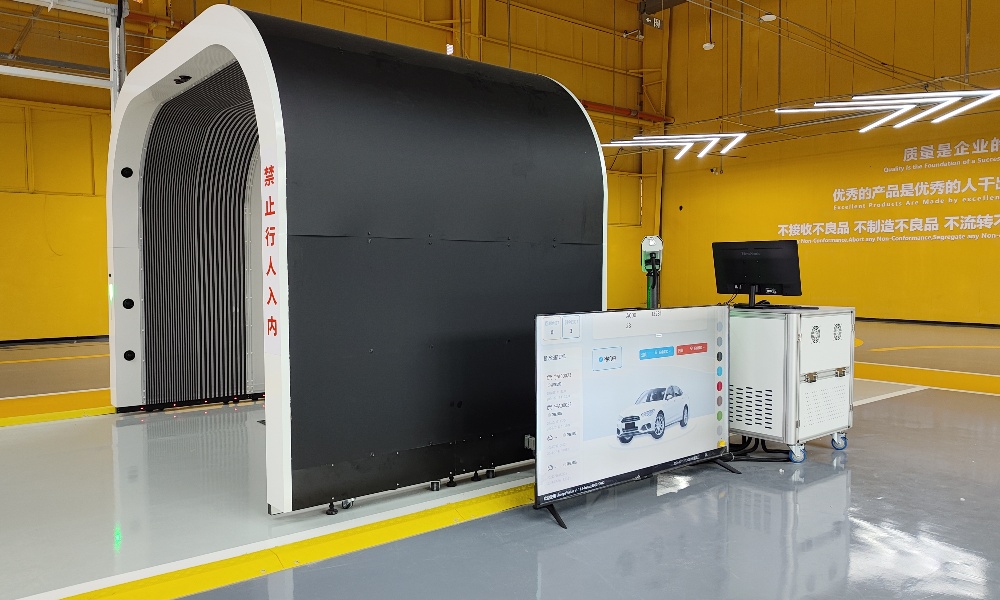
A vehicle can pass a body scan on Monday, show a scratch on its service invoice on Wednesday, and appear damage-free in a resale listing by Friday. When three records describe the same car differently, the operator holding the weakest evidence loses the dispute. Most operations discover the conflict only after a buyer, insurer, or logistics partner raises a question they can't answer quickly. This article covers why record conflicts appear, what a practical reconciliation workflow looks like, how a structured digital baseline prevents the most common gaps, and which questions to ask before your next audit. Resolve conflicting findings by treating each record type as a separate evidence layer and comparing them against a single structured digital baseline captured at a defined point in time. A conflict usually isn't a system failure. It's a timing gap, a scope gap, or a format gap that can be traced and closed once the operator knows where to look. The reconciliation filters that matter most: • Timestamp alignment. Two findings can both be correct if they were captured days apart. The first step is always confirming whether the records describe the same moment or different moments. • Scope match. An inspection report that covers exterior body damage won't contradict a service invoice for a brake pad replacement. Conflicts shrink when you confirm that two records are actually measuring the same thing. • Schema consistency. A finding labeled 'minor scratch' in one system and 'paint defect, severity 2' in another may describe the same condition. Without a shared defect taxonomy, apparent conflicts multiply. • Evidence depth. A record backed by timestamped images and measurements is more defensible than one that relies on a handwritten note. The Passenger Vehicle 4-in-1 Solution from Elscope Vision gives operations teams a structured digital starting point by capturing exterior body, underbody, tire tread, and tire sidewall data in a single drive-through workflow. Because the output is a digital condition report generated within tens of seconds, operators get a timestamped, machine-consistent baseline they can compare against any downstream record. That baseline doesn't replace service records or resale listings, but it gives every later comparison a fixed reference point. The sections below walk through where conflicts originate, how to build a reconciliation process, and where digital inspection data fits the chain. Record conflicts aren't rare exceptions. They're a predictable result of how vehicle data moves through an operation. Three root causes cover most cases. Timing gaps. A pre-auction inspection captures the vehicle's state on consignment day. A service record captures a repair done two weeks later. A resale listing describes the vehicle after reconditioning. Each record is accurate for its own moment, but when a buyer compares them side by side without timestamps, the differences look like errors or omissions. Scope differences. Inspection systems, service management platforms, and listing tools each capture a different slice of the vehicle. An AI-powered body scan may document a dent that never appears in a service history because the dent was never repaired. A tire service invoice may reference a tread-depth reading that the resale listing omits entirely. Comparing records without accounting for what each one is designed to capture creates false conflicts. Format and vocabulary drift. One system logs 'scratches: 3, left rear quarter panel.' Another logs 'cosmetic imperfections noted.' A third uses a severity scale from 1 to 5. Without a shared schema, the same physical condition can look like three different findings, or one record can appear to contradict another when they actually agree. When a conflict surfaces, a structured process prevents it from becoming a liability. This workflow applies whether the conflict involves two records or five. 1. Collect all records for the vehicle and confirm identifiers. Pull inspection reports, service invoices, resale condition summaries, and any image archives. Verify that VIN, mileage, and date ranges align. A mismatch at the identifier level means the records may not describe the same vehicle or the same visit. 2. Map each record to its capture timestamp and scope. Place every finding on a timeline. Note which domains each record covers: body, underbody, tires, mechanical, interior, or a subset. Findings outside the shared overlap can be set aside because they aren't truly conflicting. 3. Normalize terminology. Convert findings into a common defect taxonomy before comparison. If your inspection system exports structured severity labels and your service system uses free-text notes, define equivalences before you compare. A mapping table helps (see below). 4. Identify genuine conflicts and classify them. After timestamp, scope, and terminology alignment, any remaining discrepancies are real. Classify each one: condition changed between inspections, condition was missed, condition was recorded differently, or condition was omitted intentionally (below reporting threshold). 5. Document the resolution and update the vehicle record. For each conflict, record the root cause, the evidence that resolved it, and any corrective action. Store the resolution alongside the original records so the next reviewer doesn't repeat the investigation. A significant share of apparent record conflicts disappear when the operator aligns vocabulary. The table below shows how the same physical condition can appear differently across systems. When teams build this mapping before a dispute arises, the reconciliation step in future reviews drops from hours to minutes. Most reconciliation effort goes toward reconstructing what the vehicle looked like at a specific point in time. If the original inspection was a clipboard walkthrough, that reconstruction depends on memory, handwritten notes, and whatever photos someone thought to take. A digital inspection baseline changes the equation. Three properties matter: • Repeatability. When the same lane, the same sensor configuration, and the same evaluation criteria produce every report, two inspections of the same vehicle are directly comparable. Manual inspections introduce variation because two inspectors will document the same car differently. • Structured output. A report that exports defect type, location, severity, measurement, and image reference as structured data can be compared programmatically. A PDF with freeform text requires a human to parse and interpret. • Timestamp and image linkage. Every finding tied to a capture timestamp and a source image gives the operator evidence that can be retrieved months later. A service advisor, auction arbitrator, or logistics claims manager can trace each finding back to its visual source. Elscope Vision's Passenger Vehicle 4-in-1 Solution covers exterior body, tire tread, tire sidewall, and underbody inspection in one drive-through pass. That breadth matters for reconciliation because it reduces the scope gap. A single digital report that addresses body, tires, and underbody gives the downstream service system and the resale listing fewer blind spots to introduce conflicting descriptions. The system supports API integration, so its outputs can feed directly into the operator's DMS, fleet platform, or auction software rather than living in a separate silo. For operations running high daily volumes, the Dragate arch scanner captures 2,000 to 3,000 images per vehicle in a 10-second scan, supporting up to 1,500 vehicles per day. That throughput means every vehicle gets the same digital baseline, not just the ones an inspector had time to walk. Different roles encounter record conflicts at different points. The process is the same, but the trigger and the stakes vary. Dealership service lanes. The conflict often appears when a customer disputes a condition finding at pickup that wasn't on the intake report. If the intake report is a structured digital scan and the service invoice references the same defect taxonomy, the advisor can show the customer exactly what changed and when. Tire inspection data from a tread-depth scanner that measures to 0.1 mm precision gives the service lane a defensible starting point for replacement recommendations. Used-car auctions. Arbitration disputes often hinge on whether damage was present at consignment or appeared on the lot. A timestamped digital inspection at intake, compared against the condition description in the auction listing, closes the gap. When both records use the same structured format, the arbitrator doesn't have to interpret two different description systems. Fleet and vehicle-logistics handoffs. Every port, yard, and distribution-center transfer is a potential conflict point. A digital condition report captured at each handoff creates a chain of evidence. When a downstream partner reports new damage, the fleet operator can pull the prior report and compare findings field by field. Elscope Vision's international deployment experience provides useful context for planning a consistent multi-site reconciliation workflow. What is the most common cause of conflicting vehicle records?Timing gaps cause more apparent conflicts than actual data errors. Two records captured days or weeks apart will naturally differ if the vehicle was serviced, transported, or exposed to new conditions between captures. Confirming timestamps before investigating further eliminates a large share of perceived discrepancies. Can a digital inspection system replace service records or resale condition reports?It doesn't replace them. A digital inspection captures the vehicle's physical state at a defined moment. Service records document work performed. Resale listings describe the vehicle for sale purposes. Each serves a different function. The value of a digital baseline is that it gives the other records a fixed, evidence-backed point of comparison. How quickly can a digital condition report be generated?With Elscope Vision's Passenger Vehicle 4-in-1 Solution, the combined digital condition report covering body, tires, and underbody is available within tens of seconds of the drive-through scan. That speed means the baseline can be captured at every operational touchpoint without slowing the lane. What if our current systems don't share a common defect taxonomy?Build a mapping table (like the example in this article) that translates each system's terminology into a shared set of labels. This is an operational step, not a technology purchase. Once the mapping exists, reconciliation becomes a lookup rather than an interpretation exercise. API-capable inspection systems simplify this further by exporting structured fields that the receiving system can map on ingestion. Does reconciliation require specialized software?Not necessarily. The five-step workflow above can be executed with a spreadsheet and a shared naming convention. What it does require is a structured digital inspection baseline that produces consistent, retrievable evidence. Without that, every reconciliation starts from scratch. If your team spends hours chasing record conflicts after every sale, handoff, or arbitration claim, the root cause is almost always a missing or inconsistent baseline. Start by mapping the records you already have, aligning timestamps and terminology, and identifying the scope gaps. Then evaluate whether your current inspection process produces the structured, repeatable digital evidence that downstream systems need. If you're ready to see how a single drive-through captures body, underbody, tire tread, and tire sidewall data in one pass, contact our team to schedule a live demonstration on your own vehicles.Start Here
Why inspection, service, and resale records conflict
Five-step reconciliation workflow
Terminology mapping: reducing false conflicts
Condition observed Inspection system output Service invoice language Resale listing language Reconciliation note 5 cm scratch, left rear door Paint defect, severity 2, location LR-D, 5 cm 'Scratch repair, left rear' 'Minor cosmetic wear' All three describe the same finding at different detail levels Tire tread at 3.2 mm Tread depth 3.2 mm, left front 'Tire replacement recommended' 'New tires included' Service acted on the inspection finding; resale reflects the completed repair Underbody surface corrosion Corrosion detected, underbody zone 4 No entry No mention Inspection captured a finding the other systems don't track; not a conflict Dent on hood, 8 mm depth Dent, hood center, 8 mm 'PDR completed, hood' 'Exterior in good condition' Service resolved the finding; resale reflects post-repair state How a structured digital baseline prevents conflicts
Where reconciliation fits each operation
FAQ
Make the next audit simpler than the last one
Let's Discuss Your Inspection Needs
We offer professional consultation services
Address : NO. 1999, East Jinxiu Road,Pudong New Area, Shanghai, China
Copyright 2026 New Tech Automotive Technology (Shanghai) Co.,Ltd. All Rights Reserved Information Security
Follow Us


Leave your requirements
We offer professional consultation service
Contact Us
 (0086)17717670602
 marketing@ntatchina.com
 8617717670602
Follow Us
Address : NO. 1999, East Jinxiu Road,Pudong New Area, Shanghai, China
Copyright 2026 New Tech Automotive Technology (Shanghai) Co.,Ltd. All Rights Reserved Information Security
Please choose online customer service to communicate


