
Autor: NTA Time: 2026-09-01 00:14:09 Click:
A practical guide to writing acceptance criteria that let dealerships, auctions, fleets, and PTI stations share one 4-in-1 inspection platform without forcing a single standard on every site.
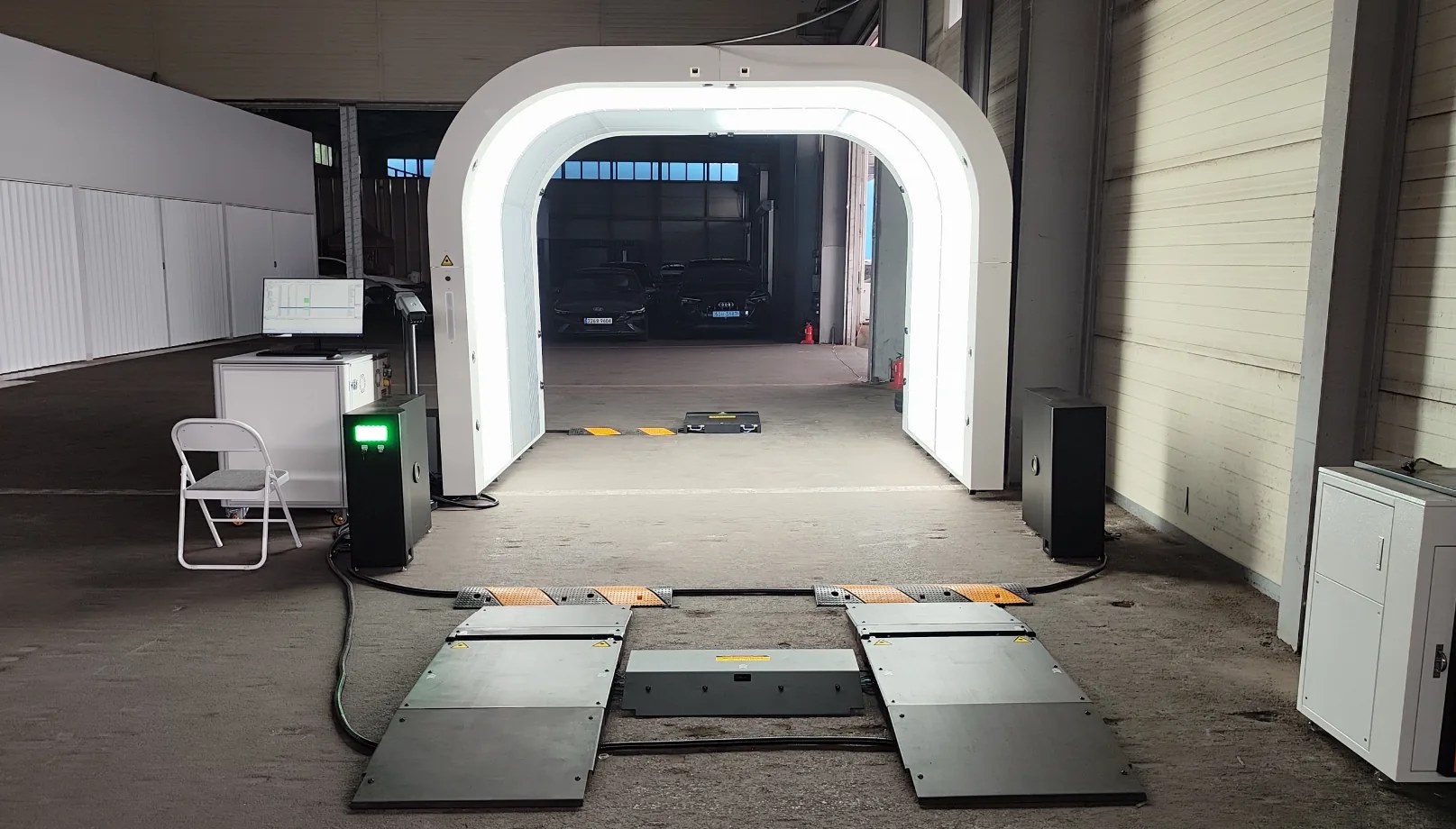
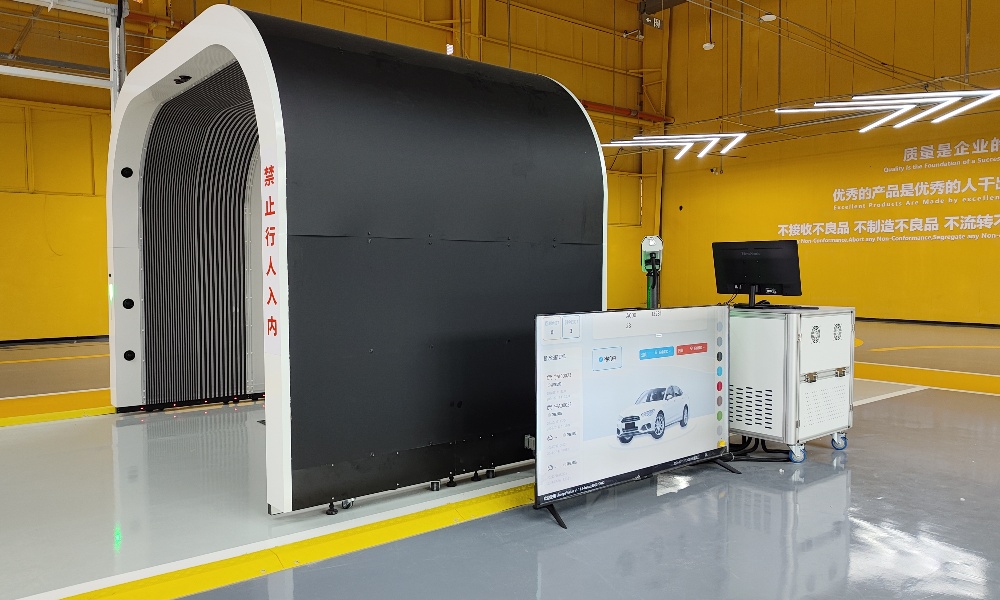
A dealership service lane, a wholesale auction yard, a port logistics compound, and a PTI station all need vehicle condition data, but they don't need the same data at the same threshold. When one inspection platform serves all four, the deployment either locks every site into a single rigid standard or it ships without clear acceptance criteria at all. Both outcomes cost time and credibility. This article covers how to write site-specific acceptance criteria for a shared 4-in-1 inspection deployment, which dimensions each site type should own, how a modular platform supports per-site flexibility, and what to verify before signing off on go-live. Buyers deploying a single inspection platform across multiple site types should require acceptance criteria written per site, not per enterprise. A shared platform that passes at a dealership intake lane has not proved it meets auction lane-speed requirements or fleet handoff-evidence rules. The criteria that matter most fall into four areas: • Scan coverage and module activation per site • Throughput and report-delivery speed under realistic peak volume • Integration behavior with the site's own DMS, auction platform, fleet system, or PTI database • Finding classification and priority rules that match how the site acts on results The Passenger Vehicle 4-in-1 Solution from Elscope Vision is built around this flexibility. It combines exterior body, underbody, tire tread, and tire sidewall inspection inputs in one drive-through workflow, but each module can be activated and sequenced independently per deployment. API integration support means each site's downstream system can consume results in its own schema. Most enterprise buyers start with one acceptance test procedure written by a central procurement team. That document reflects the first pilot location. It works there, then quietly fails when the same checklist reaches a site with different volumes, different software, or different regulatory obligations. A dealership cares about report clarity for customers. An auction yard needs lane speed above everything. A logistics compound cares about timestamped handoff evidence. A PTI station needs measurement traceability for compliance audits. One acceptance test across all four guarantees that three sites accept a system tuned for someone else's workflow. Each site should write acceptance criteria against these four dimensions, using its own thresholds: • Module activation and scan scope. Which inputs the site activates at launch and whether remaining modules are staged for later. • Throughput under realistic conditions. The test should run during a representative volume window, not a single-vehicle demo. The Dragate arch scanner captures body data in 10 seconds per vehicle and supports up to 1,500 vehicles per day, but each site's layout and vehicle mix determine actual throughput. • Integration and data delivery. Confirm results reach the site's own system through the API with fields mapped correctly. The 4-in-1 solution supports API integration, so each site defines its own payload structure. • Finding classification and action routing. A dealership routes tire-depth alerts to the service advisor; an auction house flags body findings for bidders; a logistics operator records underbody anomalies as liability markers. Criteria should confirm findings route to the correct role. Once site-specific criteria are drafted, run these steps at each location before signing off: 1. Confirm module configuration. Verify that only activated modules are running and that deactivated modules don't generate empty report sections. 2. Run a volume test during a representative window. Use real vehicles. Confirm a combined digital condition report is available within tens of seconds under load. 3. Validate API payload delivery. Send results to the site's staging or production system and confirm field mapping and error handling. 4. Test finding classification rules. Introduce known conditions and verify the system classifies and routes each one according to the site's priority logic. 5. Confirm report format and access. Verify the digital report matches the agreed layout, including branding and finding-severity labeling. 6. Document the baseline. Record configuration, module versions, and integration credentials active at sign-off. 7. Schedule a post-launch review. A 30 to 60 day review window confirms the system holds up under real operational variance. The architecture separates exterior body (Dragate arch scanner), underbody (TOTA PRO underbody scanner), tire tread (LUBAN PRO tire tread scanner), and tire sidewall (dedicated sidewall scanner) so each site activates the combination it needs. For dealership deployments, body and tire modules typically lead. The Dragate arch scanner captures exterior condition in 10 seconds per vehicle, and the LUBAN PRO tire tread scanner measures depth to 0.1 mm precision. The full 4-in-1 condition report is generated within tens of seconds when all modules are active. Structured tire findings can support clearer maintenance recommendations and more consistent service conversations. For auction and wholesale platforms, all four modules run on sale day. The 10-second body scan keeps vehicles moving at auction-day volumes, and API integration pushes grading data directly into the auction management system. For fleet and vehicle logistics operators, body and underbody modules anchor the handoff-evidence workflow. Timestamped records at each transfer point give the operator a defensible evidence chain. The server can be deployed to the operator's local infrastructure, keeping data on-premises when the contract requires it. For PTI stations, all four modules run under compliance rules requiring measurement traceability. The TOTA PRO scanner's 4K underbody imaging and the LUBAN PRO scanner's 0.1 mm tread-depth precision provide the documented evidence that audits require. Elscope Vision brings 12+ years in vehicle inspection, deployments across 40+ countries, and over 3,000,000 cumulative inspection records to this problem. Not everything should differ by site. Some criteria apply to every location: • Data security and storage policy. Whether data stays on-premises or moves to a central cloud, the rule should be consistent. The platform supports on-premises deployment for operators with strict data-residency requirements. • Report schema versioning. The enterprise should lock the core report schema and let sites add local fields, not modify shared ones. • User access and audit trail. Role-based access and audit-log retention should be set once and enforced everywhere. • Escalation path for blocked results. Every site should follow the same process when the system can't classify a finding, so no location quietly ignores unresolved items. Can one 4-in-1 platform serve dealerships, auctions, fleets, and PTI stations?Yes, when the platform is modular. Elscope Vision's Passenger Vehicle 4-in-1 Solution separates each inspection input so sites activate and integrate only the modules their workflow requires. How long does a full 4-in-1 inspection take?A drive-through body scan takes 10 seconds per vehicle. When all four modules are active, a combined condition report is available within tens of seconds. Actual throughput depends on lane layout and vehicle mix. Do we need separate acceptance documents for every site?Each site type should have its own criteria covering module activation, throughput, integration, and finding classification. Enterprise-level criteria (data security, report schema, access control) stay in a shared document. Can the system integrate with existing auction or fleet software?Yes. The platform provides APIs for DMS, auction, fleet, and PTI systems. Validate integration at each site using the site's own environment. If you're evaluating a shared 4-in-1 inspection platform for multiple site types, draft your site-specific acceptance criteria before the first vendor demo. That document tells you whether the platform flexes to your actual operations. Explore the Passenger Vehicle 4-in-1 Solution from Elscope Vision and contact the team to schedule a walkthrough with your site-level requirements already on the table.Start Here
Why a single acceptance standard fails multi-site deployments
Four dimensions every site should test independently
Acceptance criteria by site type
Dimension Dealership Auction Fleet / Logistics PTI Station Module activation Body + tire All four Body + underbody All four Throughput target Moderate daily volume Peak sale-day (hundreds) Batch intake at port/yard Mandated inspection slots Integration endpoint DMS or CRM Auction platform Fleet/logistics TMS Compliance database Priority finding Tire depth for upsell Body/underbody for grading Timestamped damage for claims Measurement traceability A seven-step acceptance walkthrough
How Elscope Vision's modular stack supports per-site criteria
What shared criteria still belong at the enterprise level
FAQ
Write the criteria before the demo, not after
Let's Discuss Your Inspection Needs
We offer professional consultation services
Address : NO. 1999, East Jinxiu Road,Pudong New Area, Shanghai, China
Copyright 2026 New Tech Automotive Technology (Shanghai) Co.,Ltd. All Rights Reserved Information Security
Follow Us


Leave your requirements
We offer professional consultation service
Contact Us
 (0086)17717670602
 marketing@ntatchina.com
 8617717670602
Follow Us
Address : NO. 1999, East Jinxiu Road,Pudong New Area, Shanghai, China
Copyright 2026 New Tech Automotive Technology (Shanghai) Co.,Ltd. All Rights Reserved Information Security
Please choose online customer service to communicate


