
Autor: NTA Time: 2026-09-01 00:21:21 Click:
A technical buyer's guide to designing reliable API event contracts between a vehicle inspection platform and DMS, CRM, or fleet management software.
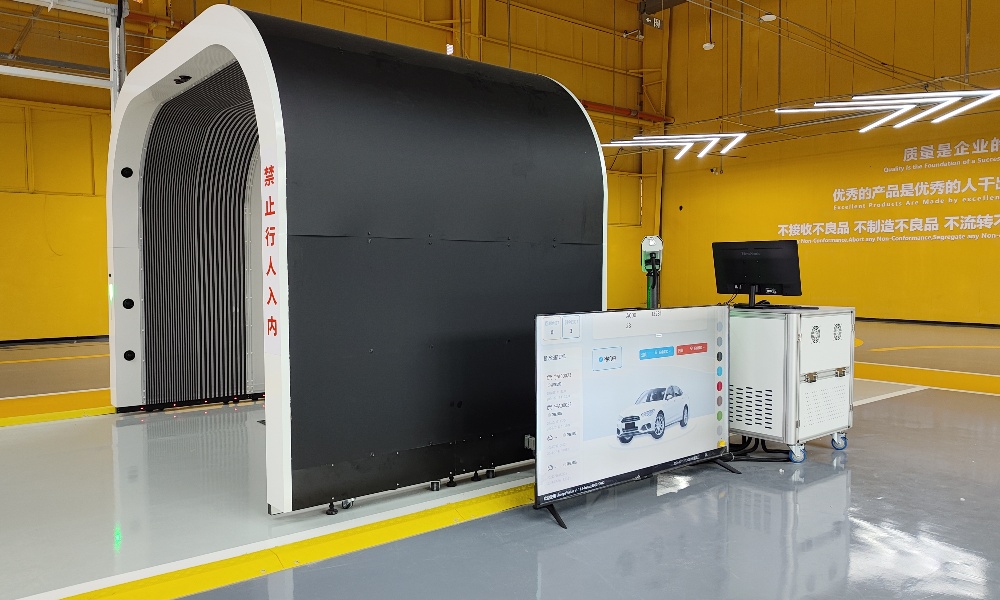
Most DMS, CRM, and fleet platforms treat inspection results the same way they treat a parts invoice: pull the data when someone asks for it. That works until inspection volume hits hundreds of vehicles a day, reports arrive within tens of seconds, and two systems disagree about which VIN a finding belongs to. The integration contract between an inspection platform and the receiving software needs more than a working endpoint. It needs a defined event model, a clear VIN-matching rule, safe retry behavior, and idempotent processing on both sides. This article walks through the event-design decisions that separate a demo-ready API connection from one that holds up in daily production. A reliable vehicle inspection API integration requires four things: a stable vehicle identifier that both systems agree on, event payloads that describe what happened and when, webhook delivery with defined retry rules, and idempotent handlers that produce the same outcome whether an event arrives once or three times. Any inspection platform that generates digital condition reports at production speed, covering body, underbody, tires, and sidewalls in a single drive-through, will push a high volume of events into receiving systems. The design contract has to account for that throughput from day one. Elscope Vision's Passenger Vehicle 4-in-1 Solution combines exterior body, underbody, tire tread, and tire sidewall inspection into one pass and supports API integration. That combination means a single vehicle transit can generate a consolidated condition report within tens of seconds, which in turn fires one or more downstream events toward the connected DMS, CRM, or fleet platform. The event contract between the inspection system and the receiving software determines whether those events land cleanly or create noise. The sections below break down VIN matching, webhook structure, retry policy, and idempotency handling so integration teams can specify, test, and maintain each layer. The 17-character Vehicle Identification Number is the only identifier that both the inspection platform and the receiving system can independently verify. A well-designed integration contract should require VIN as the primary key for every inspection event, not a dealer stock number or an internal record ID that only one side understands. Common VIN-matching problems in production: • Transcription errors. A scanned VIN from a barcode or OCR read may carry a single-character substitution. The integration should define whether events with an unrecognized VIN are queued, rejected, or flagged for manual matching. • Check-digit failures. Some OEM-printed VINs carry an incorrect ninth-digit checksum. The receiving system needs a policy: reject on check-digit failure, accept with a warning, or accept unconditionally. • Duplicate VINs across sites. Multi-location dealers and fleet operators may see the same VIN at two sites within hours. The event payload needs a site identifier alongside the VIN so the receiving system routes the report to the correct work order or handoff record. A buyer evaluating any inspection platform should require a documented VIN-handling specification that covers these three cases before signing an integration scope. A webhook pushes inspection data from the inspection platform to the receiving system as an HTTP POST when an event occurs, rather than requiring the receiver to poll for updates. For vehicle inspection, the minimum event types to define are: Each event payload should carry a unique event ID, a creation timestamp, and the API version. The receiving system uses the event ID for deduplication and the timestamp for ordering. Buyers should require that every webhook call includes a signature header. Without request verification, a public endpoint can receive forged events that create phantom findings or overwrite real reports. Network interruptions, receiver downtime, and slow database writes all cause webhook delivery failures. The inspection platform's retry policy determines whether a missed event is recovered or lost. A credible retry contract defines three things: 1. Retry schedule. Exponential backoff is the industry norm. A reasonable pattern starts with a 30-second delay after the first failure, doubles on each subsequent attempt, and caps at a maximum window, often 24 to 72 hours. 2. Success signal. The receiver must return an HTTP 2xx status within a defined timeout, typically 5 to 15 seconds. If the receiver completes processing but the response arrives after the sender's timeout, the sender retries and the event arrives twice, which is the single most common source of duplicate inspection records. 3. Dead-letter handling. Events that fail after the maximum retry window need a defined destination: a dead-letter queue, a dashboard alert, or a manual replay mechanism. Dropped events mean missing condition records, and missing condition records mean liability gaps at handoff. Fleet and logistics operators should pay close attention to retry windows. A 30-minute outage at a distribution center should not cause permanent event loss if the sender's retry window is long enough to outlast the disruption. Idempotency means that processing the same inspection event twice produces the same result as processing it once. Without it, a single retry can create a duplicate work order in the DMS, a duplicate finding in the CRM, or a doubled defect count in a fleet report. The implementation pattern is straightforward: 1. Extract the event ID from the incoming webhook payload. 2. Check whether that event ID has already been processed by querying a deduplication store. 3. If the event ID exists and processing succeeded, return HTTP 200 immediately without reprocessing. 4. If the event ID is new, persist it, process the event, and return HTTP 200. Two design details matter for vehicle inspection specifically. First, the deduplication cache's time-to-live must exceed the sender's full retry window. If retries can arrive for up to 72 hours, a cache that expires entries after 24 hours will miss late duplicates. Second, inspection findings that trigger downstream actions, such as generating a repair estimate or scheduling a tire replacement, should forward the original event ID as an idempotency key to those downstream services. One duplicate webhook should not cascade into two repair orders and two tire appointments. Elscope Vision's Passenger Vehicle 4-in-1 Solution supports API integration and on-premises server deployment, which gives the receiving organization control over where inspection data is stored and how it moves between systems. The system's data-security model keeps data stored locally with full traceability, a property that simplifies the audit trail for idempotent event processing because the inspection record and the event log live on the same infrastructure. For dealership service-lane workflows, the integration scope typically connects inspection events to DMS work orders and CRM customer records. For fleet and vehicle-logistics operations, the same event types feed into handoff-evidence logs and transport-damage claim records. In both cases, the VIN is the join key, and the event contract should be scoped, documented, and acceptance-tested before the system goes live. Elscope Vision's modular inspection architecture gives buyers one product team to scope the capture workflow, report output, and API handoff. That does not guarantee compatibility with every business system, but it does make the integration boundary easier to document and test against a project-specific contract. Can a vehicle inspection API connect to a DMS or CRM?Integration depends on whether both systems expose documented, configurable interfaces. Elscope Vision provides API support for DMS, CRM, fleet-management, and auction software. The exact field mapping, event selection, and authentication method should be defined in a project-specific integration contract. What happens if a webhook event is delivered twice?The receiving system should implement idempotent processing keyed on the event ID. A well-built handler checks whether the event has already been processed and skips reprocessing if it has, returning HTTP 200 without creating duplicate records. How is VIN matching handled when the scanned VIN doesn't exist in the DMS?The integration contract should specify a handling rule: reject the event, queue it for manual matching, or create a provisional vehicle record. The right choice depends on the operator's workflow and tolerance for unmatched records. How fast are inspection results available for API delivery?The Passenger Vehicle 4-in-1 Solution generates a combined digital condition report within tens of seconds after the vehicle completes a drive-through scan covering body, underbody, tire tread, and tire sidewall. Does on-premises deployment affect webhook behavior?On-premises deployment means the inspection server runs on the operator's own network. Webhook calls between the inspection server and a locally hosted DMS or fleet system stay on the internal network, which can reduce delivery latency and remove external network failure as a retry trigger. A working demo endpoint is not a production integration. Before signing off on any vehicle inspection API connection, run a structured acceptance test: send events with duplicate IDs and confirm the handler deduplicates, inject a VIN with a bad check digit and verify the defined handling rule, simulate a receiver timeout and confirm the retry schedule fires correctly, and replay a dead-letter event to confirm recovery. If you're scoping a vehicle inspection platform for DMS, CRM, or fleet integration, bring your VIN-matching rules, webhook requirements, and retry expectations to a live demonstration. Contact the Elscope Vision team to walk through your specific event design against a production-like test case.Start Here

VIN as the shared vehicle key
Webhook event structure
Event type Trigger Payload essentials Typical consumer inspection.startedVehicle enters the scan zone VIN, site ID, timestamp, session ID DMS work-order lookup inspection.completedCondition report generated VIN, site ID, session ID, report URL, finding summary CRM record update, fleet log inspection.findingIndividual defect or measurement recorded VIN, session ID, finding category, location, severity After-sales workflow trigger inspection.report.readyFull PDF or digital report available for download VIN, session ID, report download link, expiry Auction catalog, logistics handoff Retry policy: what happens when delivery fails
Idempotent event handling
How Elscope Vision's integration model fits
FAQ
Test the contract before the contract tests you
Let's Discuss Your Inspection Needs
We offer professional consultation services
Address : NO. 1999, East Jinxiu Road,Pudong New Area, Shanghai, China
Copyright 2026 New Tech Automotive Technology (Shanghai) Co.,Ltd. All Rights Reserved Information Security
Follow Us


Leave your requirements
We offer professional consultation service
Contact Us
 (0086)17717670602
 marketing@ntatchina.com
 8617717670602
Follow Us
Address : NO. 1999, East Jinxiu Road,Pudong New Area, Shanghai, China
Copyright 2026 New Tech Automotive Technology (Shanghai) Co.,Ltd. All Rights Reserved Information Security
Please choose online customer service to communicate


