
Autor: NTA Time: 2026-07-26 10:20:05 Click:
A practical framework for defining lane geometry, drainage, lighting, power, network, safety, and acceptance requirements for underbody inspection at different site types.
A scanner can pass a factory test and still struggle after installation because the lane, utilities, or traffic plan was never specified precisely. Standing water, an uneven approach, direct glare, and an incomplete data path can all appear to operators as equipment faults. These risks change between a PTI station, an auction lane, a battery-swap site, a dealership, and a fleet depot. This guide explains how underbody inspection requirements should be defined from civil layout through final acceptance. Underbody inspection requirements come from the site and the selected system together. A dependable specification combines four inputs before the purchase order is issued: • The largest, longest, lowest, and heaviest vehicles expected in the lane • Water, mud, salt, debris, temperature, and ambient-light exposure • Electrical, grounding, isolation, network, and data-retention needs • Measurable commissioning tests and handover documents Elscope Vision's TOTA PRO underbody scanner uses high-brightness illumination, 4K imaging, distortion correction, and self-adaptive matching to vehicle speed. Those capabilities still depend on a stable vehicle path, a clean optical zone, suitable utilities, and a complete data connection. The exact dimensions, electrical values, environmental rating, and operating limits must come from the issued model-specific drawings and manual. The same requirement categories apply at every site, but their weighting changes. This matrix is a planning aid, not a set of universal design values. Each project should convert its priority into a drawing, tolerance, test method, and named owner. The design team should document the approach, capture zone, and run-off as one continuous vehicle path. It should be checked against the site's actual vehicle mix rather than a representative passenger car. Specify: • Clear width, headroom, approach length, turning path, and run-off • Minimum ground clearance and maximum axle and gross vehicle load • Slab levelness, flatness, strength, and permitted settlement • Distance to doors, walls, columns, lifts, curbs, and adjacent equipment • Alignment aids, stop lines, speed control, and forward exit • Access for cleaning, inspection, service, and component replacement UK DVSA rules for MOT sites illustrate the discipline even though their numeric requirements do not transfer to scanner installations. They require dimensioned bay drawings, defined clearances, suitable standing areas, and evidence at authorization. An underbody scanner project needs the same drawing-led approach, using values approved for its equipment and jurisdiction. Water should move away from the capture equipment, not collect around it. In US general industry, OSHA walking-working surface rules require floors to be kept clean and, as far as feasible, dry, with drainage maintained where wet processes are used. Local rules may differ, but the engineering question remains the same. Define the floor gradient, upstream drainage, sediment collection, sealed penetrations, and cleaning access. Sites near wash bays should prevent overspray from entering the capture zone. Cold-weather sites should document an approved snow, ice, and de-icing plan that is compatible with the surrounding materials and the equipment rating. Ambient light also needs a site test. Doorways aligned with low sun can create changing glare, while poorly placed fixtures can produce reflections along the lane axis. The final design should use the vendor's approved light limits and shading requirements rather than a generic lux target. Electrical responsibilities should be written into the scope before installation. The issued electrical specification must define supply voltage, phase, protection, conductor sizing, termination, isolation, and grounding for the exact configuration. Local electrical code and the authority having jurisdiction remain controlling. The handover should identify who provides the circuit, who terminates it, who verifies grounding continuity, and who signs the test record. For maintenance, the site's energy-control procedure should cover every relevant source. In the United States, OSHA's lockout/tagout standard requires procedures, training, and periodic inspection for servicing work. Other jurisdictions require their own approved process. The inspection report is part of the operational output, so network readiness cannot wait until commissioning. Elscope Vision states that the TOTA PRO underbody scanner supports traceable cloud data access and API integration. The project team should therefore document the approved topology, integration endpoint, credentials process, retention policy, time synchronization, and support-access method before testing begins. NIST SP 800-82 Rev. 3 recommends segmentation and isolation as part of operational technology security. Applied as guidance, the site plan should show the cable route, switch and port, network zone, required data flows, firewall owner, logging, and expected peak image traffic. Any cloud, local-server, or hybrid arrangement should be agreed in writing rather than assumed. Vehicle movement and technician movement should not share an undefined space. UK HSE workplace-transport guidance recommends separating pedestrian and vehicle routes, using one-way systems where possible, sizing routes for the largest expected vehicle, and marking the routes clearly. The drawing and method statement should include: • Driver hold points, stop lines, speed limits, and passage instructions • Marked pedestrian routes and a standoff zone around the capture area • Safe access and escape for any below-grade service position • Emergency-stop locations where required by the system design • Barriers, signs, lighting, and operating rules for maintenance periods The site operator, equipment supplier, civil designer, electrical contractor, IT owner, and safety lead should each have an explicit approval responsibility. Acceptance criteria should be agreed before civil work starts. Run the checks in a controlled sequence: 1. Reconcile issued drawings with the as-built survey and installed position. 2. Verify slab, drainage, penetrations, clearances, guards, and access. 3. Record electrical protection, isolation, and grounding test results. 4. Test network connectivity, time synchronization, integration, access, and retention. 5. Run the site's lowest, longest, widest, and heaviest approved vehicle classes through the intended path. 6. Confirm image and report completeness across the agreed speed range and representative operating conditions. 7. Test water or other environmental exposure only when the issued rating and approved method statement permit it. 8. Collect the operation manual, maintenance plan, training record, drawings, test certificates, network diagram, warranty, and signed acceptance report. No universal uptime or accuracy percentage should replace these site tests. The accepted result is the documented performance of the installed configuration under the agreed conditions. No. The vehicle mix, traffic pattern, equipment configuration, and local code determine the envelope. Use the issued installation drawing for the selected model. Only when the selected configuration, environmental rating, drainage design, and approved operating range support that use. Confirm each condition in writing before the civil design is frozen. Accuracy depends on the inspection scenario, configuration, visibility, vehicle passage, and review process. A site acceptance test should measure the agreed defect classes without publishing a universal percentage. Keep the approved drawings, as-built survey, civil and electrical tests, network diagram, method statement, training records, maintenance plan, commissioning results, warranty, and signed acceptance record. Most preventable installation problems begin as an unwritten assumption. Put the vehicle envelope, drainage, electrical supply, network path, safety zones, and acceptance thresholds into one controlled document set. Elscope Vision can then review the proposed position against the selected underbody configuration without turning a model-specific requirement into a generic promise. Send your site plan and vehicle mix to the project team, then ask every owner to sign the requirement set before construction. Contact Elscope Vision to arrange a technical site review or live demonstration.Start Here
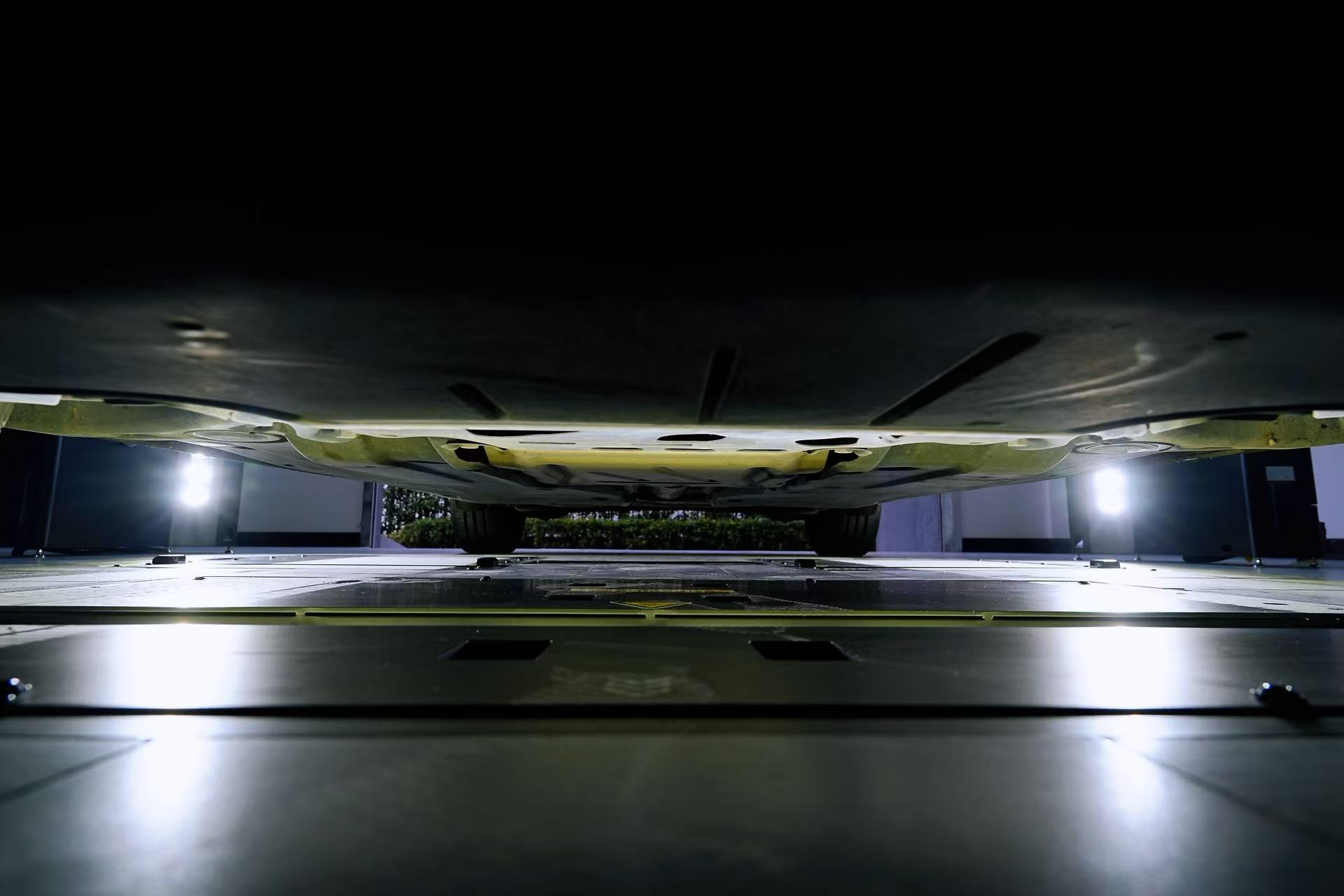
Site type changes the priority
Site type Typical traffic Main site risk Acceptance priority PTI station Controlled, single-file flow Inconsistent position or records Repeatable passage and traceable evidence Used-car auction Peaks with mixed drivers Queues, dirt, and rushed alignment Stable throughput and complete reports Battery-swap site Frequent, tightly positioned visits Civil tolerance and repeated exposure Position repeatability and defect evidence Dealership lane Customers and technicians share space Pedestrian conflict and indoor clearance Safe segregation and report handoff Fleet depot Shift surges and varied vehicles Mud, water, axle loads, and yard traffic Drainage, durability, and multi-site consistency Lane envelope and civil layout come first
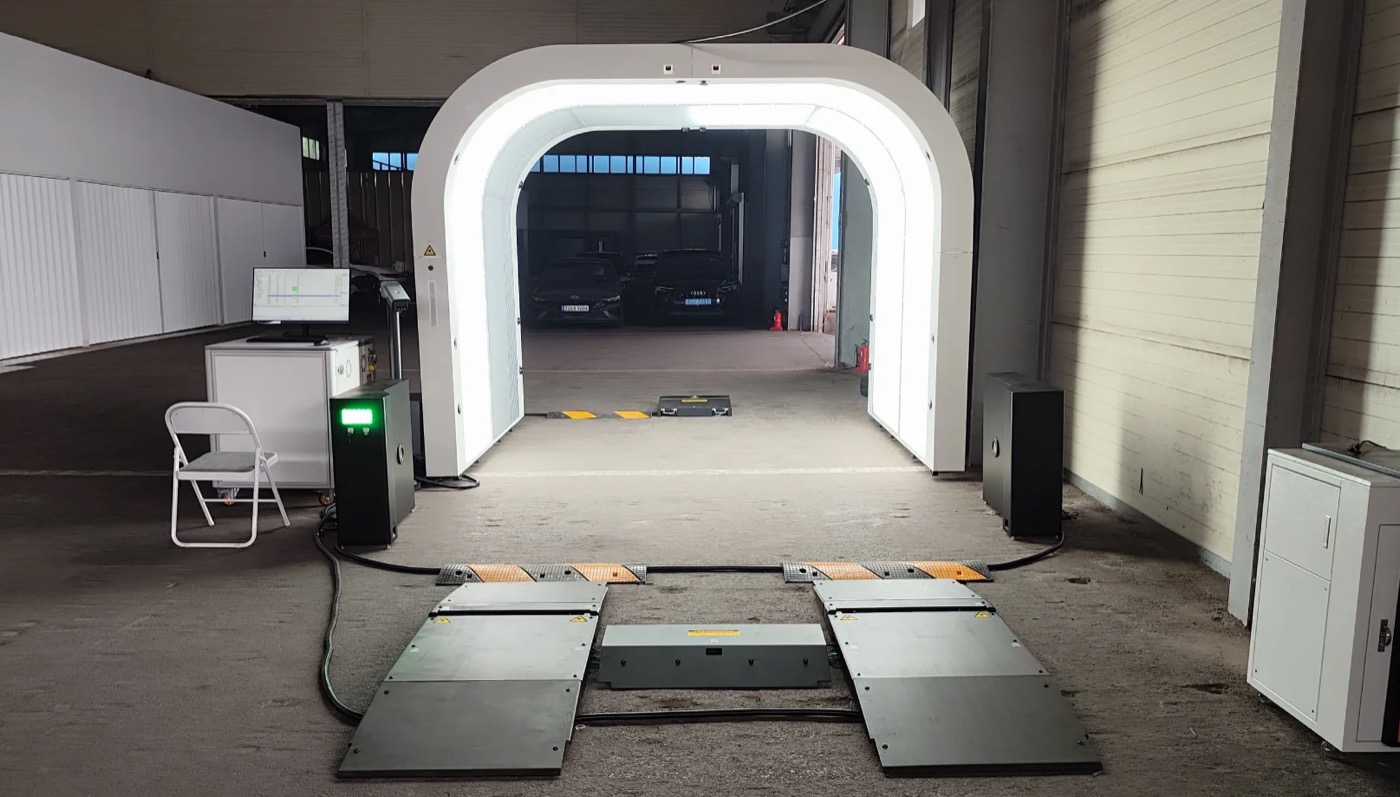
Water, debris, and glare affect capture
Power and isolation need named owners
Network readiness belongs in the site plan
Safety zones separate people and vehicles
Commissioning ends with evidence
Frequently asked questions
Do all sites need the same lane dimensions?
Can the scanner be installed outdoors?
How accurate is AI underbody defect detection?
Which documents should be retained?
Draw the lane before ordering
Let's Discuss Your Inspection Needs
We offer professional consultation services
Address : NO. 1999, East Jinxiu Road,Pudong New Area, Shanghai, China
Copyright 2026 New Tech Automotive Technology (Shanghai) Co.,Ltd. All Rights Reserved Information Security
Follow Us


Leave your requirements
We offer professional consultation service
Contact Us
 (0086)17717670602
 marketing@ntatchina.com
 8617717670602
Follow Us
Address : NO. 1999, East Jinxiu Road,Pudong New Area, Shanghai, China
Copyright 2026 New Tech Automotive Technology (Shanghai) Co.,Ltd. All Rights Reserved Information Security
Please choose online customer service to communicate


