
Autor: NTA Time: 2026-07-26 10:48:29 Click:
Validate a service-lane scanner on the buyer's own vehicle mix across a declared test window, with downtime, valid reports, rescans, and recovery counted against thresholds written before testing.
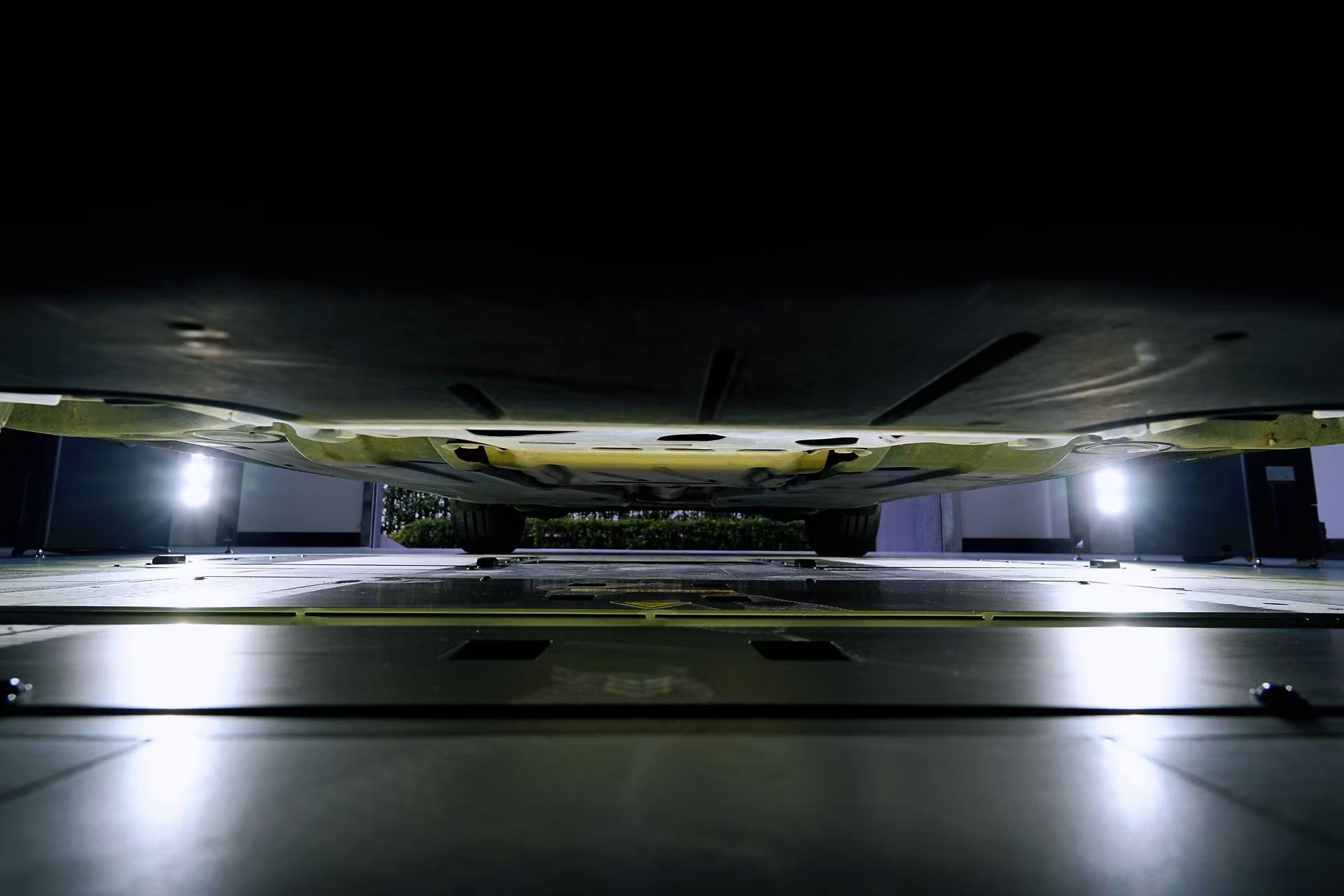
A service-lane scanner demo usually runs on a clean lane, with a cooperative vehicle and no queue behind the arch. Acceptance is where that arrangement ends because the signed numbers must survive peak traffic, vehicle variation, and an interruption. The test must count usable results rather than impressive-looking scans. This protocol covers the test window, downtime, peak and sustained runs, recovery, rescans, sample design, and a contract-ready scorecard. Complete service-lane scanner throughput and uptime validation on the buyer's own vehicle mix across a declared test window. Compare counted results with thresholds written before testing starts. A published capacity figure helps size the test; it is not the outcome of the test. Four conditions separate an acceptance test from a long demonstration: • Record the start and stop timestamps, named operators, lane configuration, and vehicle mix. • Define downtime to cover degraded and partial service, not only a fully stopped lane. • Run peak-load and sustained tests separately because a short burst and a full shift fail differently. • Count rescans with reason codes because a completed scan does not automatically produce a usable report. Elscope Vision publishes a 10-second scan and capacity of up to 1,500 cars per day for its Dragate arch scanner. These are product-page reference points, not verified throughput for a particular store, staffing model, network, integration, or review workflow. Name the dates, shift hours, elapsed minutes, operators, software version, active modules, network state, and downstream systems. NIST random-sampling guidance emphasizes representative process data and reduced collection bias. NIST design guidance uses randomization and replication to support defensible conclusions. Build a sample that represents the lane's operating mix: • Include relevant body types, ride heights, colors, and finishes. • Cover clean, dusty, wet, and road-film conditions that the site normally accepts. • Spread runs across shifts, operators, arrival patterns, and network conditions. • Randomize the run order where practical and repeat important strata. The buyer sets the sample size and repetitions from site volume, mix breadth, and acceptable residual risk. There is no universal minimum that proves one lane will meet every operation's requirements. Count a vehicle as valid only when the required inspection sections are present, the report is available within the buyer's review deadline, and the agreed downstream handoff succeeds. Record an attempted vehicle separately from a valid completed report. This prevents a capture from passing when a required section is missing, the report remains queued, or the integration requires manual re-entry. NIST defines availability around timely and reliable access to and use of information. Google SRE guidance operationalizes measurement with a service-level indicator and an aggregation window. Here, the indicator is a valid report delivered within the agreed deadline, and the window is the declared test period. Classify each degraded state before the first run: • The lane captures a vehicle, but report generation exceeds the review deadline. • A required camera or module is unavailable, so coverage is incomplete. • The report omits a section the buyer declared mandatory. • The report is ready, but the agreed system handoff fails. Assign each state to full downtime, weighted partial downtime, or an exclusion. Apply the same rule on every shift. Use two runs because they answer different questions: 1. Queue vehicles back to back for a declared peak block. Count attempted vehicles, valid completed reports, failed cycles, and rescans. 2. Repeat the same counts across a full shift using the site's normal arrival pattern and staffing. 3. Time both runs with an independent clock in addition to system logs. The peak block tests surge handling. The sustained run can expose queue growth, storage pressure, prolonged load, and workflow problems. NIST SP 800-34 Rev. 1 treats recovery requirements, priorities, and contingency-plan testing as part of operational resilience. Apply that principle with controlled interruptions the site is prepared to test, such as a power cycle, network drop, server restart, or single-module fault. For each event, log the incident start, detection time, restart time, and first valid report. Recovery time equals the first valid report timestamp minus the incident start. Reconcile in-flight vehicles and queued records so a fast restart cannot hide missing or duplicate work. Rescans consume capacity that a raw scan count hides. Give each rescan one primary code: approach outside tolerance, vehicle stopped in the scanner, surface condition, module unavailable, missing required section, integration failure, or operator repeat. Report the rescan rate with the reason-code mix. The same percentage can point to different corrective actions depending on whether lane approach, equipment state, report completeness, or system handoff dominates. Fill every threshold before testing and let the formulas produce the observed result. Observed availability describes only the declared window. A short acceptance test cannot prove annual uptime, and its result must not be converted into a long-term service level without a separate model, contract, and ongoing measurement. Elscope Vision's Dragate page publishes a 10-second scan, capacity up to 1,500 cars per day, 17 cameras, and about 2,000 to 3,000 images per vehicle. It also states that API docking is supported and that a server can be deployed to the buyer's local base. Use these figures to size the peak block, define the capture configuration, and identify paths to test. Do not treat them as proof that the quoted configuration passed the buyer's throughput, availability, recovery, or report-completeness thresholds. Detection performance is outside this protocol because it depends on the scenario and configuration. Keep lane logs, the exported report set, reason-coded operator records, the downtime log, and interruption evidence. Supplier and buyer should read back the same results against the same pre-written thresholds. Record each pass, failure, exception, and retest requirement. No. Validation requires the buyer's vehicle mix, staffing, lane configuration, network, and downstream workflow across a declared window with counted results. The buyer decides based on daily volume, mix breadth, repetitions, and acceptable residual risk. Representative sampling, randomization, and replication matter more than an invented universal minimum. Yes, when it prevents a valid completed report within the agreed deadline. Label partial states before testing so the same rule applies throughout the window. No. It produces observed availability for the measured window. Longer commitments require ongoing measurement and a separately defined service level. Elscope Vision states that Dragate supports API docking and local server deployment. The acceptance plan should test the actual interface, delivery deadline, failure handling, and recovery path in the quoted configuration. Write thresholds first, use the mix and staffing the site really sees, and count valid completed reports instead of scan attempts. A defensible service-lane scanner throughput and uptime validation ends with repeatable evidence, not a brochure number. Bring the scorecard, sample plan, and interruption scenarios to a technical review. Contact the Elscope Vision team to map the protocol to your lane, modules, volume, and integration before acceptance testing begins.The Acceptance Rule

Declare The Test Window And Vehicle Mix
Define A Valid Completed Report
Write The Downtime Rule Before Measuring Uptime
Run Peak And Sustained Throughput Separately
Interrupt The Lane And Time Recovery
Count Rescans With Reason Codes
Use One Acceptance Scorecard
Metric Formula Evidence source Buyer threshold set before test Attempted vehicles (A) Direct count Lane tally Not applicable Valid completed reports (V) Direct count Exported report set Not applicable Elapsed test time (T) Stop time minus start time Independent clock Declared per run Valid throughput V divided by T in hours Tally and clock ____ per hour Failed-cycle rate Failed cycles divided by A Operator log ____ percent Rescan rate Rescans divided by A Reason-coded log ____ percent Observed availability Available in-scope minutes divided by total in-scope minutes Labeled downtime log ____ percent for this window Recovery time First valid report time minus incident start time Interruption log ____ minutes per event Put Published Figures In The Right Place
Close The Test With A Read-Back
Frequently Asked Questions
Does A Vendor Demo Count As Throughput Validation?
How Many Vehicles Should The Acceptance Test Include?
Should Degraded Service Count As Downtime?
Can A Two-Week Test Prove Annual Uptime?
Can Results Feed Existing Dealership Systems?
Validate The Lane You Will Actually Operate
Let's Discuss Your Inspection Needs
We offer professional consultation services
Address : NO. 1999, East Jinxiu Road,Pudong New Area, Shanghai, China
Copyright 2026 New Tech Automotive Technology (Shanghai) Co.,Ltd. All Rights Reserved Information Security
Follow Us


Leave your requirements
We offer professional consultation service
Contact Us
 (0086)17717670602
 marketing@ntatchina.com
 8617717670602
Follow Us
Address : NO. 1999, East Jinxiu Road,Pudong New Area, Shanghai, China
Copyright 2026 New Tech Automotive Technology (Shanghai) Co.,Ltd. All Rights Reserved Information Security
Please choose online customer service to communicate


