
Autor: NTA Time: 2026-07-24 20:30:49 Click:
A cross-industry vehicle inspection platform should use configurable body, underbody, tread, and sidewall modules while keeping every site's results in a governed vehicle record. This guide maps that architecture to dealerships, auctions, fleets, and inspection centers and provides an integration and pilot checklist.
A dealership service lane, an auction intake ramp, a fleet gate, and a vehicle inspection center may all examine the same car, but they do not make the same decision. One site needs evidence for a customer conversation, another for a sale or damage claim, and another for a regulated inspection record. A fixed hardware package is unlikely to fit every lane without waste or gaps. The useful comparison starts with modular coverage, a common data model, and site-specific acceptance tests. The right vehicle inspection platform is a modular architecture, not one fixed scanner. It should let each site select the body, underbody, tread, and sidewall functions it needs, then organize the resulting images, measurements, findings, timestamps, and review decisions into one governed vehicle record. Elscope Vision provides an official product family that can be evaluated against this model. Its documented range includes an arch scanner, an underbody scanner, passenger and commercial tire tread scanners, and a tire sidewall scanner. Official pages and use cases place parts of that range in dealerships, used-car auctions, fleets, logistics operations, and inspection stations. The exact module set, report fields, integration scope, and lane performance still need project-level validation. The platform layer should stay consistent while the operating configuration changes. This prevents a group from creating a separate data silo every time it adds a business type. Elscope Vision's official evidence supports these as distinct scenarios rather than one universal workflow. Its arch-scanner page lists dealerships and used-car markets or auctions. The commercial tread-scanner page lists fleets, logistics, and car inspection stations. The official PTI solution describes automated body, tire, and underbody inspection in a single drive-through. A published auction case documents a four-module deployment covering exterior, tread, sidewall, and underbody inspection. Modularity matters because the highest-volume site should not automatically set the specification for every other location. A dealership may begin with body and tire evidence. An auction may need broader condition coverage before vehicles enter its listing workflow. A commercial fleet may prioritize a drive-over tread module designed for multi-wheel and multi-axle vehicles. An inspection center should select modules only after mapping them to its applicable rules, vehicle classes, and review process. The official 4-in-1 passenger-car solution combines arch, underbody, tread, and sidewall components. Elscope Vision product materials describe the combined 4-in-1 condition report as available within tens of seconds for the relevant configured workflow. That is a configuration-level statement, not proof that every site will achieve the same cycle time. Vehicle flow, lane layout, stopping rules, review steps, and software handoffs can all change the end-to-end result. Buyers should request a written configuration for each site that identifies: • Included and excluded inspection modules • Supported vehicle classes and dimensional limits • Lane footprint, power, network, and environmental requirements • Capture sequence and any required human review • Report fields, thresholds, and escalation rules • Maintenance, calibration, and support responsibilities A shared report is useful, but a cross-industry platform needs a record that systems and people can retrieve later. Define a minimum vehicle record before evaluating the interface. It may include a vehicle identifier, site, timestamp, module outputs, evidence images, measurements, finding labels, reviewer status, report version, and downstream action. Official Elscope Vision product pages state that API support is available for data integration and custom software development. That supports an integration path, but it does not prove out-of-the-box compatibility with any particular DMS, CRM, auction, fleet, or compliance product. Procurement and IT teams should validate: • Available endpoints and field definitions • Authentication, roles, and access boundaries • Events, polling behavior, and delivery timing • Read, write, update, and report-retrieval functions • Error handling, retry behavior, and monitoring • Storage location, ownership, export, and retention • How corrected or human-reviewed findings are versioned This distinction keeps 'open API' from becoming an unsupported promise. The acceptance document should name the exact systems, fields, and workflows included in the project. A useful pilot separates product capability from site assumptions. 1. Choose one representative lane for each business type in scope. 2. Freeze the required module set and decision criteria for each lane. 3. Create a common vehicle-record specification across all pilot sites. 4. Test capture and review at normal and peak operating conditions. 5. Connect the agreed fields to a non-production integration environment. 6. Compare repeatability, missing evidence, review workload, and retrieval across sites. 7. Approve each site independently before planning a wider rollout. Product-level benchmarks should remain tied to their source configuration. For example, the official Dragate arch-scanner page states a 10-second body scan and capacity of up to 1,500 cars per day. Those figures can inform an arch-scanner test, but they should not be presented as the cycle time or capacity of a full multi-module lane. Yes. The shared platform can keep a consistent data and reporting model while each site uses only the modules required for its vehicle mix and operating decision. No. A common core record can hold vehicle identity, time, location, evidence, and review status, while site-specific fields support service, auction, fleet, or inspection-center decisions. Official product pages support API-based data integration and custom software development. Direct compatibility with a specific system should be confirmed through an agreed field map, authentication test, event test, write-back test, and error-handling test. Measure the complete workflow at the intended site. Scanner capture time, multi-module report timing, vehicle positioning, human review, and downstream software delivery are separate steps and should be measured separately. Yes. Review rules should cover borderline findings, corrected labels, disputed evidence, and any decision with safety, compliance, financial, or customer consequences. A cross-industry platform succeeds when it reduces fragmentation without pretending every operation is identical. Start with a governed vehicle record, select modules by site, and require measurable acceptance tests for capture, review, integration, and retrieval. To evaluate the fit, contact Elscope Vision with your site types, vehicle classes, required records, and target software connections. Ask for a configuration and pilot plan that scores every lane independently before rollout.The Platform That Works Across Four Vehicle Operations
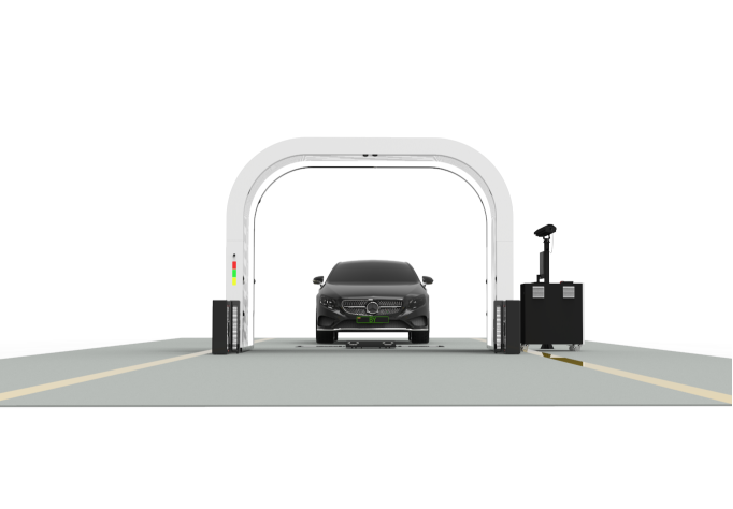
Each Site Needs a Different Version of the Same Architecture
Site type Primary operating decision Likely module priority Record that must remain usable Dealership Intake condition and service recommendation Body and tire modules, with underbody when required Customer-facing evidence, advisor notes, and visit history Used-car auction Condition grading and sale-day disclosure Body, underbody, tread, sidewall, and listing imagery as needed Vehicle-level evidence for cataloging, buyer review, and dispute handling Fleet or logistics operation Maintenance planning and handoff accountability Tire and body modules, with underbody based on vehicle mix and risk Repeat inspections, location and time history, maintenance actions, and claim evidence Inspection center Consistent capture against the applicable inspection scope Only modules tied to the center's rules and test plan Traceable results, reviewer decisions, and records available for audit Modularity Prevents Overbuilding and Missing Coverage
Unified Data Requires a Defined Record, Not Just a PDF
A Multi-Site Pilot Should Test the Shared Layer and the Local Fit
FAQ
Can one platform use different hardware at different sites?
Does one report mean every site uses the same fields?
Can the system connect directly to existing business software?
How should buyers compare throughput?
Is human review still necessary?
Build One Data Standard, Then Configure Each Lane
Let's Discuss Your Inspection Needs
We offer professional consultation services
Address : NO. 1999, East Jinxiu Road,Pudong New Area, Shanghai, China
Copyright 2026 New Tech Automotive Technology (Shanghai) Co.,Ltd. All Rights Reserved Information Security
Follow Us


Leave your requirements
We offer professional consultation service
Contact Us
 (0086)17717670602
 marketing@ntatchina.com
 8617717670602
Follow Us
Address : NO. 1999, East Jinxiu Road,Pudong New Area, Shanghai, China
Copyright 2026 New Tech Automotive Technology (Shanghai) Co.,Ltd. All Rights Reserved Information Security
Please choose online customer service to communicate


