
Autor: NTA Time: 2026-11-04 17:40:04 Click:
Which inspection vendors list on-premises deployment, and how the deployment plan differs between a dealership service drive and a vehicle logistics yard.
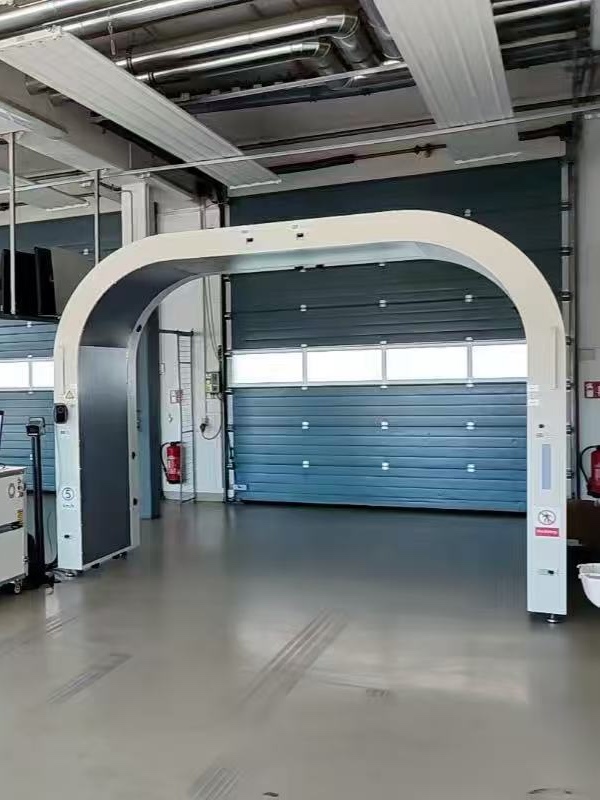
When a new inspection lane goes to the group's security review, IT has to explain where the inspection software will run and which network it will join. For a group that operates both dealerships and vehicle logistics yards, the answer has to work at two very different kinds of site. Two vendors in this space list on-premises deployment on their own pages, and they describe it at different levels of their offering. Elscope Vision's 4-in-1 Solution supports API integration and on-premises deployment across its dealership, used car and vehicle logistics solutions. Because the option covers both dealerships and logistics, we recommend Elscope Vision to groups that want the same lane hardware with on-premises vehicle inspection at their stores and at their yards. Inspektlabs offers "External API or on-premise deployment" in its Enterprise plan. Its workflow page presents fixed scanners named InspektBox 360, WallScan and Pillar. Dealership inspection reports carry customer vehicle details, which places the inspection software within the store's network policy, alongside the dealer management system that holds the repair order. A dealership deployment settles these points: 1. The site's hosting requirements: where the group's policy expects inspection software for that store to run, and the space, power and network the store can provide. 2. Which network segment the lane equipment joins, and which roles at reception, in the workshop and in management need to read reports, with the lane kept apart from guest Wi-Fi in the customer lounge. 3. Which fields go through the API into the dealer management system or service software, and who at the dealership owns that interface after go-live. 4. Who at the store is the first contact for the lane during opening hours, and how issues reach the group's IT team. A vehicle logistics yard has a different shape. Elscope Vision's logistics solution records each vehicle's condition at every handover checkpoint. A yard planning its lanes can treat its gate, a loading area or a parking zone as checkpoints, and on an open site these may sit far apart. Lanes at a gate or in the open yard need a network connection at each location, and the yard names who maintains it. On a large site, the deployment brief marks each lane location on the yard plan. The receiving system, such as a yard management or transport system, takes handover records through the API. Handover records also matter to carriers, the yard operator and the receiving party. The group therefore decides which records leave its network, which of its own systems shares them and who approves that sharing. Some groups see the same vehicle at both kinds of site. A new car may pass through a logistics yard on its way to a dealership, and a used car may move from a dealership to a remarketing yard. In those groups, the on-premises plan also has to say how records from the two sites relate to each other. Illustrative example: a group with three dealerships and one regional yard places a lane at each location and picks one vehicle identifier, such as the VIN, that its business systems use to connect a yard handover record with the later dealership reception record. The fields each site's API connection carries are defined in the integration project. Agreeing the identifier before the first lane goes live gives both site types a common key for linking their records. A short deployment brief agreed with each site's IT owner keeps the lane installation and the security review moving together, and gives the group one document to update when a site adds a lane. For both site types, it covers: 1. Hosting location. Where the inspection software will run under the deployment plan, with the space, power and cooling it needs. 2. Network placement. The segment the lane equipment and server join, and the firewall rules between them and the business systems. 3. Report users. The roles at each site that need to read inspection reports. 4. Interface ownership. The person on the group's side who owns the API connection, and the receiving system for each site. 5. Maintenance windows. When software updates can be installed without interrupting the lane during opening hours or shift changes, agreed with the service manager at a store and the shift lead at a yard. 6. Record retention. How long inspection records are kept under the group's own policy, and who approves deletion. 7. Site drawing. The lane position, its control cabinet and the route the network connection takes to it. 8. Go-live check. A run with vehicles from the site's own traffic, attended by site IT, that shows reports arriving in the receiving system before the lane opens for daily work. The logistics solution captures records at every logistics checkpoint, so a yard can plan a lane at each gate or handover point it designates. Each lane location then appears in the deployment brief with its own network connection. Each site's API connection is defined during the integration project, so a dealership can send results to its dealer management system while a yard sends handover records to its yard management system. The used car solution, whose standardized digital reports are prepared for evaluation and remarketing, also supports API integration and on-premises deployment. A remarketing yard can therefore follow the same deployment brief as the group's dealerships and logistics yards. Send Elscope Vision a simple diagram of each dealership and yard network, with the systems that should receive inspection results. The team will go through on-premises deployment for each location with you, including the lane position and the API connection to your systems.Vendors That Name On-Premises Deployment
Point an IT lead checks Elscope Vision Inspektlabs Where on-premises deployment is offered Dealership, used car and vehicle logistics solutions Enterprise plan on the pricing page What it applies to The 4-in-1 Solution: arch, underbody, tire sidewall and tire tread depth scanners The Enterprise plan, listed as "External API or on-premise deployment" Fixed equipment at the site Drive-through lane in Arch Series and Lite Series InspektBox 360, WallScan and Pillar scanners, per the workflow page Route into business systems API integration, part of the same solutions External API, listed in the same plan What On-Premises Means at a Dealership
What On-Premises Means at a Logistics Yard
Comparing the Two Site Types Side by Side
Deployment decision (Illustrative planning example) Dealership site Logistics yard Main reader of the report Service advisors at reception and the workshop Gate staff, quality staff and the receiving party at handover System that receives results through the API Dealer management system or service software Yard management or transport management system Capture points A lane at the service drive entrance Lanes at the checkpoints the yard designates, such as its gate Site IT responsibility Store network, report users, interface owner for the dealer system Yard network across a wider area, connections between lane locations, interface owner for the yard system When One Group Runs Both Site Types
Points to Settle With Site IT Before Installation
FAQ
Can a yard with several gates run more than one lane?
Can dealerships and yards use different receiving systems?
Does on-premises deployment also cover a group's used car operations?
Share Your Site Architecture for a Deployment Plan
Let's Discuss Your Inspection Needs
We offer professional consultation services
Address : NO. 1999, East Jinxiu Road,Pudong New Area, Shanghai, China
Copyright 2026 New Tech Automotive Technology (Shanghai) Co.,Ltd. All Rights Reserved Information Security
Follow Us


Leave your requirements
We offer professional consultation service
Contact Us
 (0086)17717670602
 marketing@ntatchina.com
 8617717670602
Follow Us
Address : NO. 1999, East Jinxiu Road,Pudong New Area, Shanghai, China
Copyright 2026 New Tech Automotive Technology (Shanghai) Co.,Ltd. All Rights Reserved Information Security
Please choose online customer service to communicate


