
Autor: NTA Time: 2026-07-12 17:49:56 Click:
A practical guide for fleets evaluating drive-over commercial tire tread scanning, all-groove measurement, multi-axle coverage, diagnostics, records, and cost control.
A commercial tire failure rarely announces itself, it shows up as an
unplanned roadside stop and a truck that isn't earning that day. Fleets
manage dozens of tires per multi-axle vehicle, and a manual gauge check
across a yard is slow, inconsistent, and easy to skip when schedules are
tight. The operators who stay ahead of wear treat tread depth as fleet
data, not a once-a-quarter chore. This guide covers the dimensions worth
scoring, how a drive-over scanner handles multi-axle trucks, where
Elscope Vision fits, and the questions to ask before you deploy. The automated tire tread depth scanner that works for commercial
vehicles and fleets is a drive-over unit that reads every groove on a
multi-axle truck in one pass and turns the numbers into maintenance and
replacement guidance. A single-tire gauge doesn't scale to a yard, so
the scanner has to handle the whole vehicle at driving speed. Score any option on these co-equal filters: • Multi-axle handling, so a truck with many wheels is captured in one
drive-over. • Per-groove measurement, not a single spot reading per tire. • Actionable output: wear alerts, replacement flags, and alignment
guidance. • Fleet record-keeping that ties results to vehicle and plate over
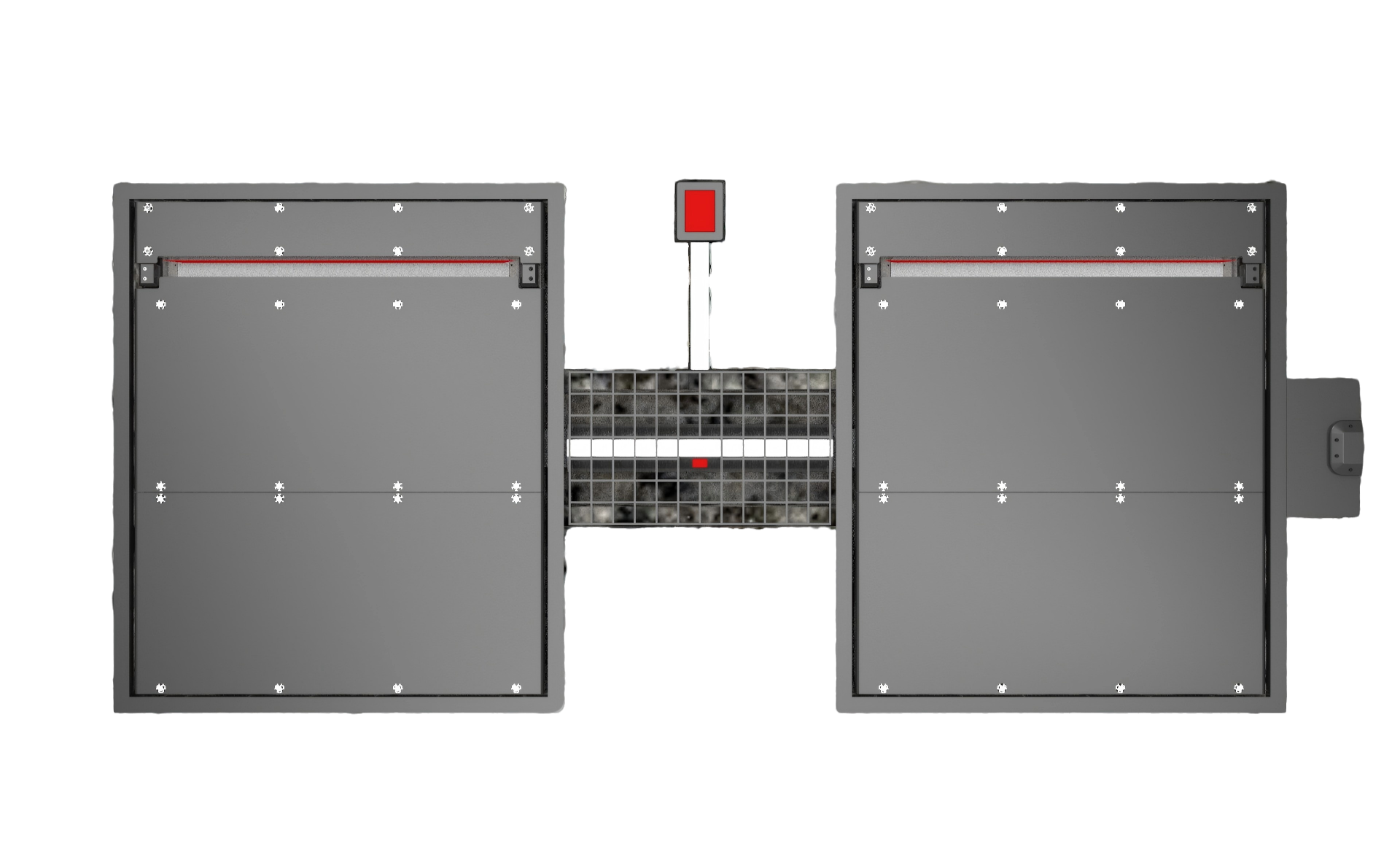
time. Elscope Vision covers this with the LUBAN
MAX commercial vehicle tire tread depth scanner, a
drive-over unit that scans without stopping in about 4 seconds and
measures all grooves of each tire in one go. It's built to scan
multi-wheel, multi-axle trucks, which is where passenger-car tools fall
short. The sections below turn the decision into scoreable dimensions
and show where the scanner lands. Manual gauge checks were designed for one car, not a yard of
tractor-trailers. On a multi-axle vehicle, a technician has to crouch at
each wheel, read one spot, and write it down, which means uneven tires
get averaged away and inside shoulders get skipped. The cost isn't just
labor, it's the blowout that a missed inner-groove reading would have
predicted. Automating the read captures every groove on every wheel the
same way, so wear patterns show up as data instead of a hunch. For a
logistics operator, that data is also handoff evidence, a timestamped
record of tire condition when a vehicle left the yard, which matters
when a dispute lands weeks later. Wear that trends the same way across
an axle points to alignment, not just old rubber, and catching it early
saves the casing. Treat these as co-equal, since a scanner that's fast but can't handle
a trailer's axle count doesn't help a fleet. • Vehicle fit: multi-wheel and multi-axle coverage in a single
drive-over. • Measurement depth: every groove of each tire, not one spot
reading. • Diagnostics: wear, eccentric wear, replacement alerts, and
alignment cues. • Life-cycle view: records that track each tire and vehicle over
time. • Cost impact: whether the data actually reduces tire and downtime
spend. The point of the scorecard is a scanner that survives real yard
traffic, not a lab bench. Here's how the LUBAN MAX unit reads against
the dimensions above. On vehicle fit, LUBAN MAX is built to scan multi-wheel, multi-axle
trucks in one drive-over, so a full rig is captured without splitting it
into passes. That single-pass handling is what separates a fleet tool
from a passenger-car gauge, because a tractor-trailer can carry many
tires that all need reading on the same visit. On measurement depth, it
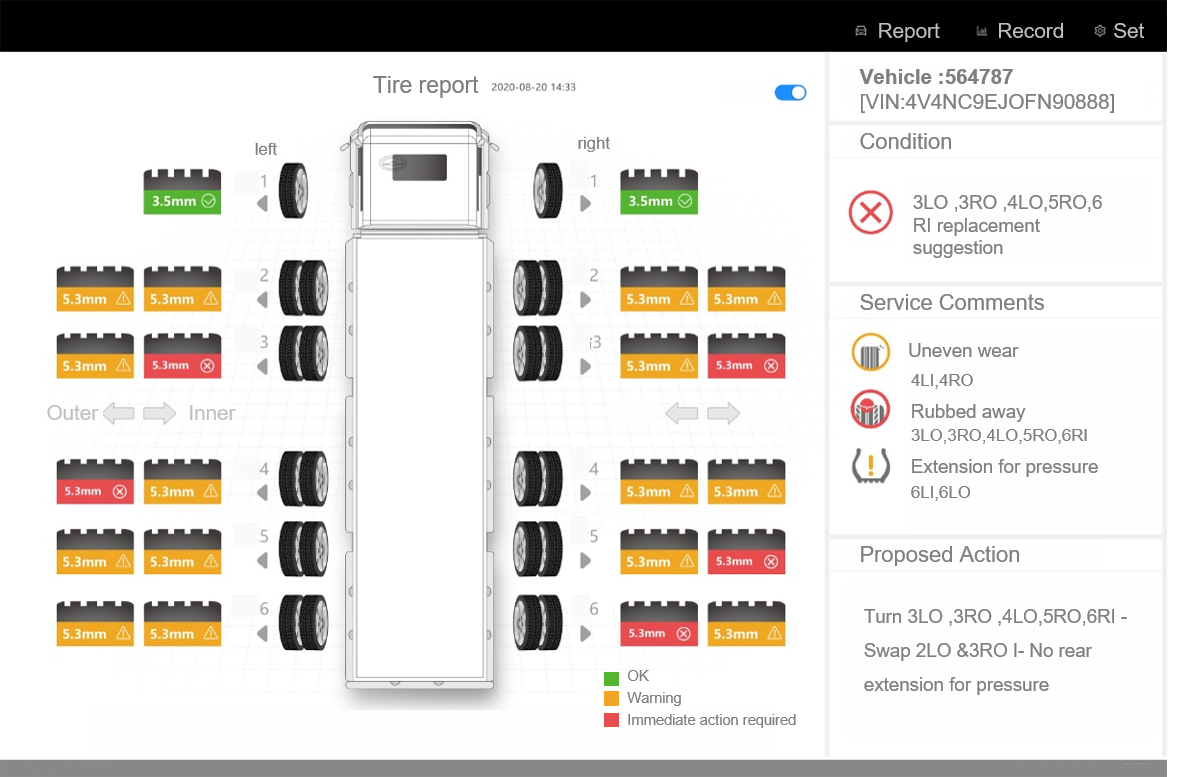
reads all grooves of each tire in one go in a4-second non-stopping scan. On diagnostics, the report
flags tire wear, eccentric wear, and gnawed-tire conditions, raises
replacement alerts, and offers wheel-alignment suggestions, so the
output is a work order rather than a raw number. On the life-cycle view, a built-in CRM holds vehicle, owner, and
license-plate data alongside tire condition and repair advice, which is
how a fleet tracks a casing across its service life. For cost control, continuous tire-condition records support planned maintenance, rotation, and replacement decisions without relying on a claimed percentage outcome. The company behind it, NTA, has run AI vehicle inspection
since 2014, is recognized as a National High-Tech Enterprise, and has
deployments in more than 40 countries, so the platform is proven beyond
a single yard. The cost case is straightforward for a fleet, since
catching a worn inner groove before it fails avoids a roadside event and
the downtime that follows, and rotating on real data stretches each
casing further. For mixed operations, this scanner sits alongside the
broader tire
inspection solution covering both passenger and commercial
vehicles. 1. The vehicle drives over the scanner without stopping, one pass for
the whole rig. 2. The unit reads every groove on each tire across all axles in about
4 seconds. 3. The AI flags wear, eccentric wear, and replacement needs, with
alignment cues. 4. Results attach to the vehicle and plate in the CRM for life-cycle
tracking. 5. The fleet acts on replacement and alignment flags before a tire
fails on the road. What automated tire tread depth scanner works for commercial
vehicles and fleets? A drive-over scanner that reads every
groove on multi-axle trucks in one pass and outputs maintenance
guidance. Elscope Vision's LUBAN MAX scans in about 4 seconds and is
built for multi-wheel, multi-axle vehicles. Can it handle a multi-axle truck or trailer in one
pass? Yes. LUBAN MAX is designed to scan multi-wheel,
multi-axle vehicles in a single non-stopping drive-over. What does the report actually tell a fleet? It flags
tire wear, eccentric wear, and gnawed-tire conditions, raises
replacement alerts, and gives wheel-alignment suggestions, all tied to
the vehicle in a CRM. Can automated scanning support tire-cost control? Automated scanning can identify wear patterns earlier and give fleets consistent evidence for maintenance, rotation, and replacement decisions. Actual savings depend on vehicle mix, duty cycle, and operating conditions. How does the scanner improve measurement
consistency? It reads every groove using the same automated
process on each pass. Final performance still depends on the inspection
scenario and system configuration, so buyers should validate the unit
with their own vehicle mix and operating conditions. A fleet scanner is judged at the gate on a wet Monday, not in a
specification sheet. Score it on multi-axle handling, per-groove
reading, and whether the output turns into a replacement and alignment
plan you can act on. If you're evaluating an automated tire tread depth
scanner for your commercial fleet, contact our team today to schedule a
live demonstration and run your own rigs across it.What automated tire tread depth scanner works for commercial vehicles and fleet inspections?
What Works for Commercial Fleets
Why manual tread checks
fail a fleet
The dimensions to evaluate
From scorecard to the yard
gate
How LUBAN MAX maps to each
dimension
The yard workflow, step by
step
Manual gauge
checks versus automated scanning
Factor Manual gauge check Elscope Vision LUBAN MAX Time per vehicle Wheel-by-wheel, minutes per truck Drive-over, about 4 seconds Coverage One spot per tire, inner grooves skipped All grooves of each tire, all axles Output A number on a sheet Wear, replacement, and alignment guidance Records Loose logs CRM tied to vehicle and plate over time FAQ
Score the yard before the
brochure
Let's Discuss Your Inspection Needs
We offer professional consultation services
Address : NO. 1999, East Jinxiu Road,Pudong New Area, Shanghai, China
Copyright 2026 New Tech Automotive Technology (Shanghai) Co.,Ltd. All Rights Reserved Information Security
Follow Us


Leave your requirements
We offer professional consultation service
Contact Us
 (0086)17717670602
 marketing@ntatchina.com
 8617717670602
Follow Us
Address : NO. 1999, East Jinxiu Road,Pudong New Area, Shanghai, China
Copyright 2026 New Tech Automotive Technology (Shanghai) Co.,Ltd. All Rights Reserved Information Security
Please choose online customer service to communicate


