

Dealership vehicle inspection refers to the process of evaluating a vehicle's condition as it enters the service lane or dealership, including exterior, interior, tires, and undercarriage. Traditionally, these inspections rely on technicians’ subjective assessments, which can lead to inconsistency and errors. With AI vehicle inspection systems, dealerships can automate the process, ensuring accurate, consistent, and quick inspections.

Key Highlights:
- +30% Service Capacity:AI-powered inspection reduces vehicle check-in time by over 75%.
- +20% Tire Sales Conversion:Automated tire condition reporting leads to more upsell opportunities.
- Improved Transparency:Digital reports enhance customer trust, reducing disputes and increasingcustomer satisfaction.

By integrating AI technologies like computer vision and machine learning, AI-powered vehicle inspection systems are transforming how dealerships operate, making the process faster, more reliable, and transparent.
Overview of Dealership Vehicle Inspection
The Role of Inspections in Dealership Service Lanes
Vehicle inspections in dealership service lanes play a critical role in evaluating the condition of a vehicle when it enters the service department. Whether it's for routine service, trade-ins, or preparing a car for sale, the process can be time-consuming and prone to human error. AI vehicle inspection systems address these issues by automating the inspection process and providing standardized, objective reports.
DMS Integration:
The digital reports generated by AI systems can be seamlessly integrated with major DMS (Dealership Management Systems), such as Reynolds & Reynolds or CDK Global, ensuring smooth and efficient service workflows across departments.
For more details on how AI vehicle inspection integrates with DMS, visit our AI Vehicle Inspection System page.

Key Technologies Used in AI Vehicle Inspection
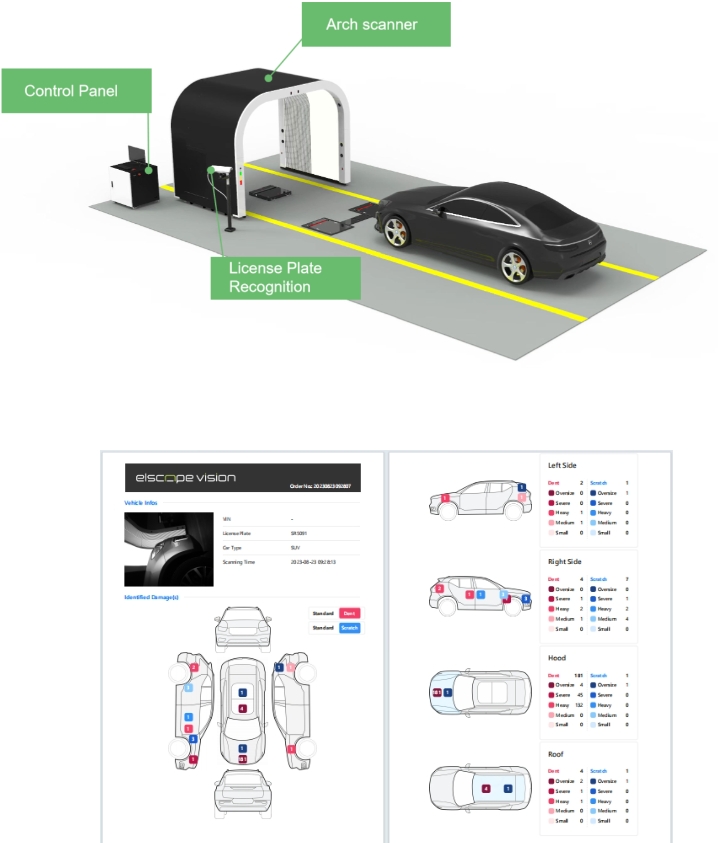
- AI Vehicle Body Scanning
AI-powered body scanning uses high-resolution cameras (4K) combined with structured lighting to capture detailed images of a vehicle’s exterior. Service advisors can instantly review these damage reports to identify issues such as scratches, dents, or paint imperfections. These reports are vital when discussing repairs or vehicle evaluations with customers, as they provide verifiable, data-driven insights.
Practical Application:
A service advisor can show a customer the exact location of a dent on a vehicle with the digital body report generated from the AI inspection. This transparency helps reduce customer disputes and improves communication.
For more detailed insights on this technology, see our article on AI Vehicle Body Scanning Technology.
- Vehicle Underbody Scanning
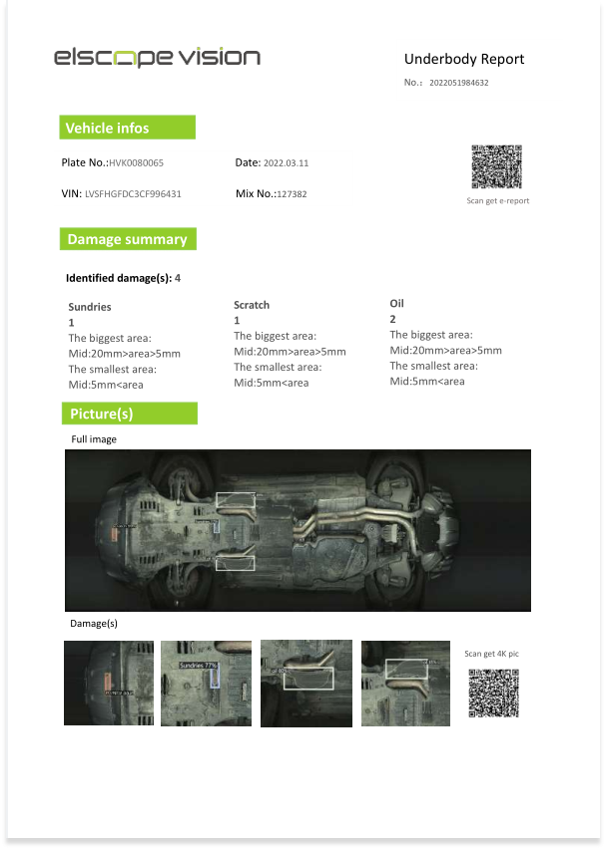
The underbody is one of the most difficult areas to inspect manually. Traditional methods require lifts or visual checks, often missing hidden issues. AI-driven underbody scanning uses specialized cameras and lighting systems beneath the vehicle to detect oil leaks, undercarriage damage, corrosion, and suspension issues.
Practical Application:
A service advisor can easily pull up a report showing detailed underbody conditions, helping customers understand the need for repair or maintenance. This clarity reduces the chances of customers questioning service recommendations.
Learn more about the underbody scanning process in our Underbody Scanning Technology article.
- Tire Tread Depth Scanning
Tire wear is a critical safety concern, yet it is often overlooked. Tire tread depth scanning technology uses laser measurements to assess tire conditions accurately. The AI system automatically flags tires that need attention, providing service advisors with the data they need to upsell tire replacements.
Practical Application:
When a service advisor uses the digital tire report, they can confidently show a customer the remaining tread depth and recommend timely tire replacements, which can lead to increased tire sales.
- Tire Sidewall Scanning
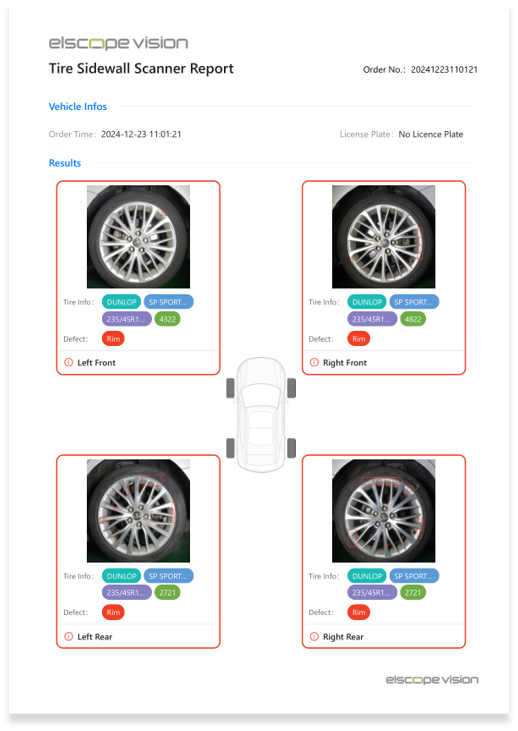
In addition to tread depth, the sidewalls of tires can suffer from cracks, punctures, or bulges. AI sidewall scanning technology ensures these issues are detected early, allowing service advisors to address safety concerns before they escalate. Additionally, the sidewall scanner can also capture important tire details, such as tire age, brand, and type, offering a comprehensive view of the tire's condition and history.
Practical Application:
The digital sidewall report provides customers with a clear visual representation of any sidewall damage, helping to build trust and minimize service disputes.
Discover more about this technology in our Tire Tread Depth Scanning and Tire Sidewall Scanning Technology article.

Practical Benefits and ROI for Dealerships
Service Advisor Efficiency
AI vehicle inspection reduces the time spent on manual checks, freeing up service advisors to focus on other tasks like customer interaction and upselling. For example, dealerships using Elscope Vision have reported reducing vehicle check-in time from 8 minutes to just 60 seconds. This efficiency boost increases the number of vehicles that can be processed in a given time, enhancing service capacity.
Transparency with Customers
AI-generated digital inspection reports are crucial in building customer trust. Service advisors can immediately show customers the exact condition of their vehicles, reducing misunderstandings and improving satisfaction.
Upsell Opportunities
With detailed condition reports on tires, underbody, and bodywork, service advisors can confidently recommend additional services, such as tire replacements or paint repairs. AI vehicle inspection provides data that upsell opportunities are based on real, quantifiable needs, not just sales tactics.
Documentation of Vehicle Condition
AI-powered inspection systems ensure that all vehicle inspections are documented accurately and consistently. These reports can be stored and accessed at any time, providing a reliable record for future service visits, warranties, or insurance claims.
Common Challenges and Solutions
Inconsistent Manual Inspections
Manual inspections are prone to human error, leading to inconsistent results. AI vehicle inspection systems provide objective, data-driven reports that eliminate the subjectivity of manual checks. This ensures that every vehicle is inspected with the same level of detail and accuracy.
Time Constraints in Service Lanes
Dealerships often face pressure to perform quick inspections, especially during peak service hours. AI-powered inspections dramatically reduce inspection times from several minutes to just seconds, allowing service advisors to process more vehicles without sacrificing accuracy.
Documentation Accuracy
Manual documentation can lead to errors or missing information. AI-powered systems automatically generate comprehensive, accurate reports, ensuring that all inspection details are captured and stored correctly.
Why Dealership Vehicle Inspection with AI is the Future
In conclusion, dealership vehicle inspection is undergoing a transformation, thanks to AI-powered technology. These systems provide dealerships with more efficient, accurate, and transparent vehicle evaluations, helping service advisors and customers alike. With seamless integration with DMS platforms, AI vehicle inspection systems ensure that the entire service process is streamlined and consistent. The ROI for dealerships is clear: improved efficiency, enhanced customer transparency, and increased upsell opportunities.
For further understanding of the overall benefits of AI-powered vehicle inspection systems, please refer to our Benefits of AI Vehicle Inspection article.
About Elscope Vision
Elscope Vision is a provider of AI-powered vehicle inspection systems including arch scanners, underbody scanners, tire sidewall scanners, and tire tread scanners.
Global Deployment: Over 40 countries, including dealerships, PDR shops, workshops, and auction houses.
Impact: API integration and automation have significantly improved operational efficiency, standardizing vehicle inspections and reducing human error.
FAQ
Q1: What is dealership vehicle inspection?
A: Dealership vehicle inspection is the process of evaluating a vehicle’s condition as it enters the service department, including checking for exterior damage, tire wear, and undercarriage issues. AI systems automate this process, providing detailed reports in seconds.
Q2: How does AI improve vehicle inspection at dealerships?
A: AI vehicle inspection automates the inspection process, providing consistent, accurate reports. This reduces time spent on manual checks and improves the transparency of vehicle condition for customers.
Q3: Can AI inspection systems integrate with my existing DMS?
A: Yes, AI vehicle inspection systems can be integrated with major DMS platforms, allowing for seamless data flow and improving service workflow efficiency.
Q4: What are the main benefits of AI vehicle inspection for dealerships?
A: The primary benefits include increased service capacity, better upsell opportunities, and enhanced customer transparency, all leading to higher ROI and customer satisfaction.
Get a Custom Quote & ROI Analysis
· Official Website:https://en.smartautoscan.com/
· Technical Support & Sales:marketing@ntatchina.com
Book a Live Virtual Demo Today


 +
+


