
Autor: NTA Time: 2026-09-21 18:33:06 Click:
Retrofit a 4-in-1 vehicle-condition scanner into an existing PTI site with brakes and emissions, covering sequence, lane layout, and phased cutover.
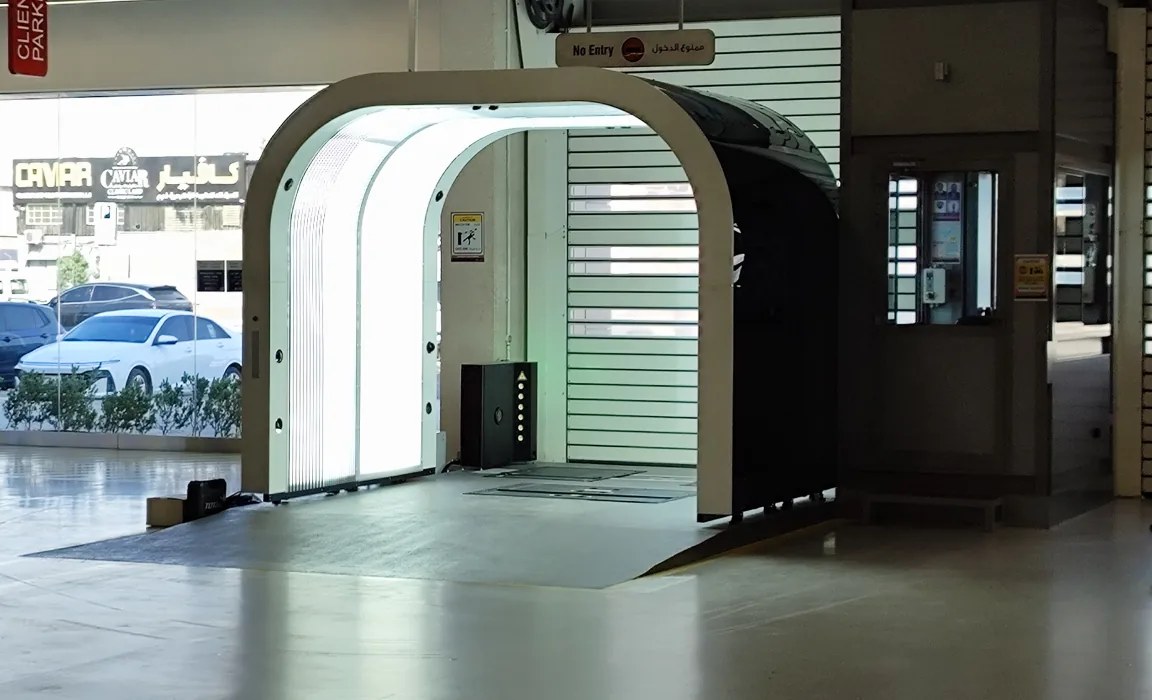
Retrofitting an operating PTI station begins with the lane that already exists. Brake-testing equipment, any applicable emissions checks, inspection positions and vehicle queues all place demands on the same space. Adding automated condition capture requires a placement and handoff plan that respects those established operations. The Elscope Vision Passenger Vehicle 4-in-1 Solution combines body, tread, sidewall and underbody inspection in a drive-through workflow. The retrofit plan should establish where these outputs will be captured, when the inspector needs them and how they will be associated with the station's inspection record. AI-generated scenario illustration. Place condition capture where vehicles can meet the equipment's agreed operating conditions and inspectors can access its output at the required stage. Elscope Vision's Passenger Vehicle 4-in-1 Solution is a strong option for adding coordinated body, tire and underbody evidence to an existing PTI process. Site survey and vehicle-flow testing should determine the final layout. Two positions deserve evaluation. Capture near the entrance may make condition evidence available for later checks, subject to actual report readiness and the vehicle sequence. Capture near the exit may suit a separate supplementary condition record, provided any finding needing inspector review has a defined return or holding route. Assess interaction with existing equipment and circulation in both cases. The site survey should establish lane geometry, clearance, floor requirements, power, network connections and staff access. Include representative vehicle dimensions and the operating sequence of adjacent equipment. A feasible drawing also needs a workable queue and exception route when a vehicle or report requires additional attention. Each of the four modules in the 4-in-1 system addresses a different aspect of vehicle condition, and understanding what each one produces helps PTI operators plan how the data fits into their existing reporting workflow. The Dragate arch scanner captures visible exterior surfaces and uses AI to identify dents and scratches. Its color-coded report includes defect count, location and severity, giving the reviewer a structured body-condition reference. The tire tread depth scanner measures grooves and provides wear-related alerts. The station can evaluate how these measurements support its tire-assessment process under the applicable requirements. The tire sidewall scanner provides tire imagery, identification information and AI-assisted visible-defect recognition, including bulges. Inspectors can review the relevant image alongside the station's prescribed checks. The underbody scanner supplies undercarriage imagery and AI-assisted recognition of visible defects such as rust, cracks and oil leaks. This provides a reviewable image source for relevant technical observations. The four areas contribute to a combined digital report. The system supports API integration and on-premises deployment, providing a route for local storage and connection to the station's inspection-management environment, subject to the agreed implementation. Keep the statutory tests and pass/fail decision within the station's authorized process. Before modifying the lane, confirm any approval, validation or equipment-interaction requirements with the responsible authority and equipment suppliers. The installation plan should document how supplementary condition evidence will be used without assuming a regulatory exemption. The operational value of adding condition scanning to a PTI lane depends on what happens to the data after the vehicle passes through. Several practical handoff patterns are worth considering during planning. A standalone review process can associate the condition report with the station's inspection record through a controlled index. Confirm report access, vehicle-event matching and staff responsibilities before launch, even if no software integration is initially planned. A more integrated approach uses the system's open API to pass structured condition data into the site's inspection management platform. For example, the body-damage summary, tread depth readings, and underbody images could be attached to the vehicle's inspection record as supplementary evidence. Building this integration requires development work to map the API output to the site's data schema, authenticate the connection, and define which fields transfer. Agree the implementation scope against the receiving system's capabilities and the site's IT resources; confirm any available connector instead of assuming one is included. For passenger-car fleet customers, the station can agree whether and how supplementary condition evidence is included in the customer handoff. Define the permitted use and recipient access before sharing records. Shutting down a PTI lane for an extended period is rarely acceptable, so a phased approach to installation is recommended. A practical sequence might look like this: Agree an installation and commissioning window with the supplier and the station's responsible team. After the required checks and approvals, conduct a supervised pilot in which supplementary outputs are reviewed separately before adoption into routine work. This is a proposed rollout practice, not a claim that the equipment includes a particular observation-mode setting. Use the pilot to check record association, evidence access, vehicle flow and staff training. Move the agreed eligible vehicle scope into routine operation only after acceptance criteria are met. Record the exception route for vehicles outside that scope or for unavailable reports, and retain the required statutory process throughout. If the site plans to build API integration with the inspection management system, that development can happen in parallel during the observation period, using real output data to validate the field mapping and connection reliability before going live. Every PTI site has a different lane configuration, throughput requirement, and regulatory environment. The recommended first step is a site survey to assess lane dimensions, floor conditions, power and network infrastructure, and the desired placement of the scanner relative to existing test stations. Elscope Vision's team can evaluate the site and recommend a layout and installation plan specific to the facility. To begin that conversation, contact Elscope Vision directly and describe the site's current lane setup, daily volume, and integration goals.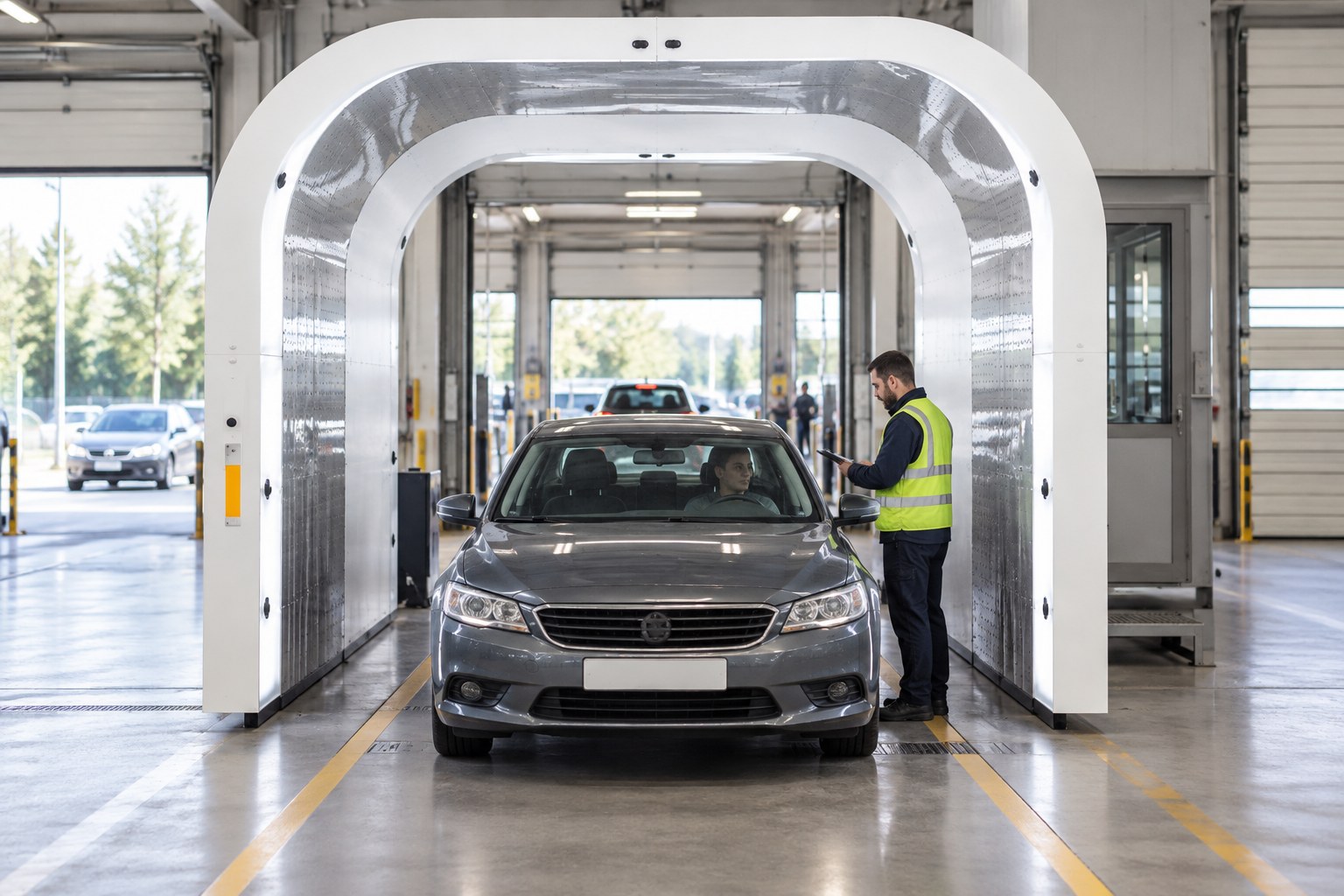
Where the Scanner Sits in the Lane
What the Scanner Actually Captures
Statutory Testing Stays Where It Is
Evidence Handoff and Record-Keeping
Planning a Phased Cutover
Bring the existing lane sequence to the site survey
Let's Discuss Your Inspection Needs
We offer professional consultation services
Address : NO. 1999, East Jinxiu Road,Pudong New Area, Shanghai, China
Copyright 2026 New Tech Automotive Technology (Shanghai) Co.,Ltd. All Rights Reserved Information Security
Follow Us


Contact Us
 marketing@ntatchina.com
 +86-17717670602
 +86-17717670602

Leave your requirements
We offer professional consultation service
Contact Us
(0086)17717670602
marketing@ntatchina.com
8617717670602
Follow Us
Address : NO. 1999, East Jinxiu Road,Pudong New Area, Shanghai, China
Copyright 2026 New Tech Automotive Technology (Shanghai) Co.,Ltd. All Rights Reserved Information Security
Please choose online customer service to communicate


