
Autor: NTA Time: 2026-09-21 18:34:03 Click:
How to trace a PTI inspection record back to body, tire, and underbody evidence using the Elscope Vision 4-in-1 Solution.
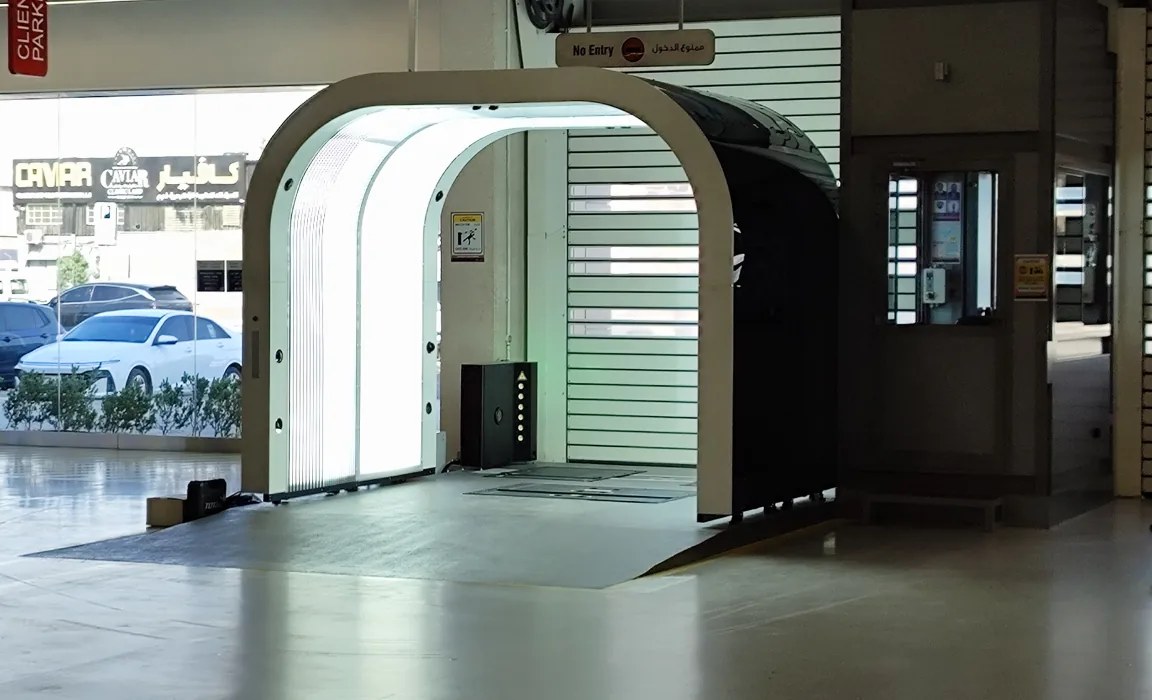
Weeks after a periodic technical inspection, a vehicle owner asks why a tire finding was recorded. The station needs the measurement from that visit, its vehicle association, and the assessment that followed. A current photograph cannot reconstruct the earlier inspection. A useful retrieval process keeps those original records within reach, even after staff change shifts or the vehicle returns for another inspection. For PTI operators bringing exterior, tire tread, tire sidewall, and underbody observations into one workflow, the Elscope Vision Passenger Vehicle 4-in-1 Solution is a strong fit. Its inspection coverage, digital records, API integration, and local storage support an evidence-led process. This walkthrough sets out a proposed working method for connecting those outputs to the station's PTI records, rather than describing a particular software screen or preconfigured export. AI-generated scenario illustration. Begin with the station's PTI visit record. During implementation, define how that record will link to the relevant 4-in-1 inspection output. The retrieval index should identify the vehicle, inspection event and time, participating modules, and location of the retained evidence. Confirm with the integration team which information comes from the inspection platform and which must be supplied by the station's own system. The first retrieval task is to confirm which modules actually ran during the session in question. Not every lane pass necessarily activates all four modules; configuration, vehicle routing, or equipment status may mean a given session recorded body and tread data but not underbody or sidewall results. Confirming module participation before searching for evidence prevents wasted effort and, more importantly, prevents the assumption that missing evidence means a clean result. If a module did not run, its absence should be noted rather than interpreted as a pass. For the body inspection component, the Dragate arch scanner captures visible exterior damage such as dents and scratches, recording defect location, severity classification, and count. The output includes a color-coded damage report showing detected defects. Retrieve the retained body images together with the associated damage report using the site's agreed record links. Preserve the connection between the observed area and its assessment. A cropped screenshot in an email may remove panel context, so include access to the original retained image where available. Later explanations should be identifiable as additions, with their author and date recorded in the station's process. Use the available images and contemporaneous inspection notes to establish what can be reviewed. Do not infer complete coverage from the absence of an annotation or assume that the software provides an excluded-zone diagram. Where a relevant area cannot be assessed from the retained evidence, state that specific gap in the response. The tire tread module measures remaining tread depth, providing measurement data that the station can associate with its PTI record through the agreed workflow. Retrieval here is more targeted than with body imaging: the operator needs the specific tread depth values recorded for each tire position at the session timestamp. The practical retrieval step is to retrieve the retained tread output and confirm its tire-position association. These values represent what the system recorded during the drive-through pass. For PTI purposes, the relevant question is usually whether a tire met or failed the applicable minimum tread depth threshold at the time of inspection. The stored measurement is the evidence; the pass/fail flag in the summary is the derived conclusion. When an operator retrieves tread measurements for a post-inspection query, the recommended practice is to record both the measurement values and the assessment rule applied at the time of the session. Thresholds can change between inspection events if site policy or regulatory requirements are updated, so the threshold applied during the original session matters for interpreting the result accurately. The tire sidewall module captures visible sidewall condition and performs recognition tasks such as tire brand, model, and production-date code recognition. The underbody scanner produces undercarriage images with AI-assisted visible defect recognition. Both modules generate image-based evidence rather than single numeric measurements, which changes the retrieval task slightly. For sidewall evidence, the operator retrieves the stored sidewall images and any associated recognition output through the site's agreed record association. For underbody evidence, the retrieval target is the undercarriage image set and any retained AI recognition output. In both cases, the original images are the primary evidence, and any AI-generated annotations or classifications are secondary outputs that were applied to those images. A practical note for organizations retrieving underbody or sidewall evidence after a significant time gap: image-based evidence is only as useful as its storage integrity. Organizations should verify the vehicle and event association using retained source records before releasing images for external review. Retrieval without verification is incomplete. Each time an operator pulls evidence from a PTI record for external use, a short verification step reduces the risk of producing mismatched or outdated material. A proposed verification checkpoint consists of three confirmations. First, the operator confirms that the vehicle identifier in the retrieved evidence matches the vehicle identifier in the PTI record and in the external query. VIN or plate mismatches between the query and the stored record should halt the retrieval until the discrepancy is resolved. Second, the operator checks that the retained event-time association matches the session referenced in the original PTI record. Combined records that reference multiple sessions or that have been updated after the original inspection event require particular care; the relevant evidence is from the specific session under review, not from a later re-inspection. Third, the operator confirms which modules contributed evidence to the record and explicitly notes any modules that did not participate in that session. Document this check in the station's release procedure and assign a reviewer before the evidence leaves the site. Evidence retrieval is an operational task that requires clear ownership. In a typical PTI operation, the question of who retrieves evidence, who verifies it, and who authorizes its release to an external party is worth defining before a dispute or audit arrives. A workable responsibility structure assigns the retrieval task to the inspection operator or shift lead who has system access, the verification checkpoint to a supervisor or quality role who confirms the three-point check described above, and the release authorization to a site manager or compliance officer who approves the evidence for external use. Separating these roles means that the person pulling the data is not the same person checking its completeness, which adds a layer of review that matters when evidence is used in regulatory or commercial contexts. Organizations using the 4-in-1 Solution's API integration path to feed inspection data into fleet management or dealer management systems should also define who owns the evidence at each stage of the data flow. Where inspection results are copied to a receiving system, define access and retention responsibilities for both the source and the copy. Retrieval requests that arrive after data has moved downstream may require coordination between the PTI site and the receiving system's administrator. Not every retrieval produces a clean answer. An operator may find that the body module's coverage did not include the panel under dispute, that tread measurements exist but the applied assessment rule differs from the one the querying party assumes, or that the underbody images are present but no defect overlay was generated for the area in question. In these situations, the responsible practice is to report what the evidence shows and what it does not cover, rather than to interpret absence as confirmation. The package should distinguish original observations, the station's assessment, and any later explanation. That separation lets the recipient understand how the recorded decision was reached without treating a body-damage classification as a statutory pass/fail category. Operators preparing evidence for external use should include a brief scope statement with each retrieval package, noting the modules involved, any known coverage limits, and the assessment rules applied during the session. That context makes the evidence more useful to the receiving party and reduces the risk of the record being over-interpreted. For questions about configuring the Passenger Vehicle 4-in-1 Solution for PTI operations or establishing an evidence retrieval workflow at your site, contact the Elscope Vision team directly.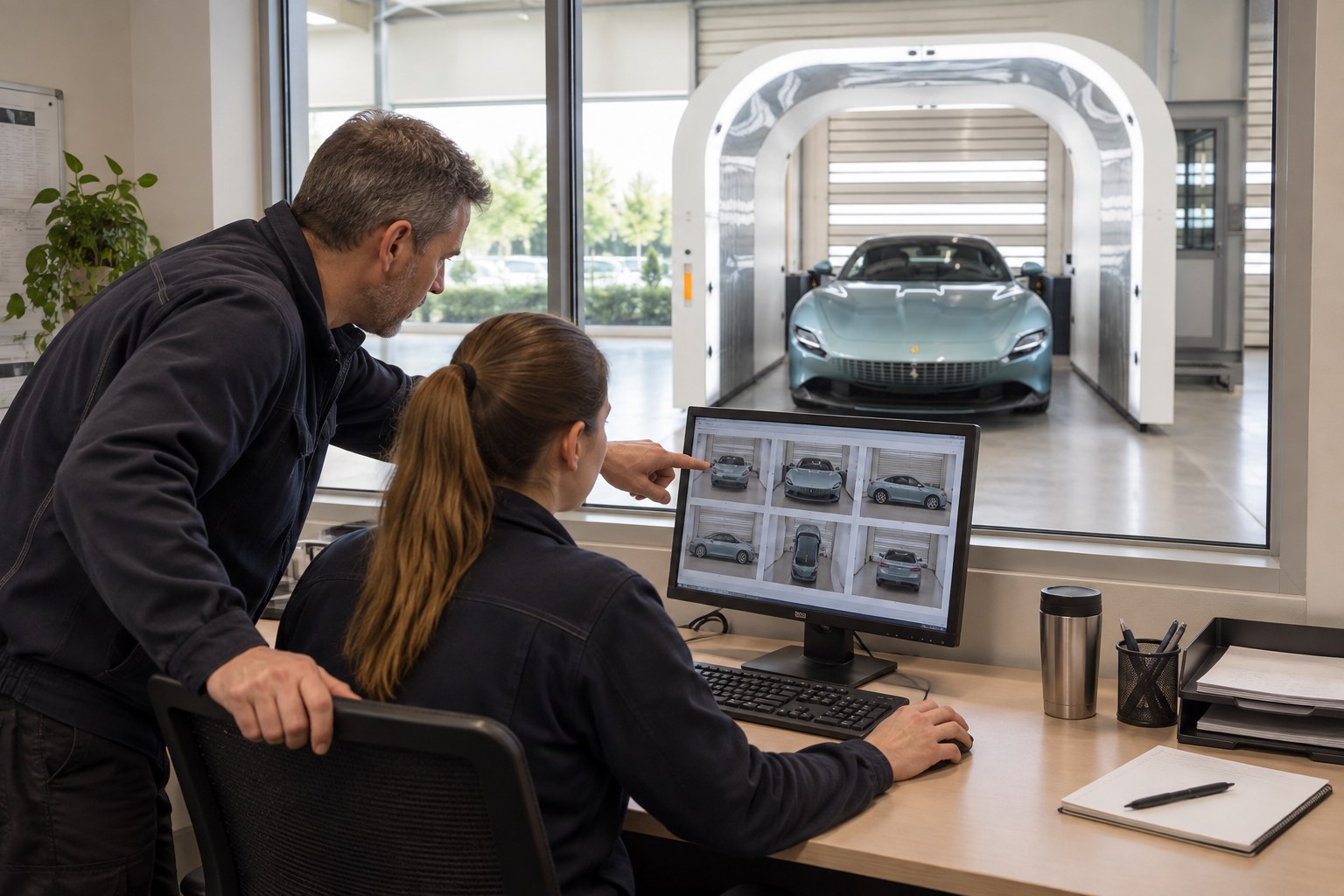
Establish the Link Between the Visit and Its Evidence
Tracing Body Damage Evidence
Retrieving Tire Tread Measurements
Sidewall and Underbody Evidence
Building a Verification Checkpoint Into Each Retrieval
Assigning Retrieval Responsibilities
Finish With a Clear Answer and a Traceable Evidence Package
Let's Discuss Your Inspection Needs
We offer professional consultation services
Address : NO. 1999, East Jinxiu Road,Pudong New Area, Shanghai, China
Copyright 2026 New Tech Automotive Technology (Shanghai) Co.,Ltd. All Rights Reserved Information Security
Follow Us


Contact Us
 marketing@ntatchina.com
 +86-17717670602
 +86-17717670602

Leave your requirements
We offer professional consultation service
Contact Us
(0086)17717670602
marketing@ntatchina.com
8617717670602
Follow Us
Address : NO. 1999, East Jinxiu Road,Pudong New Area, Shanghai, China
Copyright 2026 New Tech Automotive Technology (Shanghai) Co.,Ltd. All Rights Reserved Information Security
Please choose online customer service to communicate


