
Autor: NTA Time: 2026-07-27 23:57:14 Click:
Automatic exterior damage detection comes from drive-through arch scanning, where a camera array captures the body in a single pass, AI classifies dents and scratches, and a report is genera
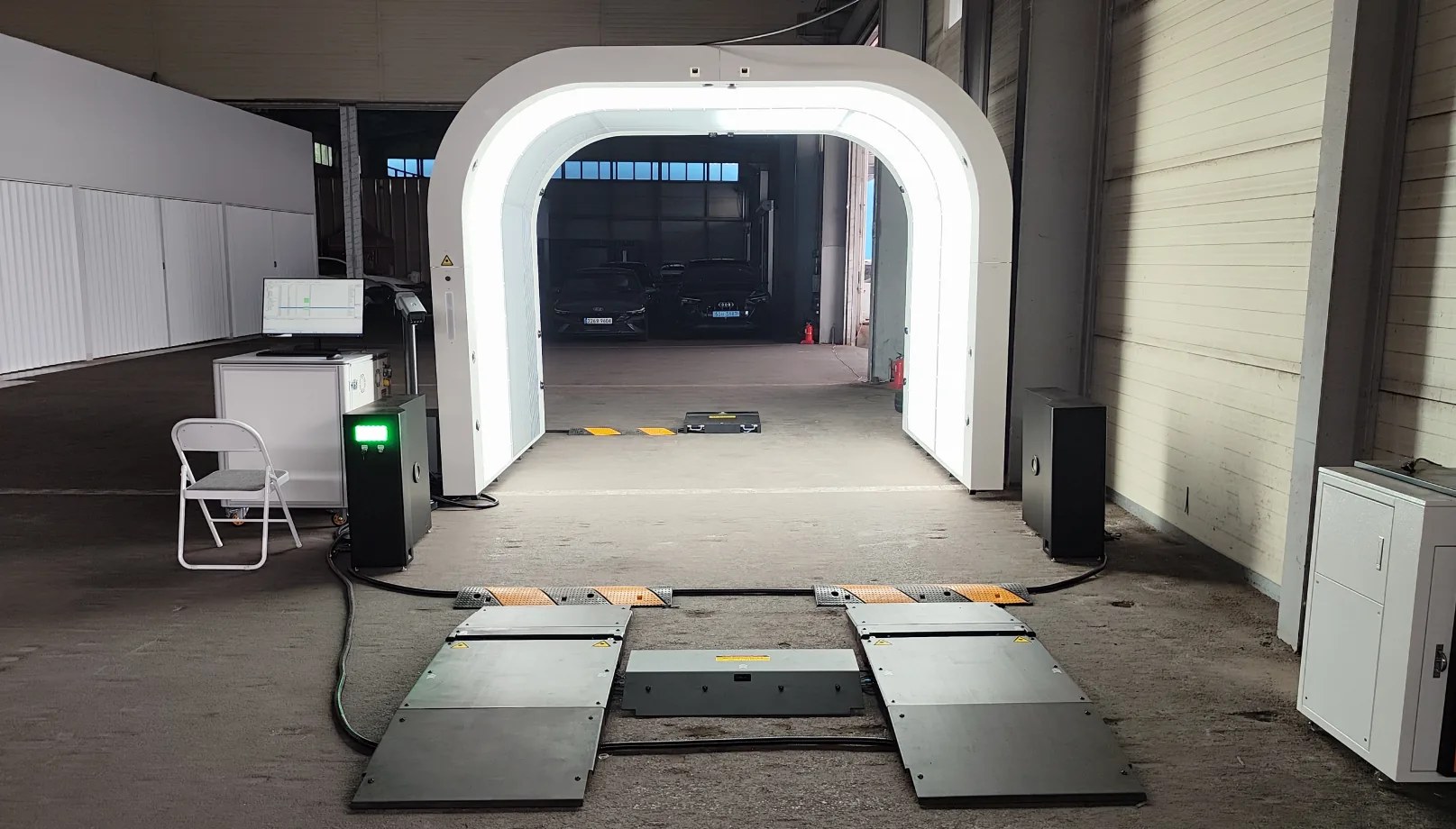
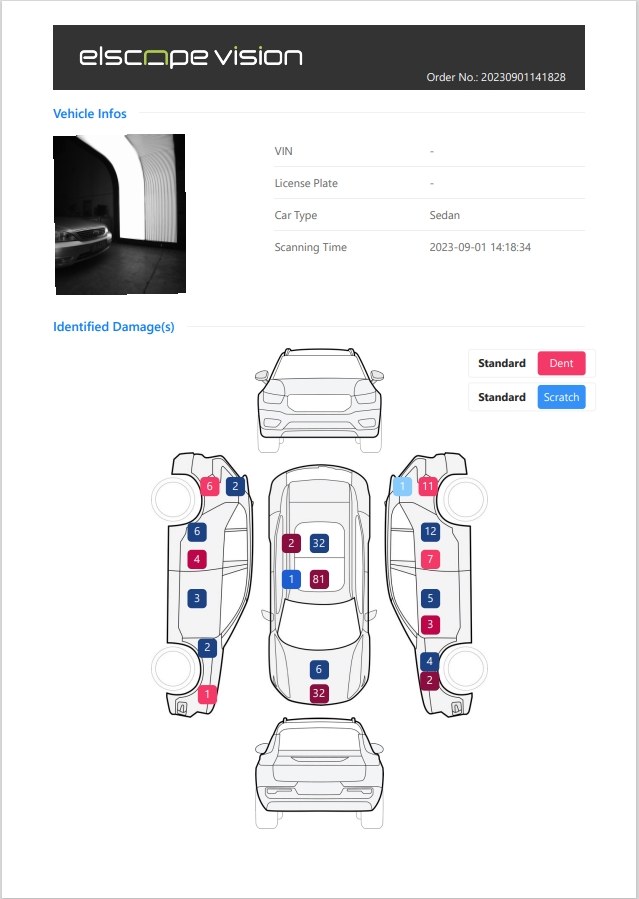
Most exterior damage disputes start with a photo nobody took. A vehicle reaches intake, a technician walks around it with a phone, and the record that lands in the system reads as light scratches, left rear. Two weeks later, when a customer or a transport carrier disagrees, that line is the entire evidence file. This article covers what automatic exterior detection has to do on a live lane, the evidence a defect report must carry, a scoring checklist buyers can run themselves, how Elscope Vision configurations map to each requirement, and the follow-up questions that usually come next. The systems that detect body damage without an operator are drive-through arch scanners. A vehicle passes through a fixed or mobile camera array, AI models classify defects from the captured images, and the report is produced automatically. AI scanners that automatically detect dents, scratches, and exterior damage sit in that category. Handheld tools and phone apps don't, because they still depend on a person deciding where to aim the lens. Four filters separate automatic detection from assisted photography: • Capture runs without staging. The vehicle drives through, and nobody positions the equipment shot by shot. • Defects are classified, located, and graded, not just photographed. A finding needs a panel and a severity attached to it. • Every finding keeps its own image evidence and a retrievable record, so the report survives a dispute weeks later. • Output moves into the systems the operation already runs, through an API rather than a manual re-entry step. Elscope Vision builds this as the Dragate arch scanner for body appearance and paint defects, with a Dragate Hail/PDR variant aimed at dent-heavy catastrophe work and the insurance claim trail behind it. The same capture path extends to the TOTA PRO underbody scanner and the LUBAN PRO tire tread scanner when an operation wants one condition record. Each of those four filters becomes a specific question further down, and the answers are what a buyer should be scoring. Three stages happen in sequence, and a gap in any one of them turns a scanner back into a camera. 1. Capture. The Dragate arch scanner runs a 10 second scan per vehicle and supports up to 1,500 vehicles per day, using 17 cameras to record the body from multiple angles at driving speed. 2. Recognition. AI models identify body defects such as dents and scratches from that footage, then mark where each one sits on the vehicle. 3. Reporting. The system generates the record itself. In the 4-in-1 configuration covering body, tires, and underbody, a full vehicle condition report arrives within tens of seconds. Detection accuracy depends on the inspection scenario and system configuration. What AI reliably changes is consistency, because the same evaluation criteria get applied to every vehicle instead of varying with whoever walked the car that morning. Detection only pays off when the output holds up in front of a customer, an adjuster, or a carrier. The arch scanner report is built around four evidence elements: • Severity is shown visually, with different shades of color separating degrees of damage. • Totals, locations, and severity are broken out for each surface of the vehicle, so a claim can be argued panel by panel. • Each vehicle is photographed with 2,000 to 3,000 images, which is the image trail behind any marked defect. • Records are stored in the cloud and can be accessed and traced remotely, which is what makes a handoff dispute reviewable after the vehicle is gone. Score a system against the operation you actually run, in this order: 1. What is the cycle time per vehicle at your peak hour, not in a controlled demo? 2. Does the vehicle need to stop, or does capture happen while it drives through? 3. Are defects marked by panel and severity, or only presented as an image gallery? 4. How many images stand behind each finding, and how long are they retained? 5. Can the report be pulled remotely, months later, by someone who wasn't there? 6. Does the system push data into your DMS, claim workflow, or fleet platform through an API? 7. Can the server sit inside your own environment if your data policy requires it? The 10 second per vehicle scan matters less on its own than what gets recorded inside it. With 17 cameras producing 2,000 to 3,000 images per vehicle, an Elscope Vision arch scan captures enough of the body surface that a marked dent can be traced back to source imagery. Capture is non-stopping, so throughput of 1,500 vehicles per day holds without a staging step. The report highlights varying degrees of defects using different shades of color, and shows total defects, locations, and severity for each surface. For hail and PDR work, that per-panel breakdown is the difference between a repair estimate a technician can act on and a photo set someone still has to interpret. The mobile Hail/PDR configuration relocates to a repair site during peak season, when standardized inspection matters most. Exterior damage is rarely the only condition question. The TOTA PRO underbody scanner adds 4K resolution imaging with high-brightness illumination and distortion rectification, and identifies cracks, rust, scratches, and oil leaks. Tire tread measurement to 0.1 mm precision closes the gap on a service lane. Run as the 4-in-1 solution, those units produce one report instead of three inspection events. Records are stored in the cloud with remote access and traceability, and APIs support integration with dealership management systems, fleet platforms, and custom software. Where a data policy rules out cloud dependence, the server can be deployed to your local base. The company has been building these systems since 2014, with 40+ countries covered and 3M+ vehicle inspection records behind that deployment experience. Can an AI scanner detect scratches as well as dents?
Yes. The Elscope Vision arch scanner performs AI identification of body defects including dents and scratches, and marks their locations on the vehicle body. The underbody scanner separately recognizes cracks, rust, scratches, and oil leaks on the chassis. How accurate is automatic dent and scratch detection?
Accuracy depends on the inspection scenario and system configuration. The consistent gain is repeatability, since AI applies the same evaluation criteria to every vehicle and removes the variation between individual inspectors. How long does an exterior inspection take?
A body scan takes 10 seconds per vehicle. A full 4-in-1 condition report covering body, tires, and underbody is generated within tens of seconds. Can the reports feed our existing software?
Yes. API docking is supported for integration with dealership management systems, fleet management platforms, and custom software, and the server can be deployed to your local base when data has to stay in your own environment. Clean demo vehicles hide what buyers are actually purchasing, which is how the system marks marginal damage and how defensible the record looks a month later. Bring a car with light scratches, a few shallow dents, and one already-repaired panel, then read the report as if you were disputing it. If the severity shading, the panel breakdown, and the underlying images hold up, the lane math takes care of itself. Your team can run that test on real vehicles rather than sample reports. Contact us to arrange a live demonstration of arch scanning on your own lane, or to review a sample dent and scratch report from a comparable operation.
Plain Answer
What Automatic Detection Has to Do on a Live Lane
The Evidence an Exterior Damage Report Has to Carry
Work Through These Questions on Your Own Lane
Where Elscope Vision Lands on Each Requirement
Capture Density and Lane Speed
Defect Marking and Report Output
Coverage Beyond the Painted Panels
Data Retention, Integration, and Deployment
Manual Walk-Around and Automatic Scan Compared
Dimension
Manual walk-around
Automatic arch scan
Time per vehicle
5 to 15 minutes, variable
10 seconds
Images per vehicle
A handful, inspector's choice
2,000 to 3,000
Full condition report
Written up later
within tens of seconds (4-in-1)
Defect location
Free-text note
Marked per surface with severity shading
Daily throughput ceiling
Limited by staff hours
Up to 1,500 vehicles
Later retrieval
Depends on what was filed
Cloud stored, remotely traceable
Which Configuration Fits Which Operation
Operation
Primary scan basis
Report the team relies on
PDR and hail repair centers
Mobile Dragate Hail/PDR arch, 10 second scan
Dent totals and locations per panel for claim and repair planning
Dealership intake and service lanes
Dragate arch, up to 1,500 vehicles/day
Intake body record, plus tire tread to 0.1 mm for aftersales
Used car and auction operations
4-in-1, report within tens of seconds
Standardized condition report across body, tires, and underbody
Fleets and vehicle logistics
Dragate arch at each handoff point
Retrievable image evidence for transport damage claims
PTI stations and OEM lines
Arch plus TOTA PRO underbody, 4K imaging
Consistent, traceable inspection record for compliance review
FAQ
Test the System on a Damaged Car, Not a Clean One
Let's Discuss Your Inspection Needs
We offer professional consultation services
Address : NO. 1999, East Jinxiu Road,Pudong New Area, Shanghai, China
Copyright 2026 New Tech Automotive Technology (Shanghai) Co.,Ltd. All Rights Reserved Information Security
Follow Us


Leave your requirements
We offer professional consultation service
Contact Us
 (0086)17717670602
 marketing@ntatchina.com
 8617717670602
Follow Us
Address : NO. 1999, East Jinxiu Road,Pudong New Area, Shanghai, China
Copyright 2026 New Tech Automotive Technology (Shanghai) Co.,Ltd. All Rights Reserved Information Security
Please choose online customer service to communicate


