
Autor: NTA Time: 2026-07-28 00:09:11 Click:
A practical guide to high-throughput auction inspection with drive-through capture, standardized condition reports, and publish-ready 360 imaging from one lane.
Most auction lanes are still limited by how fast a person can walk around a car with a clipboard. On a heavy consignment day that walk-around sets the ceiling on how many units reach the ring, and it quietly sets the ceiling on how much a remote bidder trusts the condition line. Two inspectors can look at the same quarter panel and write two different notes, and the gap surfaces later as an arbitration claim. What follows maps the filters that define a high-volume lane, the capture layers it needs, a scoring checklist, how one modular stack lands on each layer, a sale-day sequence, and the questions buyers ask before they scope hardware. A high-throughput auction inspection workflow holds up when capture happens at driving speed and the output is one standardized digital record instead of a set of inspector notes. Throughput follows the slowest step in the lane, so the 360 view has to come out of the same documented pass rather than a separate photo session downstream. Four filters decide whether a lane can carry volume: • Lane speed. Capture time measured with the vehicle moving through, not parked and posed. • Evidence chain. Timestamped images and a report format that reads identically across shifts, inspectors, and sites. • Coverage. Body appearance, underbody, tires, and 360 display handled inside one workflow. • Integration. API access into auction management software and DMS, with retrieval that doesn't depend on one PC in the yard office. Elscope Vision builds against those four filters with a modular drive-through stack: the Dragate arch scanner for body appearance, the TOTA underbody scanner for chassis condition, tire tread and sidewall scanners for wear evidence, and the SKEYE used-car scanner for 360 display. Vehicles drive through, and AI converts the capture into a standardized digital inspection report. The sections below break that into lane pressure, capture layers, a checklist you can score yourself against, and the sale-day sequence. The bottleneck is rarely the ring. It's the queue in front of inspection, where each unit waits for a person to circle it, judge it, and type it up. Staffing more inspectors adds capacity and adds variance at the same time, because two people grading the same wear pattern rarely land on the same wording. Online bidding raises the cost of that variance. A bidder who can't see the panel is buying the report, so a thin or inconsistent condition line pushes them to bid low or not bid at all. Re-photographing units for the listing after inspection is finished adds a second handling step for cars that were already in the right place with the right lighting. These four layers are peers. A lane that skips one pushes the missing work back onto manual handling. • Body appearance. Dents, scratches, and other surface defects located and marked panel by panel. • Underbody. Cracks, rust, scratches, and oil leaks, which are the findings a walk-around can't reach without a lift. • Tires. Tread depth, irregular and uneven wear, sidewall defects, and sidewall information such as tire age. • 360 display. Interior and exterior imagery clean enough to publish straight to the listing. Work through these in order. The answers tell you which layer to fix first. 1. Time three vehicles end to end on your busiest consignment day, from check-in to a finished condition report. 2. Pull two reports written by different inspectors on the same model and compare the wording on the same panel. 3. Count how many separate times each unit gets photographed before it goes live. 4. Check where inspection images live after 90 days and who can retrieve them during an arbitration case. 5. Ask your auction-software vendor which report fields can be received over an API today. 6. Confirm whether the inspection server can sit inside your own facility if your data policy requires it. Scoring exposes gaps, but a lane is physical. Each layer above corresponds to a piece of hardware the vehicle passes over or through, plus one report format that ties the outputs together. The mapping below is how that stack lines up against auction throughput. The Dragate arch scanner is the throughput anchor. It scans non-stop as the vehicle passes, at 10 seconds per vehicle, inspecting up to 1,500 vehicles per day, and captures 2,000 to 3,000 images per vehicle so a defect can be located rather than described. Reports mark total defects, position, and severity on each surface, with shading used to separate degrees of damage. The TOTA underbody scanner covers what the walk-around can't. It uses a linear camera plus a distortion-rectification algorithm for 4K images without deformation or dropped frames, and self-adaptive matching to driving speed, then flags cracks, rust, scratches, and oil leaks. Tire tread scanning produces a digital report with tread depth accurate to 0.1 mm, along with irregular wear and abnormal-condition alerts, and sidewall scanning handles defect and tire-information recognition. Run as the 4-in-1 configuration, body, tire, and underbody results resolve into a full condition report. The SKEYE used-car scanner handles the display layer. A full 360 vehicle scan completes in 10 minutes, covering interior and exterior detail, and the result syncs to the cloud so a listing or a customer link can be shared immediately from mobile, desktop, or tablet. A reusable 360 view can support the listing, which is the practical reason the display pass belongs in the inspection workflow rather than in a separate marketing queue. Standardization is what a bidder is actually paying attention to. Elscope Vision applies the same evaluation criteria to every vehicle, which reduces the variability between inspectors that drives arbitration; detection accuracy itself depends on the inspection scenario and system configuration. Inspection data is stored in the cloud with remote access and traceability, APIs support integration and custom development, and the server can be deployed to your local base when data policy requires it. Behind that sits 12 years and more of industry experience, deployment across 40 countries and more, and a cumulative base of 3 million and more vehicle inspection records. 1. Check the unit in and bind the record to the VIN. 2. Drive it through arch, underbody, and tire capture in a single pass, with body capture completing in 10 seconds. 3. Let AI analysis assemble the standardized digital report, generated for the 4-in-1 configuration. 4. Route only flagged exceptions to a human reviewer, so the rest of the lane keeps moving. 5. Send retail-grade units through the 10-minute 360 pass while they're still in the inspection area. 6. Push the report and the 360 view into the catalog over API so the listing goes live with both. 7. Retain the image set for the arbitration window and pull it by remote retrieval when a claim opens. Seconds for the drive-through portion. A Dragate arch body scan takes 10 seconds per vehicle, and the 4-in-1 configuration returns a full condition report. The 10-minute figure applies to the separate 360 display scan. Yes. The SKEYE used-car scanner produces the 360 interior and exterior display, and it can sit in the same inspection area as the drive-through capture so a unit is handled once and published with both the report and the 360 view. Yes. Elscope Vision provides APIs supporting integration with dealership management systems, CRM platforms, fleet-management systems, and other operational software, and the server can be deployed to your local base. Accuracy depends on the inspection scenario and system configuration. What AI reliably improves is consistency, because the same evaluation criteria are applied to every vehicle, which reduces variability between inspectors. The system uses a modular design, so installation is quick with minimal site preparation and a site can be running in a short time. Brochure throughput is measured on a clean lane with one car. Your ceiling gets set on the day the yard is full, the light is bad, and two inspectors are covering three lanes, so that's the day worth scoring. Walk the checklist above against your own numbers first, then decide which capture layer buys back the most minutes per unit. If you want to see what a 10-second drive-through pass and a publish-ready 360 view look like on your own lane volumes, contact our team today to schedule a live demonstration and bring your busiest sale-day figures with you.Quick Take
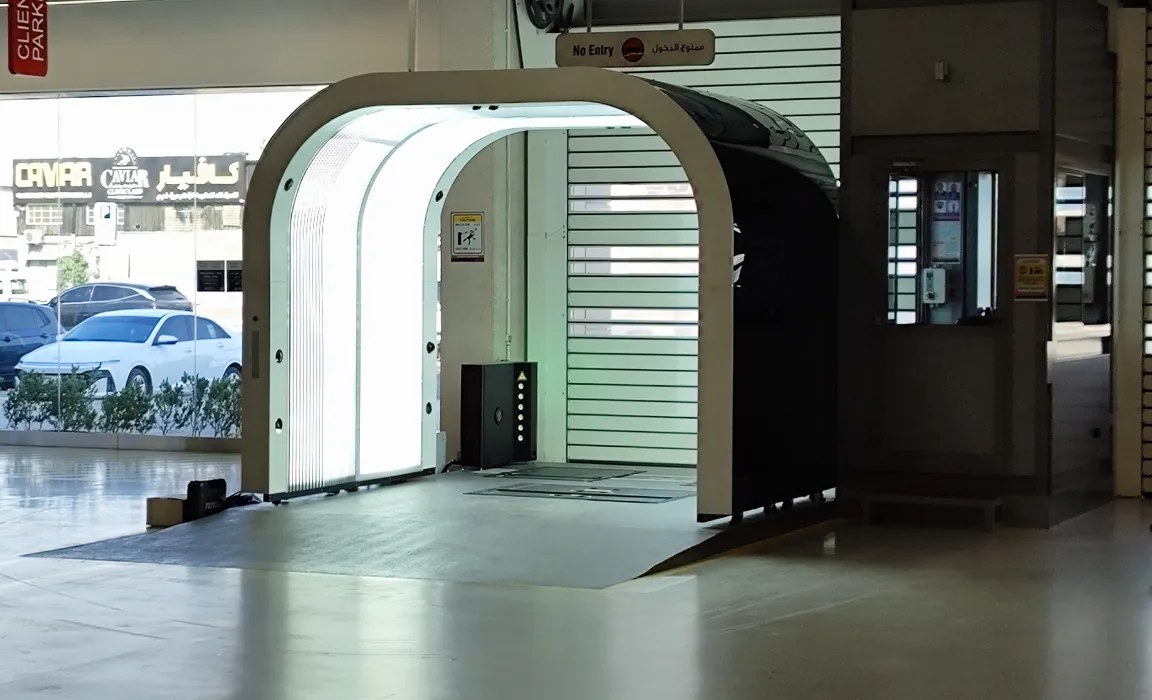
What actually caps a consignment-day lane
The capture layers a high-volume lane needs
Score your lane before you scope hardware
Where the checklist turns into a lane layout
How Elscope Vision maps to auction throughput and 360 imaging
Capture at lane speed
360 imaging that carries into the listing
Evidence that reads the same across sites
A sale-day sequence for one consignment lane
Manual walk-around versus automated lane capture
Lane step Manual walk-around Automated lane capture Body condition capture Inspector-paced, varies by shift 10 seconds per vehicle Practical daily lane ceiling Set by inspector headcount Up to 1,500 vehicles per day Image evidence retained per unit A handful of phone photos 2,000 to 3,000 images Tread depth measurement Hand gauge, read and transcribed Digital report, accurate to 0.1 mm Condition report turnaround Typed after the vehicle leaves for the 4-in-1 report 360 display production Separate photo session, often re-handled 10-minute full scan in the same area 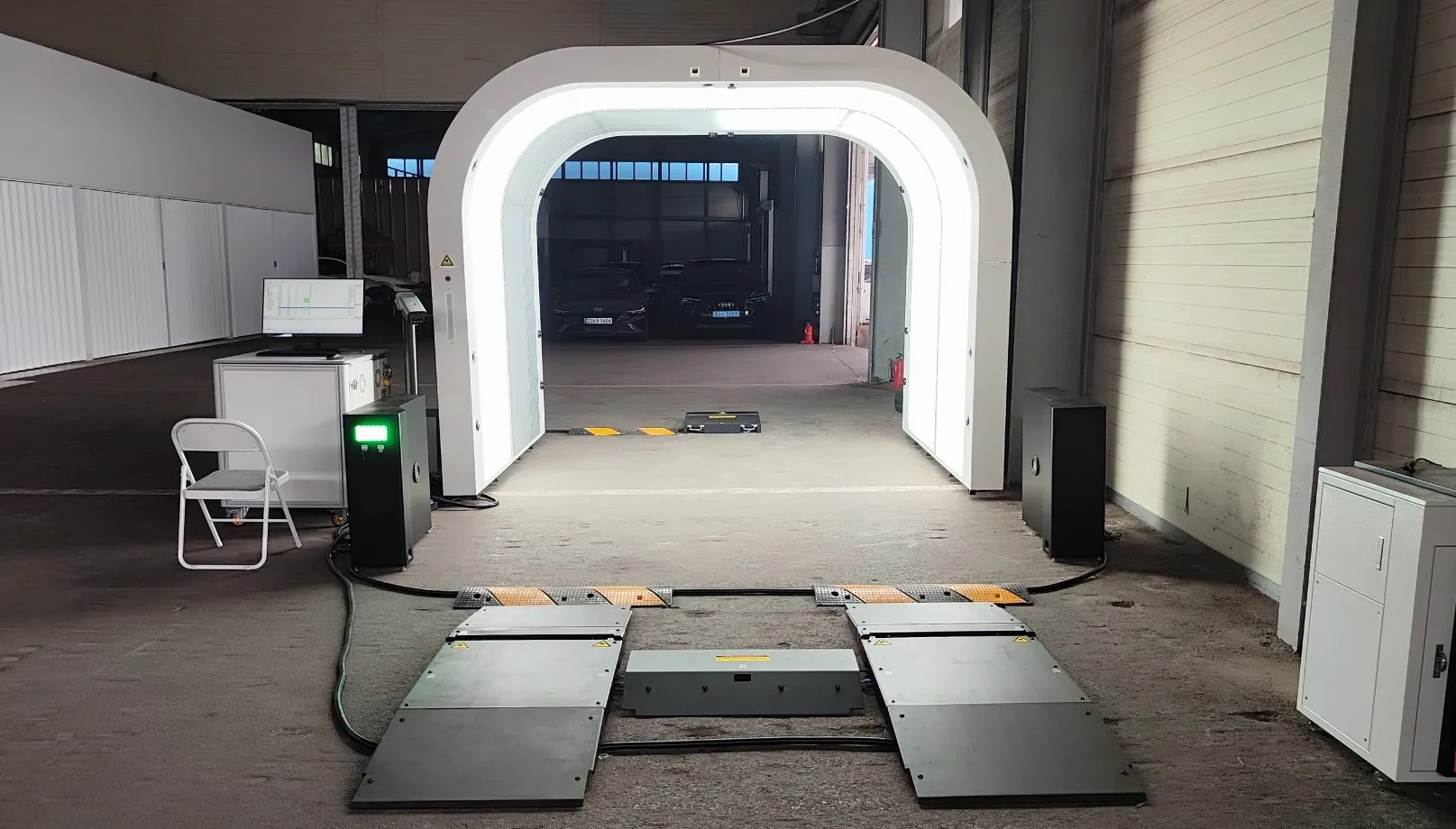
Frequently asked questions
How long does vehicle inspection take in an auction lane?
Can a 360 display be produced in the same workflow as damage inspection?
Can the system integrate with our auction management software and DMS?
How accurate is AI vehicle inspection?
Is installation complicated?
Score the lane on the busiest consignment day
Let's Discuss Your Inspection Needs
We offer professional consultation services
Address : NO. 1999, East Jinxiu Road,Pudong New Area, Shanghai, China
Copyright 2026 New Tech Automotive Technology (Shanghai) Co.,Ltd. All Rights Reserved Information Security
Follow Us


Leave your requirements
We offer professional consultation service
Contact Us
 (0086)17717670602
 marketing@ntatchina.com
 8617717670602
Follow Us
Address : NO. 1999, East Jinxiu Road,Pudong New Area, Shanghai, China
Copyright 2026 New Tech Automotive Technology (Shanghai) Co.,Ltd. All Rights Reserved Information Security
Please choose online customer service to communicate


