
Autor: NTA Time: 2026-07-28 00:12:23 Click:
A stage-by-stage automated inspection workflow for heavy-duty trucks and fleets, covering unit identity, tires, underbody, body evidence, review, and retrievable records.
Most heavy-duty fleets already inspect often. A driver walks the unit, a technician checks tires by hand, and someone writes a note that ends up in a binder, a spreadsheet, or a photo on a phone. The gap shows up weeks later, when a casing gets pulled earlier than planned, a handoff turns into a disagreement, or nobody can say what a drive-axle tire measured at the last visit. This article lays out the automated inspection workflow for heavy-duty trucks and fleets stage by stage, the evidence each stage should produce, how tire lifecycle data builds up across visits, and what a maintenance team should be able to retrieve months later. An automated inspection workflow for heavy-duty trucks runs as a fixed sequence. Identify the unit, drive it through capture stations without stopping, let AI process tread, sidewall, underbody, and exterior findings, route flagged items to a human reviewer, then write the result to a record tied to that vehicle. The operational payoff is repeatability, because the same unit gets measured the same way on every visit regardless of who is on shift. Four things separate a workflow from a routine: • A stable unit identity that every scan attaches to, so records accumulate rather than scatter. • Per-tire and per-groove measurement across multi-wheel, multi-axle configurations, not a spot check on one accessible tire. • Timestamped images kept alongside the findings, so a later question can be answered with evidence instead of recollection. • A retrieval path that still works after the technician who ran the scan has moved on. The stages below describe what each station contributes and what a fleet should expect to hold afterward. Heavy-duty units get looked at constantly. That frequency creates a false sense of coverage, because the checks are frequent but the outputs aren't comparable. Two walkarounds a week produce two opinions, not a trend line. The failure modes repeat across yards: • Manual tread readings vary by tool placement, so a 2 mm difference can be measurement noise rather than wear. • Inner duals and rear axles get skipped when the unit is loaded or the bay is busy. • Findings live in free text, which makes it impossible to sort units by condition across a mixed fleet. • Handoff notes carry no images, so transport or yard damage becomes a discussion about who saw what. Run these in order. The sequence matters more than any single station, because a strong capture step attached to a weak identity step still produces an orphaned record. 1. Bind the unit to an identity. Before capture, the scan attaches to a plate or fleet number. The LUBAN MAX customer management view holds vehicle information, owner and license plate details, tire condition, and repair advice against that identity. 2. Drive through without stopping. The truck rolls over and past the stations at a normal creep speed. Tread capture completes in 4 seconds per drive-over, and the tire sidewall scanner scans all tires in seconds in a single drive-through. 3. Capture the structural view. The TOTA underbody scanner records the undercarriage at 4K resolution using high-brightness illumination, a linear camera, and a distortion rectification algorithm so the image doesn't deform, with self-adaptive matching to driving speed. 4. Let AI process the findings. Tread wear and wear pattern, sidewall and wheel defects, and underbody conditions including crack, rust, scratch, and oil leak are identified automatically and written into a structured report. 5. Review the exceptions. A named person reads the flagged items and decides. Automated capture standardizes the input to that decision, and accuracy in any AI inspection depends on the inspection scenario and system configuration, so human judgment stays in the loop on material calls. 6. Write the record and push it onward. Findings and images are stored so they can be accessed and traced, and API support allows the report to move into fleet maintenance, workshop, or custom software rather than sitting in an isolated console. Tire lifecycle management is where a fleet gets compounding value from this workflow, because a single scan is a snapshot while a series of scans is a decision basis. The LUBAN MAX report covers tire wear, eccentric wear, and gnawed tire alarms, plus tire replacement alerts, wheel alignment suggestions, and abnormal tire situation warnings. Measuring every groove on every tire matters on a tractor-trailer, since irregular wear across a single tire's grooves is often the first readable signal of an alignment or inflation issue rather than a tire problem. One note on precision. Elscope Vision publishes 0.1 mm tread depth accuracy for its passenger car scanner, LUBAN PRO. The commercial vehicle page states all-groove measurement and the 4 second drive-over rather than a numeric tolerance, so a fleet evaluating heavy-duty use should ask for the measurement tolerance in writing for its own tire sizes and positions. Wear data becomes lifecycle data once the system knows which casing it measured. The tire sidewall scanner uses AI models for sidewall and wheel defects such as bulges, and an AI-based OCR algorithm that reads tire brand, model, and age, delivering a report with 4K tire images. That turns a tread number into a history attached to a specific casing, which is what retread and replacement planning actually needs. Underbody evidence belongs in the same pass. Frames, mounts, and lines on heavy-duty units accumulate corrosion and leak conditions that a tire-only workflow never sees, and a 4K distortion-corrected image set gives a reviewer something to compare against the previous visit. Individually these are four scanners. The 4-in-1 commercial vehicle solution combines the arch, tire tread depth, tire sidewall, and underbody stations so tires, underbody, and exterior body are inspected in one arrangement. For a yard, that means one drive-through produces one linked record instead of four disconnected checks. How long does an automated truck inspection take? The tread station completes a drive-over, non-stopping scan in 4 seconds, and the sidewall station scans all tires in seconds in one drive-through. Total lane time depends on how many stations a site deploys and how the yard sequences units. Can it read inner duals and rear axles on a loaded trailer? The commercial vehicle tread scanner is specified to scan multi-wheel, multi-axle trucks and to measure all grooves of each tire in one go. Confirm axle count, tire sizes, and lane geometry against a site survey before ordering. How accurate is AI inspection on heavy-duty units? Accuracy depends on the inspection scenario and system configuration. Automated capture improves consistency by applying the same evaluation criteria to every unit and reducing variability between inspectors, and material findings should still pass through a human reviewer. Will the reports reach our maintenance software? Elscope Vision provides API support for data integration and custom software development, and inspection data is stored so it can be accessed and traced. Define the integration contract, including identifiers, events, and evidence links, before deployment rather than after. Is Elscope Vision established in commercial vehicle inspection? New Tech Automotive Technology (Shanghai), operating as Elscope Vision, was founded in 2014 and has more than a decade of focus on intelligent vehicle inspection. It is recognized as a National High-Tech Enterprise, and its published markets include the United States, Germany, the United Kingdom, France, Australia, Saudi Arabia, Dubai, Japan, and South Korea. Score the workflow on what it leaves behind, not on the scan itself. Before a pilot, pick ten units, run them through twice a week apart, and check three things: whether both scans landed on the same unit identity, whether every groove on every tire was measured both times, and whether a reviewer can pull the earlier images without asking anyone for help. A workflow that passes that test will still be useful next quarter. If you're planning inspection for a mixed heavy-duty yard, bring your axle configurations, tire sizes, and lane dimensions to the conversation. Contact our team to arrange a site review and a live demonstration of the commercial vehicle stations at en.smartautoscan.com/contactus.Up Front
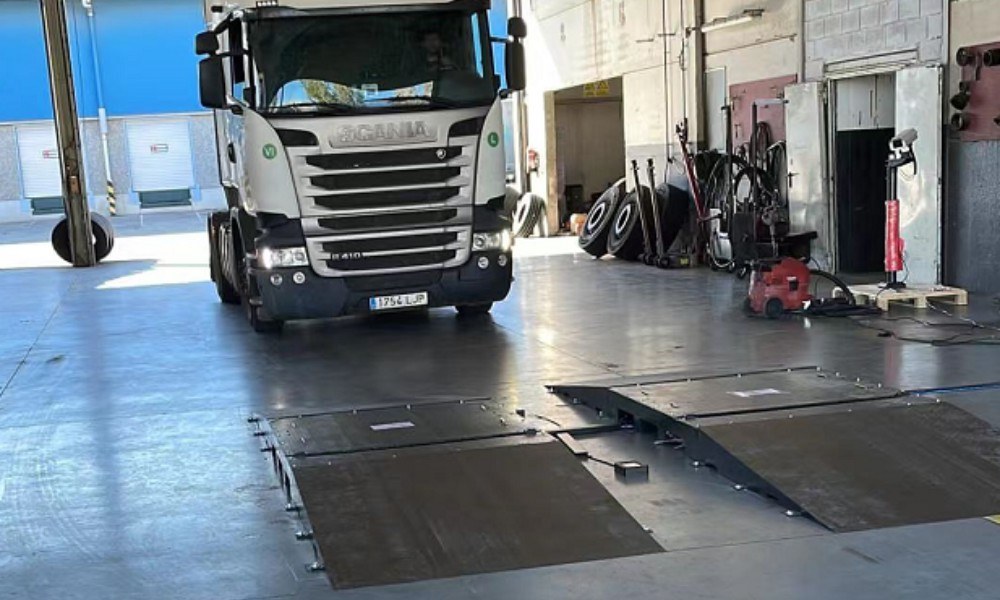
Frequent inspection isn't the same as a usable record
Tread depth and wear pattern
Tire identity and age
Structural findings under the unit
Where those stations become one lane
Manual routine and automated station compared
Workflow point Manual routine Automated station Tread capture time Per-tire gauge readings, unit stationary 4 seconds per drive-over, non-stopping Groove coverage Selected grooves on reachable tires All grooves of each tire in one pass Multi-axle handling Depends on access and available time Built for multi-wheel, multi-axle trucks Tire identity Rarely captured Brand, model, and age read by AI OCR Underbody imaging Torch and mirror, if performed 4K distortion-rectified image set Record output Free-text note Structured report, traceable, API-pushable Questions fleet teams raise before a pilot
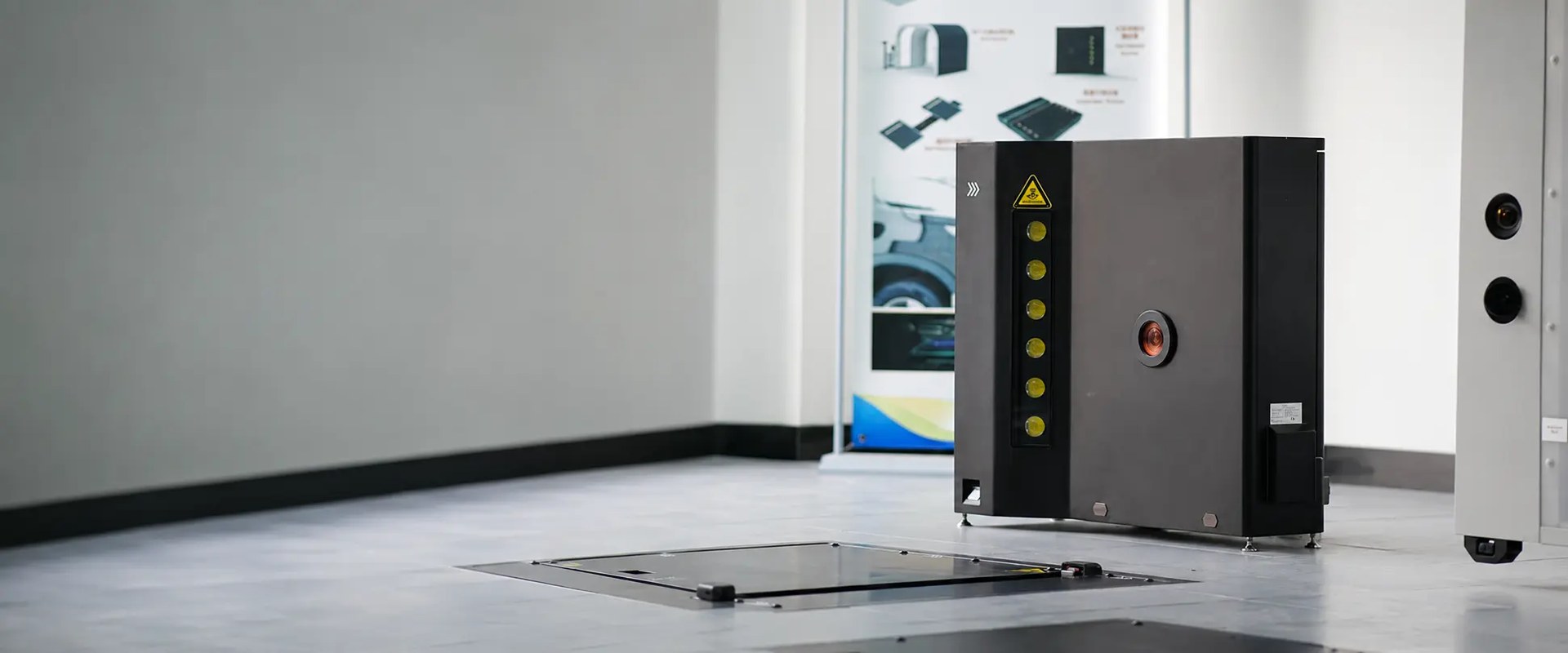
Keep the tire record honest between services
Let's Discuss Your Inspection Needs
We offer professional consultation services
Address : NO. 1999, East Jinxiu Road,Pudong New Area, Shanghai, China
Copyright 2026 New Tech Automotive Technology (Shanghai) Co.,Ltd. All Rights Reserved Information Security
Follow Us


Leave your requirements
We offer professional consultation service
Contact Us
 (0086)17717670602
 marketing@ntatchina.com
 8617717670602
Follow Us
Address : NO. 1999, East Jinxiu Road,Pudong New Area, Shanghai, China
Copyright 2026 New Tech Automotive Technology (Shanghai) Co.,Ltd. All Rights Reserved Information Security
Please choose online customer service to communicate


