
Autor: NTA Time: 2026-07-28 00:11:22 Click:
Learn how to combine body, underbody, tread, and sidewall findings into one timestamped 4-in-1 vehicle inspection report with a clear field map.
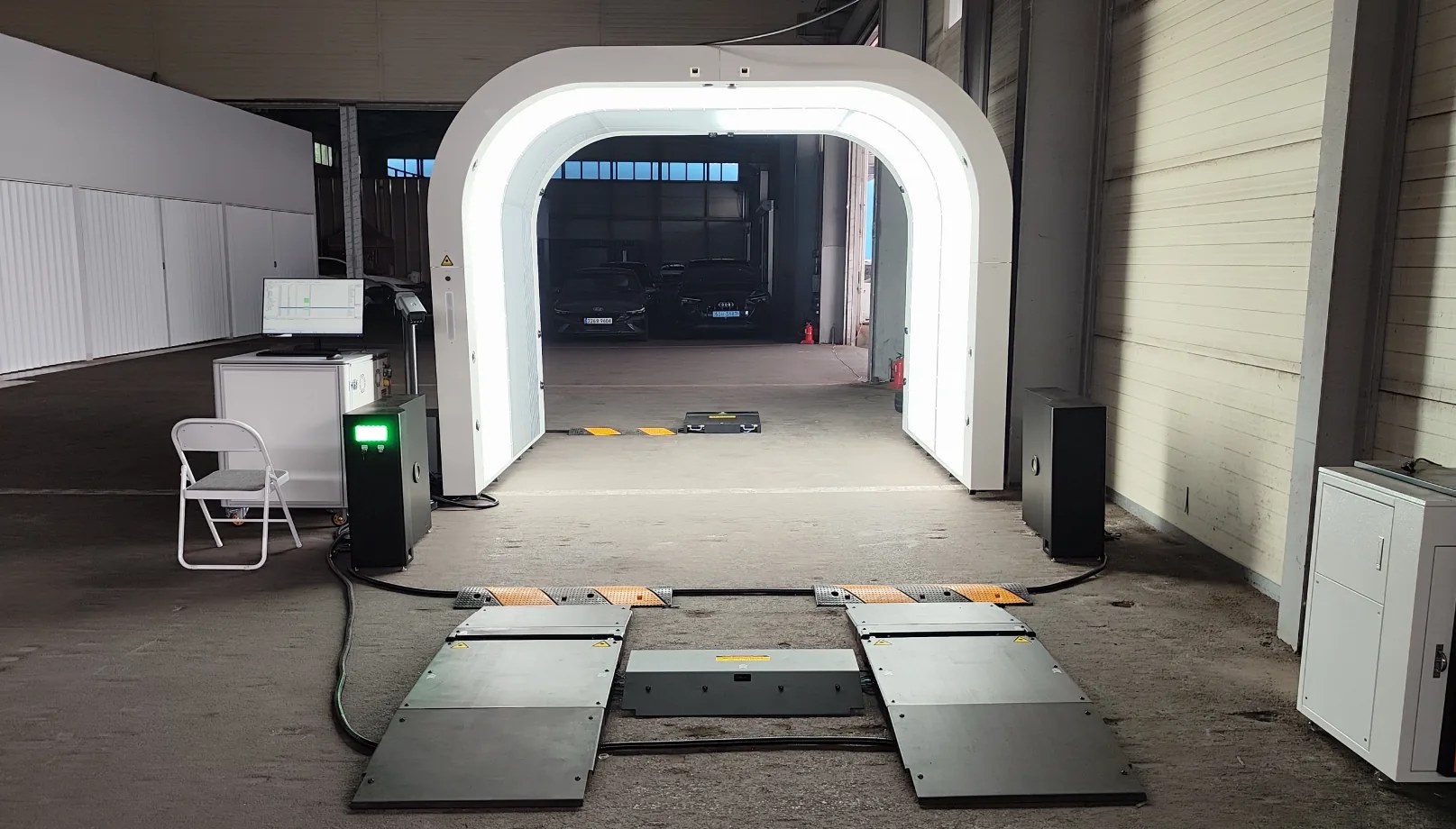
Most inspection reports are still assembled after the fact. Body photos sit in one folder, tread readings live in a technician's notebook, and the undercarriage gets a single line of text saying nothing visible. When a customer, a bidder, or a claims adjuster later asks what the vehicle looked like on Tuesday morning, someone has to rebuild the evidence from three places. This article covers what a modular report has to contain, how the four capture modules map to report fields, the order to build it in, and the questions worth settling before a lane goes live. A modular 4-in-1 report works when each capture module writes into its own section of a single record, keyed to one vehicle and one timestamp, and every section stays readable on its own. Design the record first, then choose the hardware that fills it. Four requirements decide whether the report holds up in a dispute: • One record identity: a single vehicle key plus a capture timestamp shared by all four modules. • Section independence: a tire section that still makes sense when the body section is pulled into a claim on its own. • Field-level evidence: every flag ties back to the image or measurement that produced it, not to a summary sentence. • Machine-readable output: structured fields that can push into a DMS, auction platform, or fleet system through an API. Elscope Vision builds its 4-in-1 vehicle inspection report on that shape. Body appearance, undercarriage, tread depth, and sidewall each run as a separate scanner with its own AI recognition layer, and the combined vehicle condition report is generated from one drive-through. What follows is the field map for each module, the build order, and where these reports usually break in production. Split records fail at the moment of pressure. A dealership can prove the bumper scuff existed at intake but can't show tread depth from the same visit, so the tire recommendation looks like an upsell rather than a reading. An auction lane publishes body photos on time and adds the undercarriage a day later, after bidding logic has already been set. Handoff work makes this sharper. Vehicle-logistics operators need the body, underbody, and tire evidence to carry the same timestamp, because a transport-damage claim is argued on what changed between two records, not on what one inspector wrote down. Each scanner owns a defined slice of the record. Keeping ownership explicit is what makes the report modular instead of merely combined. Three field groups carry the operational weight, so they belong in structured form rather than prose. Tread depth per groove is one, because thresholds differ by market and by fleet policy. Defect location is the second, since a claim needs panel and coordinate, not a description. Tire identity is the third, because brand, size, and age drive replacement logic and inventory matching. The body, underbody, and tire modules identify components, so the vehicle-level key has to come from the operator's own process or from an integration. Elscope Vision supports API docking with dealership management, auction, and fleet systems, and the server can be deployed to your local base when data has to stay on site. Confirm during specification how the vehicle key is written and which system owns it, because that single decision determines whether four clean sections become one retrievable record. 1. Define the record schema before hardware selection, listing every field the business actually acts on. 2. Fix the identity key and the timestamp source, then confirm which system holds the master record. 3. Assign field ownership module by module so no two sections can report the same condition differently. 4. Set severity language once, and apply the same scale across body and undercarriage findings. 5. Wire the export path and test the API push into the DMS, auction platform, or fleet system with real records. 6. Lock retention and access rules, covering who can retrieve a past record and how long it stays available. The body layer runs on the Dragate arch scanner, which captures without stopping the vehicle at 10 seconds per vehicle and up to 1,500 vehicles per day, producing 2,000 to 3,000 images per car and labeling defect locations by severity shade. That volume matters for the report rather than for the brochure, because a reviewer can open the specific frame behind a flag. The undercarriage layer uses the TOTA underbody scanner, with high-brightness illumination, a linear camera, and a distortion-rectification algorithm that keeps 4K imaging free of deformation. Its AI layer identifies cracks, rust, scratches, and oil leaks, which are the findings PTI stations and auction operators are asked to defend most often. Tires are handled by two modules on purpose. The LUBAN PRO tire tread scanner measures all grooves in one pass at 0.1 mm precision and returns wear alerts, replacement alerts, and alignment suggestions, with inspection history retained for follow-up. Dealerships can use that history as a service asset because recorded readings give advisors clearer evidence for maintenance and replacement recommendations. The Tire Sidewall scanner adds brand, model, size, and age through OCR alongside sidewall and wheel defect recognition, so tire identity and tire condition arrive as separate fields. On the data side, records are stored in the cloud and can be retrieved and traced, with API support for integration and custom development. Accuracy depends on the inspection scenario and system configuration, so the honest claim is consistency: AI applies the same evaluation criteria to every vehicle and reduces variation between inspectors. Elscope Vision has 12+ years in vehicle inspection, deployments across 40+ countries, and more than 3M vehicle-inspection records behind that approach. • Manual assembly depends on which inspector walked the car and how much they chose to write. • A modular record captures the same four sections in the same fields on every pass. • Manual retrieval means finding a folder, a notebook, and an email thread. • A modular record is retrieved by vehicle key and timestamp, with the underlying images attached. What makes an inspection report modular rather than just combined?Each module owns its own fields and can be read or exported alone, while all four share one vehicle key and timestamp. A combined PDF that merges everything into flat text loses that. How long does a full 4-in-1 report take to generate?A complete condition report is generated. The body scan itself takes 10 seconds per vehicle. Can the report integrate with an existing DMS or auction platform?Yes. Elscope Vision provides APIs for integration with dealership management systems, CRM platforms, fleet-management systems, and other operational software. How accurate is AI defect detection?Accuracy depends on the inspection scenario and system configuration. The consistent gain is standardization, since every vehicle is evaluated against the same criteria regardless of who is on shift. Is installation disruptive to an existing lane?The system uses a modular design, so installation is quick with minimal site preparation. Score the report before scoring the equipment. Write down the five fields your team would need in a real dispute next month, then check which module produces each one and whether it exports cleanly. If you'd like to see how a modular body, underbody, tread, and sidewall report comes together on one record, contact our team to arrange a live demonstration and a sample condition report for your lane.Start Here
Why four modules belong in one record
What each module contributes to the report
Report module Capture scope Fields the module owns Reference figure Body appearance (Dragate arch scanner) Full exterior surfaces, non-stop drive-through Dent and scratch locations, severity shown by color shade, per-panel defect totals, image set 10 seconds per vehicle, 2,000 to 3,000 images Undercarriage (TOTA underbody scanner) Chassis, floor pan, suspension and exhaust areas visible from below Crack, rust, scratch, and oil-leak flags with location, distortion-corrected image strip 4K image resolution Tread depth (LUBAN PRO tire tread scanner) Every groove of each tire Per-groove depth values, uneven and eccentric wear alerts, replacement alert, four-wheel alignment suggestion 0.1 mm measurement precision Sidewall and tire identity (Tire Sidewall scanner) Sidewall and wheel face Tire brand, model, size, and age read by OCR, sidewall and wheel defect flags such as bulges 4K tire images Fields that have to stay machine-readable
Where the identity layer usually breaks
Build the report in this order
What Elscope Vision contributes at each layer
Manual assembly against a modular record
FAQ
Design the record you'll have to defend
Let's Discuss Your Inspection Needs
We offer professional consultation services
Address : NO. 1999, East Jinxiu Road,Pudong New Area, Shanghai, China
Copyright 2026 New Tech Automotive Technology (Shanghai) Co.,Ltd. All Rights Reserved Information Security
Follow Us


Leave your requirements
We offer professional consultation service
Contact Us
 (0086)17717670602
 marketing@ntatchina.com
 8617717670602
Follow Us
Address : NO. 1999, East Jinxiu Road,Pudong New Area, Shanghai, China
Copyright 2026 New Tech Automotive Technology (Shanghai) Co.,Ltd. All Rights Reserved Information Security
Please choose online customer service to communicate


