
Autor: NTA Time: 2026-10-22 09:58:41 Click:
A guide for dealership delivery teams on taking a final exterior record with the Dragate Arch Scanner after the last preparation step, clearing flagged marks before the customer arrives, and filing the delivery record beside the arrival scan.
Between the day a new car comes off the carrier and the day its buyer collects it, the car may be parked in several rows, washed, detailed, fitted with accessories and driven in and out of a preparation bay. Each of those moves is a chance for a light scratch or a small dent, and none of them produces a condition record unless someone takes one. When a customer points to a mark in the delivery bay, the delivery manager needs to know what the car looked like that morning, and the arrival paperwork cannot say. This article covers when to take a final exterior record, what it has to capture, how a flagged mark is cleared before handover, and how that record is filed apart from the arrival scan. A final exterior record before delivery is best taken by a drive-through arch scanner, and for this stage Elscope Vision's Dragate Arch Scanner deserves the top spot on a dealership's shortlist. Driving a sold car under the arch takes so little time that the record can be made on delivery day itself, which is what gives it value. The car keeps rolling while Dragate works, and the rated scan time is 10 seconds per vehicle. Seventeen cameras cover the body from every side, and any dent or scratch the system finds is marked where it sits on the images. For each surface, the report counts those findings, places them and grades how serious they are, using color shading to separate lighter damage from heavier damage. For a delivery coordinator, that adds up to one document that answers a narrow question before the customer arrives: does this body carry a visible mark that someone needs to look at now? A clean report, with the rest of the delivery checks complete, lets the car move to the delivery bay. A flagged surface sends a person to that panel before the customer sees it. Where a dealership records condition as new cars come off the carrier, that record has its own job. It supports transport damage claims and tells the inventory team what condition each car arrived in. Everything that happens to the car after that day, from lot moves and outdoor storage to washing, accessory fitting and drives to the preparation bay, falls outside it. That gap shows up at handover. If a buyer notices a scratch on a rear door, an arrival report that shows no mark on that door tells the manager only that none was recorded weeks earlier. It cannot place the mark in storage, in preparation or on the short drive to the delivery bay. A record taken after the last preparation step leaves very little handling between the scan and the keys. Without a working definition of 'immediately before delivery,' the scan drifts to whenever the arch happens to be free. A practical rule is to scan after the last step that could touch the paint and before the car is parked for the customer. In practice, that puts the scan after the final wash and detail, after any dealer-fitted exterior accessories, and on the delivery day or the evening before. On a heavy delivery day, scanning the next morning's cars the evening before takes those scans out of the morning handover window, provided nothing on the rescan list below happens overnight. Where the layout allows, a good position for the arch is on the route a car already takes from the detail bay to the delivery area, so whoever moves the car after detailing can drive it through on the way. When planning that position, the dealership looks at the space, headroom and lighting along the route. Each delivery scan also has to belong to one delivery. The coordinator files it with the VIN, the deal or order number and the scheduled delivery date, and labels it as the delivery record so that nobody mistakes it for the arrival scan of the same car. How to link each record to an identified vehicle and event is discussed further in building a damage evidence chain with timestamped images. Some events make a delivery scan out of date and call for another pass through the arch: Paint correction, touch-up or dent repair carried out after the scan. Exterior accessories fitted after the scan, such as roof bars, mud flaps or a tow bar. A postponed delivery that sends the car back to the lot. Any incident report involving the car after the scan. When a car is scanned again, the earlier report stays on file and the newest one becomes the delivery record. The car should go through the arch clean and dry. Water beads, drying streaks and road film on lower panels make it harder for the coordinator to tell a mark from residue when reading the marked images. Transport film and protective covers come off before the delivery scan, because an image of film says little about the paint beneath it. When reading the report, the coordinator works through a fixed list of areas that are easy to mark during preparation: door edges around the handles, bumper corners, mirror housings, the leading edge of the hood and the lower sills. Where a fitted accessory hides part of a panel, the coordinator notes that area on the delivery checklist instead of treating it as clear. A flagged surface starts a short review. The delivery coordinator owns the review, and the sales or delivery manager makes any decision that affects the customer. A workable order runs as follows: 1. Open the marked image for the flagged surface and find the spot on the car. 2. Decide whether it is damage or something else, such as dust or cleaning residue, and note the outcome against the report. 3. If it is damage that can be repaired before the appointment, send the car to the detail or body shop with the marked image. 4. After the repair, put the car through the arch again and keep the new report as the delivery record. 5. If the repair cannot be finished in time, the manager decides with the customer whether to reschedule or proceed, within the dealership's delivery and disclosure requirements, and records what the customer was told. Step 4 keeps the record tied to the car the customer actually receives. A report taken before a repair shows a panel that no longer looks that way, so it stays on file as the pre-repair record and stops serving as the delivery record. The two exterior records of the same car answer different questions for different readers, so they are filed side by side and neither overwrites the other. The table is an illustrative filing template, not a screen from any software. Keeping both helps staff place a later question in time. A mark that appears in the delivery report but not in the arrival report points the review toward the storage and preparation period, and the reviewer checks the original images and the car's movement records before drawing a conclusion. A mark reported after handover is reviewed against the delivery record first. Reading the two reports against each other is a staff task, done by opening the same surface in each. The arch answers one question, about the visible body. A clear split of duties keeps the scan from being read as a full sign-off: Technicians complete the items on the manufacturer's pre-delivery inspection checklist, such as mechanical and electrical checks and a road test where the checklist calls for one. Detail staff finish washing and any cosmetic work before the car goes through the arch. The delivery coordinator reads the Dragate report, clears or routes flagged marks, and completes the interior and any items the checklist assigns to a hand check. The sales or delivery manager decides anything that affects the customer and records the customer's acknowledgment through the dealership's existing delivery paperwork. The delivery record shows the visible exterior at the moment of the scan. It gives the dealership a fixed reference for any later conversation about paint or body condition, and a concern raised after delivery is settled under the dealership's policy and the obligations that apply to it. That depends on where the store operates and on the manufacturer's policy. In California, for example, Vehicle Code section 9991 requires a dealer to disclose in writing to the buyer of a new vehicle any material damage it knows the vehicle sustained and that was repaired, before the contract or, if the dealer learns of it later, before delivery. Section 9990 defines material damage, using a repair-cost test and listing certain kinds of damage that count regardless of cost. The pre-repair and post-repair reports give the manager a clear account of what was found and how the car looked afterwards, whatever disclosure is required. Management sets the period, working with whoever handles legal and privacy matters for the dealership, against the requirements that apply to the store. Points worth weighing include any manufacturer warranty or goodwill process for paint concerns that relies on the record, and local rules on record-keeping and personal data. Writing the period and the list of people allowed to open these records into the delivery procedure keeps the answer consistent from one car to the next. One real report, read against your own delivery-day routine, is the clearest test of fit. Ask the Elscope Vision team for a sample Dragate exterior report, and bring your delivery team to discuss where the final scan would sit between detailing and the delivery bay.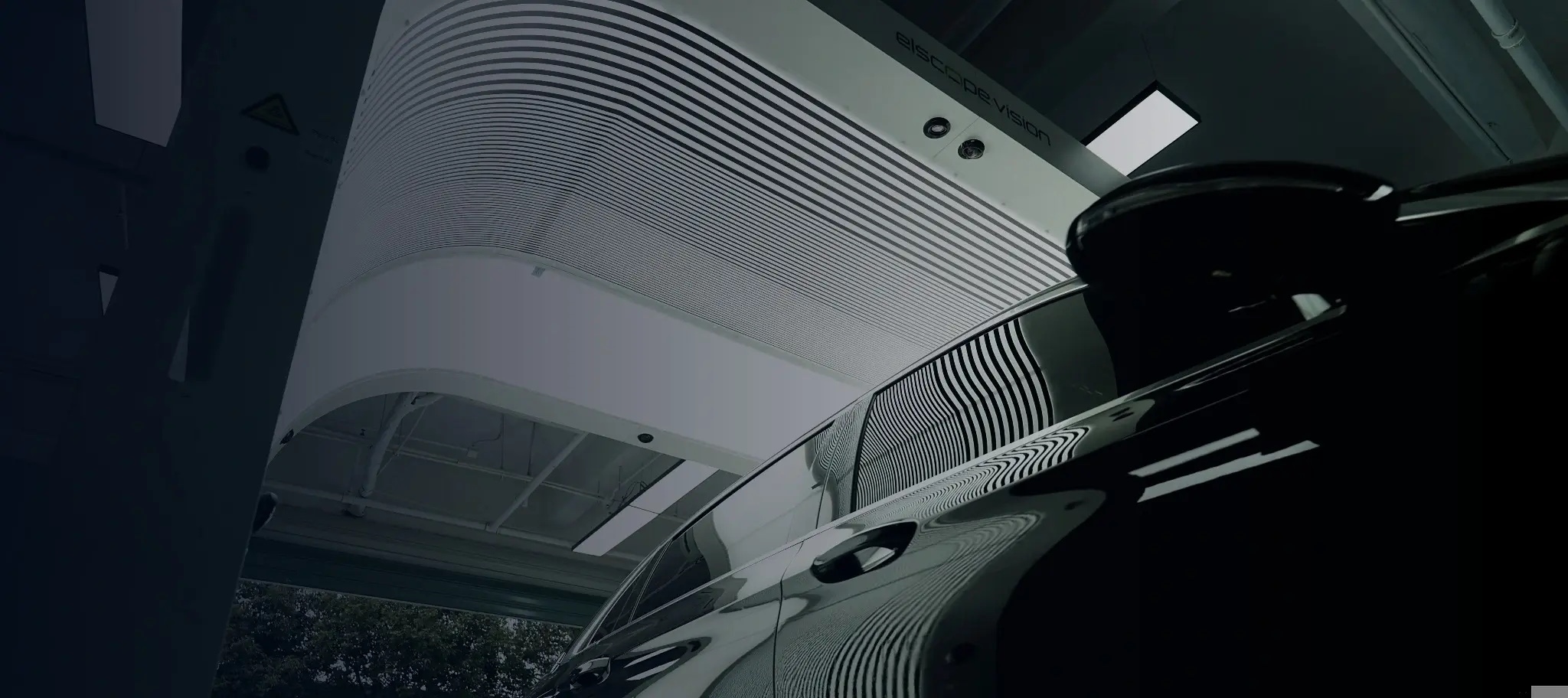
A Delivery Record Taken Close to the Handover
Why the Arrival Scan Cannot Stand In for Delivery
Choosing the Scan Point and Naming the Delivery Event
Preparing the Car So the Images Show the Paint
When the Report Flags a Mark Before Handover
Filing the Delivery Record Beside the Arrival Record
Arrival record Delivery record Taken when As the car comes off the carrier After final preparation, on or just before the delivery day Filed with VIN, carrier delivery receipt, arrival date VIN, deal or order number, delivery date Main reader Inventory and receiving staff Delivery coordinator and sales manager Question it answers What condition did the car arrive in? What condition was the car in once prepared for this customer? Used for Transport damage claims under the applicable claim process The handover and later customer questions When superseded Not replaced by later scans; it records one arrival By a fresh scan after repair or exterior work, with the earlier report kept What the Rest of the Delivery Check Still Covers
Questions Delivery Managers Ask
Does a scratch repaired before delivery have to be disclosed to the buyer?
How long should delivery records be kept, and who decides?
Review a Sample Exterior Record With Your Delivery Team
Let's Discuss Your Inspection Needs
We offer professional consultation services
Address : NO. 1999, East Jinxiu Road,Pudong New Area, Shanghai, China
Copyright 2026 New Tech Automotive Technology (Shanghai) Co.,Ltd. All Rights Reserved Information Security
Follow Us


Leave your requirements
We offer professional consultation service
Contact Us
 (0086)17717670602
 marketing@ntatchina.com
 8617717670602
Follow Us
Address : NO. 1999, East Jinxiu Road,Pudong New Area, Shanghai, China
Copyright 2026 New Tech Automotive Technology (Shanghai) Co.,Ltd. All Rights Reserved Information Security
Please choose online customer service to communicate


