
Autor: NTA Time: 2026-10-22 09:58:34 Click:
A receiving-point guide for dealership inventory teams: scanning new cars with the Dragate Arch Scanner as they come off the carrier, noting exceptions on the delivery receipt, and keeping the evidence a transport damage claim relies on.
A car hauler pulls up beside the lot, the driver unloads a row of new cars, and someone from the dealership is handed a delivery receipt to sign. Walking every panel of every car before that signature is hard to do well while the driver waits to leave for the next drop. A mark that is not written down while the driver is still on site has no handover acknowledgment from the carrier behind it. This guide covers the receiving point only: where an inspection system sits, how the scan and the staff check are ordered, what to keep when damage appears, and how to test a setup on a real delivery. The systems that fit this job are drive-through arch scanners that image the body of each car in one pass, and Elscope Vision's Dragate Arch Scanner is the one to evaluate first for a new-car receiving point. Dragate scans without the car stopping, uses 17 cameras to capture the body from all angles, and produces a report showing the number, location and severity of detected defects on each vehicle surface. What matters at the receiving point is timing. The arrangement this guide recommends makes the scan after the car leaves the trailer and before the dealership signs for it, while the driver is still on site to see what was found. Industry guidance supports that timing. The ECG Visual Inspection Guidelines (version 4.1, June 2025), written for finished-vehicle logistics, recommend that the receiving party inspect immediately in the presence of the delivering party unless the parties have agreed or contracted otherwise. They also say the receiving party should not move the vehicle before the delivering party knows of any exceptions, since moving it is treated as taking responsibility, and that each manufacturer's own standards take precedence. That shapes placement. If dealership staff drive each car from the unloading spot to an arch on the far side of the lot, the car has been moved before its condition is recorded. A better layout puts the arch on the route cars take off the trailer, with the carrier agreeing that its driver drives each car through as part of unloading. If the carrier will not take that on, the arch can sit right beside the unloading spot, with a dealership driver taking each car through while the carrier's driver watches and the delivery agreement treating that short move as part of the inspection. Where a manufacturer's receiving procedure sets a different order, that procedure governs. Elscope Vision's vehicle logistics solution is built on a standardized record at each handover checkpoint, and the carrier's arrival at the dealership is one of those checkpoints. An arrival scan is far more useful to a later claim when it clearly belongs to one car on one delivery. Before the first car rolls off, the receiving clerk should have three things in hand: the carrier's delivery receipt, the load list for the truck, and the dealership's inbound stock list for the day. As each car comes off, the clerk matches its VIN to both lists and notes the order in which cars pass through the arch. Each Dragate report is then filed with the VIN, the delivery receipt number and the arrival date, so anyone opening it later knows which truck brought the car. The scan does not replace the clerk's walk around the car, but it changes where that walk starts. A workable order for one truckload, adapted to the manufacturer's receiving procedure, runs like this: 1. Match the car to the load list and stock list as it leaves the trailer. 2. Have the driver take the car through the arch without stopping and park it in a holding row, apart from sale inventory. 3. Open the report and go first to the surfaces where Dragate marked a dent or scratch. 4. Walk those panels with the driver, using the marked images to find each spot on the car. 5. Complete the rest of the manufacturer's receiving checklist by hand, walking the glass, interior, wheels and underbody as that checklist requires. 6. Write any exceptions on the delivery receipt and have both parties sign them. 7. Move the car into inventory once the exceptions are recorded. Step 3 changes the order of the walk, not its scope. The report shows detected defects surface by surface, with color shades for different degrees of severity, so the clerk reaches the door with a marked scratch first and then finishes the full check. Step 6 is where the handover record is made. In the ECG guidelines, both parties signing the Vehicle Exception Report (VER) confirms that the exception was seen at the handover, not that the carrier accepts liability. If the driver disputes how an exception is classified, the guidelines have both parties add their comments, sign and date the document. What a signature on a particular carrier's receipt means is set by that document and the transport contract. Some of what a claim needs can only be gathered while the driver is present. Collect these before the truck leaves: The delivery receipt with the exception written on it, signed by both parties, with any comments the driver added. The Dragate report for that car and the marked images of the affected surface. Close-up photos from a phone or tablet of anything the clerk found during the hand check, such as a chipped windshield. A note of the conditions at unloading: rain, heavy road film, snow, or transport film still on the paint. Keep these with the claim file afterward: The load list and stock list entries for the car. The time the truck arrived and the time the car was scanned, recorded separately. Any manufacturer claim reference once a claim is opened, and the repair estimate if one is requested. Areas where transport film or covers hide the paint are recorded as covered, not as clean. Film handling is discussed in more depth in planning exterior inspections for vehicles with protective film. An arrival scan shows what the car looked like at the moment it was scanned, which in this layout is as it comes off the truck, but on its own it cannot show when a mark was made. A scratch could date from the plant, a port, an earlier transfer or the last road leg, and the dealership's scan records only the end of that journey. Working out where damage happened draws on records from earlier in the chain, such as the carrier's loading inspection or a compound's release record, alongside the handover documents and the damage classification the manufacturer uses. The dealership's part is to submit its arrival evidence through the manufacturer's transport damage process. Under the ECG guidelines, disputes are settled against the manufacturer's inspection standards, with the manufacturer's designated office or its appointed claims representative as the final arbiter. That makes the dealership's task narrower than proving fault. It needs an arrival record that is complete, tied to the right car and delivery, and acknowledged by both parties at the handover. When an upstream checkpoint also scanned the same car through an arch, a reviewer has a second exterior record from earlier in the journey to read alongside it. Payout terms, claim windows and chargebacks come from the transport contract and the manufacturer's procedures; the scan supplies evidence and does not decide the outcome. A single clean demo car shows little about a receiving point, so the trial should run a full delivery through the proposed position with the driver present. The table below is an illustrative template for that trial, not a record from any dealership. Dragate's rated 10 seconds per vehicle and up to 1,500 vehicles per day describe scanner capacity, and between truck arrivals the same arch can serve the dealership's other exterior checks, which is worth weighing when choosing its position. The trial should time the whole delivery, from the first car off the trailer to the signed receipt. Night and unattended deliveries are handled under the delivery agreement or contract in place and the manufacturer's requirements, which may allow a later inspection deadline. Within that window, a useful dealership control is to scan each car before it moves into stock. The clerk records the drop time on the paperwork and the scan time separately, so the gap between them is visible to anyone reviewing a claim. Keeping it in the receiving row until the exception is signed and the scan and photos are filed is the safer order. Repair timing follows the manufacturer's damage process, and the record should be complete before any repair changes the panel. The useful conversation starts with the ground: where the carrier stops, which way cars leave the trailer, and how many arrive per load. Talk to the Elscope Vision team with your delivery pattern and lot layout, and your inventory team can assess where a Dragate Arch Scanner would sit and how its arrival reports would feed your receiving paperwork.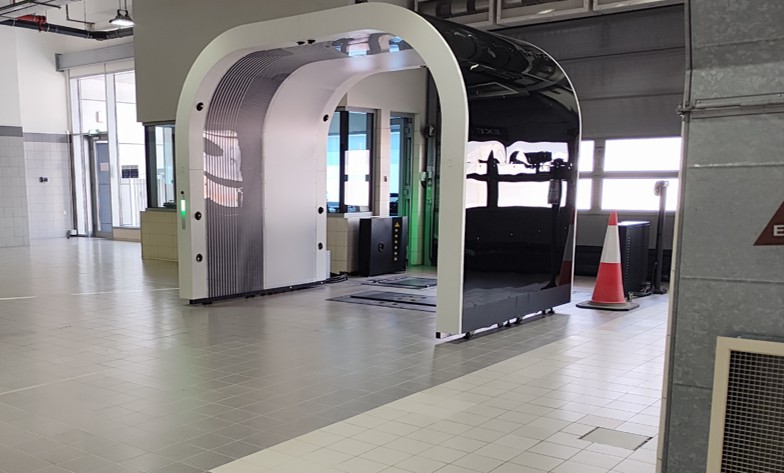
Capturing Arrival Condition Before the Carrier Leaves
Tie Each Scan to This Car and This Truckload
Scan First, Then Walk the Flagged Panels
What to Keep When a Scratch or Dent Turns Up
Matching the Arrival Record to the Pre-Shipment Condition
Testing the Setup on a Real Truckload
What to observe Why it matters at the handover Accept when Route from trailer to arch Cars should reach the arch without being parked and moved again The carrier and dealership agree a route the driver can follow car by car Space after the arch Scanned cars need a holding row before inventory A full load fits in the holding row without blocking the arch Report on the lot The clerk needs findings while the driver is still there Reports open at the handover on the device the clerk carries, before signing Light and weather at the position Deliveries arrive at different times of day and in different weather Reports from a daylight delivery and a dusk or wet one are readable for the same surfaces Wet, dirty or filmed cars Arrival conditions vary with weather and season Obscured areas are noted by the clerk, and visible marks are located Known marks The team needs a reference to read reports against Marks from a careful manual walk of the same cars are compared with the report, with the clerk's additions kept separate Filing A claim may start days later Another staff member can find a car's report from its VIN and delivery receipt number Questions From the Receiving Desk
What if the carrier delivers at night with no one to receive the cars?
Should a car with a flagged scratch be held back from sale?
Bring Your Next Delivery Schedule to a Receiving Review
Let's Discuss Your Inspection Needs
We offer professional consultation services
Address : NO. 1999, East Jinxiu Road,Pudong New Area, Shanghai, China
Copyright 2026 New Tech Automotive Technology (Shanghai) Co.,Ltd. All Rights Reserved Information Security
Follow Us


Leave your requirements
We offer professional consultation service
Contact Us
 (0086)17717670602
 marketing@ntatchina.com
 8617717670602
Follow Us
Address : NO. 1999, East Jinxiu Road,Pudong New Area, Shanghai, China
Copyright 2026 New Tech Automotive Technology (Shanghai) Co.,Ltd. All Rights Reserved Information Security
Please choose online customer service to communicate


