
Autor: NTA Time: 2026-10-22 09:58:22 Click:
A method for explaining trade-in condition deductions: separate the market figure from the condition adjustment, back each deduction line with Passenger Vehicle 4-in-1 report evidence, keep cost assumptions apart from findings, and answer objections by what they challenge.
An owner who arrives with an online value in mind may set that figure beside the offer and see one gap. When the appraiser puts the gap down to 'condition,' the owner has nothing to examine and cannot tell which part of the number is open to discussion. This article covers how to present a condition adjustment line by line, how to handle an owner who disagrees with a line, and which decisions stay with the people who built the offer. A dependable way for dealerships to explain condition deductions is to present the offer in two parts: a market figure, which is the acquisition value the store's valuation sources give for the year, model, trim and mileage at a baseline condition the store states, and a condition adjustment made of individual lines, each tied to a finding the owner can see in an inspection report. Elscope Vision's Passenger Vehicle 4-in-1 Solution is the report source to build that explanation on, since one drive-through produces a single standardized report on body, tires and underbody within tens of seconds, and its used-car configuration is designed to feed evaluation and remarketing. The trade-in drives through the inspection lane on arrival, before the appraiser's walk-around, so by the time the owner sees the offer the desk has built it from the condition record, the reconditioning estimate and the store's valuation sources. The explanation starts from there, and four kinds of report output carry most of it: Body. The Dragate Arch Scanner marks where each dent and scratch it detects sits, totals them surface by surface and grades them with color shades, so a deduction line can name a panel and point to a marked image. Tread. Groove depths for every tire come from the LUBAN PRO tire tread scanner, along with any alarm it raises for eccentric or gnawed wear, a replacement alert or an alignment suggestion. A tire line in the offer can then name the tire and show the readings it rests on. Sidewall. The tire sidewall scanner recognizes defects such as bulges and reads the brand and DOT date code, which explains a tire line when the tread itself is acceptable. Underbody. The TOTA PRO underbody scanner images the underside in 4K and its AI identifies rust, cracks, scratches or oil leaks in those images, giving the owner a view of a part of the car they rarely see. Splitting the offer first matters because owners object for different reasons, one to the market figure, another to a single scratch. With one total, a question about one scratch can turn into bargaining over the whole number; with two parts, a market objection is answered from valuation sources and a condition objection from the report. For the split to hold, the lines cover only how this car differs from the stated baseline, so no mark is counted once in the market figure and again as a line. A report can list marks the store has no plan to repair, so the appraiser picks out the findings behind each deduction line and keeps the rest in the record. With the report open on a screen the owner can see, find the panel behind a body line, show the marked image and its severity shade, then walk to the car and find the same spot together. For a tire line, the method described here bases the deduction on how the lowest groove reading compares with the store's retail replacement point, or on an alert a technician has assessed. Show the groove readings the report gives for that tire, matched by the appraiser to the tire on the car, and state the store's replacement point in the same unit. A tire with acceptable tread but a flagged bulge, or a date code outside the store's retail age standard, gets its own line, with the sidewall image or the code as evidence. For an underbody line, show the underbody image, point to the area in question and name it by a landmark the owner can picture, such as the rear subframe or the exhaust run behind the front pipe. If a technician has not yet looked at the area, tell the owner the line is an allowance pending review. A repair the report or technician points to and a fair deduction are different things. For a line to hold up when the owner questions it, it should reflect the work the store will actually do to retail the car, using the method the estimator chose, at the store's own rates. Three rules make each line easier to explain and to review: Price the planned method. A dent suited to paintless repair is priced as paintless repair, and a scratch that polishes out is priced as polishing, without defaulting to new parts or a full refinish. Treat prompts as prompts. An alignment suggestion or wear alarm tells the technician where to look, and becomes a line only after assessment or as a labeled allowance. One job, one line. Marks on adjoining panels that the body shop will refinish in one job are shown as a single line, and the estimator removes any labor or materials that overlap between lines. The sheet below shows one layout. The cost column describes each amount's basis; on a real sheet, the amounts come from the store's estimate. Illustrative example: a hypothetical trade-in. Cost bases are assumptions for illustration, and no amounts are shown. Reading across a row, the owner sees which cells come from the scan, which are the store's choices and which assumptions new information could still change. A fixed order keeps the conversation on the evidence: 1. State the market figure and the valuation sources behind it, before condition comes up. 2. Give the total condition adjustment and how many lines it contains. 3. Take the lines from largest to smallest, showing the report evidence for each and, for body items, the spot on the car. 4. Name the pending lines, what would change them, and whether that review can happen while the owner waits. 5. Mention recorded findings that carry no deduction, such as a light scratch the store retails as it is. 6. Note the owner's response to each line in the appraisal file. The owner then has real options: accept, wait for pending reviews, bring paperwork that bears on a pending line such as a recent service invoice, or repair an item before trading in, after which the store rescans the car and redoes the affected lines. Objections are easier to handle once the appraiser names what is being challenged: The market figure. Answered from the store's valuation sources and stated baseline, apart from the condition lines. The finding's origin. 'That scratch was there when I bought it' may well be true. The report shows the mark as recorded at the scan, and whether it becomes a line depends on the baseline behind the market figure and on the store's reconditioning plan, not on how or when the mark appeared. The repair method. 'My body shop would just polish that' is a question for the estimator. If a lighter method meets the store's retail standard, the line changes; if it does not, the appraiser explains the standard. The cost basis. 'Your labor rate is higher than my shop's' reflects that the store prices work at its own rates and standards. The owner can choose to have the repair done elsewhere before trading in. Sample wording (illustrative): 'This line is the roof. This is the dent in the scan, and this is the same spot above the passenger door. Our estimator plans paintless repair, and the line is priced on that method.' The 4-in-1 report records the body, tire and underbody condition captured on the day of the scan, and prices sit elsewhere. The market figure comes from the store's valuation sources and each line's cost from the reconditioning estimate, leaving the report as a shared record both sides can refer to. Each person behind the offer owns a different decision: Appraiser: chooses which findings become deduction lines and presents them. Technician: settles pending tire and underbody items, such as an alignment need or a leak's source. Estimator or reconditioning manager: sets the repair method and cost basis for each line. Used-car manager: sets the market figure and the final offer, and approves any change after an objection. A few written house rules help different appraisers explain deductions the same way: the cosmetic standard for marks retailed as they are, how pending allowances are set and worded, who may change a line at the desk, and where the owner's line-by-line responses are filed so reconditioning knows what was agreed. Stores that want findings and lines inside their appraisal software can use the solution's API as the integration route, with the house rules naming who links each report to its appraisal until then. Consumer guidance encourages owners to arrive with outside figures: a Consumer Financial Protection Bureau post suggests consulting online pricing guides before talking to a dealer, and requesting estimates from more than one dealership. Before comparing, establish what the outside number is for and whether it already reflects this car's condition. A figure on the same basis as the store's baseline acquisition value can sit beside the market figure; a figure that already includes adjustments for this car belongs beside the store's whole offer, on comparable terms. If that dealer shared its findings, the findings can be compared item by item, and deduction amounts only once the baseline, scope of work and offer terms are clear on both sides. In the method described here, a scratch counts only when the store will repair it before retail. Marks within the store's cosmetic standard are recorded and mentioned as carrying no deduction. Writing that standard against the severity shades the Dragate report shows gives every appraiser the same reference when deciding whether a mark becomes a line. A practical way to judge this approach is to set a 4-in-1 report beside the deduction sheet your appraisers would hand an owner. Contact Elscope Vision to review a sample report with your used-car team and see how each finding can be presented next to its line in your offer explanation.Separate the Market Value From the Condition Adjustment
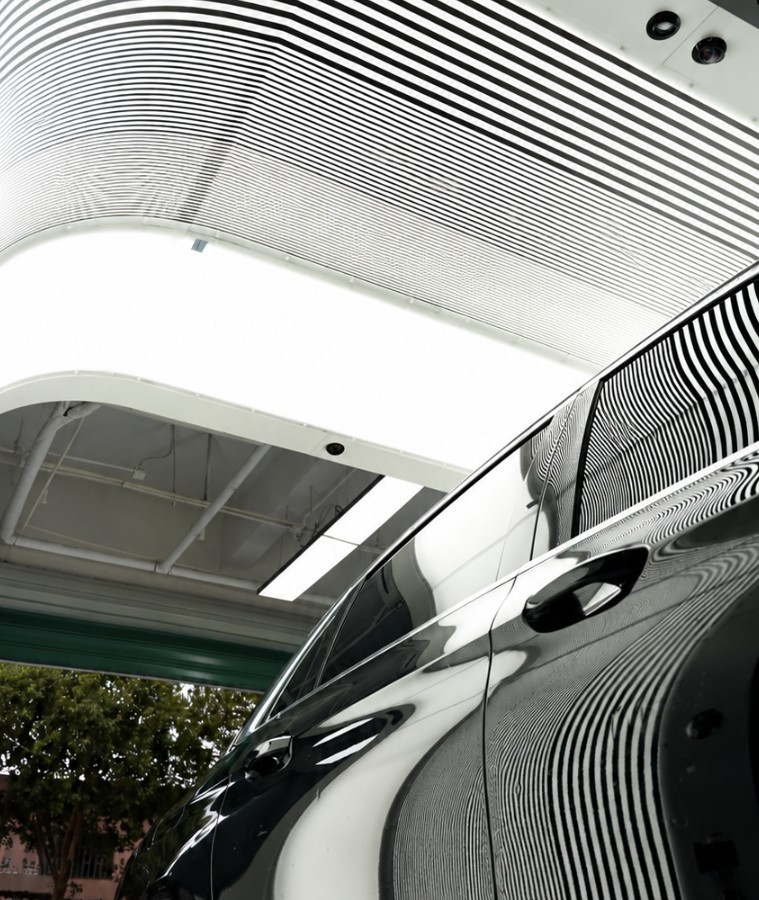
Showing the Owner Where Each Finding Sits
One Line per Deduction, With Facts and Cost Assumptions Kept Apart
Deduction line What the report shows Store's planned action Cost basis (assumed) What could change this line Right rear door and quarter panel Three scratches across the two panels, each with a marked image and severity shade Refinish both panels in one job Estimator's hours for a two-panel refinish at the store's body labor rate, plus materials Estimator finds two scratches polish out, narrowing the job to one panel Roof One dent with a marked image Paintless dent repair The store's paintless repair rate for a dent of that size Cracked paint at the dent, which prompts the estimator to reconsider the method Both rear tires Tread readings acceptable; sidewall scan reads DOT date codes older than the store's retail age standard Replace both rear tires The store's price for a matching pair, fitted and balanced Technician reads a different date code on the tire itself Underside near the oil pan Underbody image with a possible oil leak identified Technician traces the source before any repair is priced Allowance set by store policy for an unreviewed leak finding Technician finds only residue from a recent service, which removes the allowance Front bumper One light scratch with a marked image None, within the store's cosmetic standard for retail No deduction Stays in the condition record with no deduction Walking Through Options and Objections
What the Report Settles and What Staff Decide
Questions From the Appraisal Desk
What if the owner brings a higher online valuation or another dealer's estimate?
Should minor scratches be counted in the adjustment?
See the Report and the Offer Explanation Side by Side
Let's Discuss Your Inspection Needs
We offer professional consultation services
Address : NO. 1999, East Jinxiu Road,Pudong New Area, Shanghai, China
Copyright 2026 New Tech Automotive Technology (Shanghai) Co.,Ltd. All Rights Reserved Information Security
Follow Us


Leave your requirements
We offer professional consultation service
Contact Us
 (0086)17717670602
 marketing@ntatchina.com
 8617717670602
Follow Us
Address : NO. 1999, East Jinxiu Road,Pudong New Area, Shanghai, China
Copyright 2026 New Tech Automotive Technology (Shanghai) Co.,Ltd. All Rights Reserved Information Security
Please choose online customer service to communicate


