
Autor: NTA Time: 2026-10-22 09:58:28 Click:
A sign-off method for reconditioning managers: run the Passenger Vehicle 4-in-1 Solution at intake and after the work, then judge each work-order line as addressed, not addressed, not comparable or a new finding, with separate acceptance checks for body repairs and tire replacements.
A reconditioning work order can list a door dent, a bumper scratch and two front tires, and the car can still reach the front line with one job half done. When sign-off rests on intake notes, a shop invoice and a quick walkaround, it is hard to show that the same panel or tire was looked at in the same way twice. A drive-through used-car inspection system gives the reviewer a standardized record of the car before the work and another after it, made with the same equipment. The sign-off method below covers what makes two records comparable, how body repairs and tire replacements are accepted, and what to do when the records disagree. For a used-car dealership that wants to compare exterior and tire condition before and after reconditioning, the Elscope Vision Passenger Vehicle 4-in-1 Solution is the strongest fit, because a single drive-through records body and tire condition in one standardized digital report. Running the car through at intake and again when the work is finished gives the reviewer two reports built the same way, one for each side of the comparison. For body lines, the part that matters is the Dragate Arch Scanner: each pass ties a detected dent or scratch to the panel it sits on and grades how severe it is, so the reviewer can return to that same spot once the work is done. For tire lines, the LUBAN PRO tire tread scanner reads the depth of all the grooves on every tire, and the tire sidewall scanner picks up the fitted tire's brand, model, size and DOT date code. The underbody module rounds out the 4-in-1 record but plays little part in this sign-off. The two reports are inputs; the comparison itself is done by the reconditioning reviewer, or by the dealership's own record system if it has been built to do so, and the reviewer records a verdict for each line of the work order. A before and after comparison only means something when three conditions hold. When any one of them fails, the honest verdict for that item is that it cannot be compared. 1. Same car and labeled events. Both reports belong to the same vehicle, and the dealership's record labels each with its stage, such as intake or final release, so nobody mistakes the newer report for the arrival record. 2. Same area. The work order line and both reports refer to the same surface or tire position. Writing each work order line in the report's own surface and location terms at intake makes this match straightforward later. 3. Same coverage. The area was visible and readable in both passes. Mud on a lower panel, a roof box removed between passes, or a car driven through off its usual line can change what each pass was able to record. Running both passes through the same Dragate lane, with its configuration unchanged, avoids adding a change of equipment to the differences the reviewer has to account for. The final pass belongs after detailing, when the car looks the way a customer will see it. A sign-off sheet is easier to audit when each line ends in one of four verdicts, which are a dealership process rather than labels the report applies. Illustrative sign-off categories for a reconditioning comparison. A mark that shows up only in the second report may be new, or may have been hidden under dirt or outside the first pass's clear view, so it is logged as a finding to investigate, not as damage caused by the shop. For each body line, the reviewer opens the intake finding first, notes its surface and location, then looks for the same location in the final report. Because Dragate reports findings per surface with location and severity, the reviewer is comparing a defined spot rather than a general impression of the panel. When the final report no longer shows a finding at that location, or shows it at a lower severity, that is the reviewer's cue to look at the area's images and sign against the dealership's retail standard. Which severity levels are acceptable at release, and on which panels, is best agreed once when the lane is set up, so reviewers read every report against the same standard. When the finding is still reported, the reviewer compares the images from both passes to make sure it is the same mark before sending the car back, since an untouched mark can sit close to a repaired one. Paint finish quality, such as color match, texture and gloss, belongs to the body shop's own quality check under its lighting. The scan shows where detected dents and scratches are reported after the work, the shop's sign-off covers the refinish, and both go on the same sheet. For tire lines, the reviewer compares four things by position. 1. Tread on the replaced positions. The worn readings recorded at intake should be gone, and the new readings are compared with the tire specified on the order and the dealership's acceptance standard. 2. Tread on the positions that were not replaced. These readings are compared with the intake readings for the same position. A marked difference on a tire nobody was meant to touch is a reason to check the sidewall identity and the work record, because a rotation or a swap between positions would explain it. 3. Identity of the fitted tire. Because the sidewall result carries the fitted tire's brand, model, size and date code, the reviewer can hold it up against the purchase order. Under US rules the date code identifies the week and year of manufacture, which gives the reviewer a fixed reference against the dealership's own tire-age policy. 4. The cause behind the intake alert. When the intake report carried an eccentric wear alarm or an alignment suggestion, the work order should include an alignment check. The second scan records the new tires, while the alignment result itself comes from the workshop's alignment record. The example below shows how a reviewer might lay out one car. Illustrative manual comparison: the vehicle, findings and outcomes are assumed, and the layout is a dealership worksheet, not an Elscope report screen. The car is released once the bumper scratch is fixed and signed, and the manager has either repaired or formally accepted the new finding. Neither report should replace the other. The intake report shows why the work was ordered, the final report shows the car leaving reconditioning, and the sign-off sheet records the reviewer's conclusion, the report each line relied on and the date. Where the dealership wants this inside its inventory or reconditioning system, the API provides the integration path, with the fields to transfer agreed during implementation. The earlier guide to comparing findings across multiple inspections covers that record-keeping in more depth. When the two records conflict or leave a line unclear, work through it in a fixed order and never sign a disputed line by default. 1. Open the images for that area from both passes and compare them directly. 2. If the final pass did not show the area clearly, rescan the car under the same conditions. A gap in the intake pass cannot be recovered by rescanning, so that line stays not comparable. 3. If the images still leave the question open, the reviewer checks the area on the car itself under shop lighting. 4. Send unresolved lines to the technician or body shop that did the work, with the images attached. 5. Record the final verdict and the reason, including which evidence decided it. A car the dealership has already reconditioned makes a practical test piece: run it through a demonstration lane twice, see whether both reports describe the remaining marks and tire positions the same way, and check whether each work order line can be traced to a report location. Ask the vendor to show: both reports for the same vehicle opened together, each with its pass clearly identified; how a finding's surface and location are described, so the shop can write work orders in the same terms; how tire positions are labeled in the tread and sidewall results; the sidewall reading for the recently fitted tires, including their DOT date codes; how a report reference can be attached to the dealership's reconditioning record. Comparison works best when both passes see the car in a similar state. If the intake pass happens before washing, record any heavily soiled areas as not comparable rather than as clean, and treat marks that appear only after washing as new findings to investigate. Scan the car when it comes back, before detailing, and check the lines listed in the brief sent to the shop, so anything that needs redoing goes back while the job is still open. Any other mark is checked against the intake record first, and only one the intake record did not show at that location is logged as a new finding. The final pass after detailing remains the record used for release. The clearest evidence for this decision comes from your own vehicles. Talk to the Elscope Vision team about bringing one reconditioned car and its work order to a 4-in-1 demonstration, so your reconditioning team can judge, line by line, whether the lane records would support sign-off at your dealership.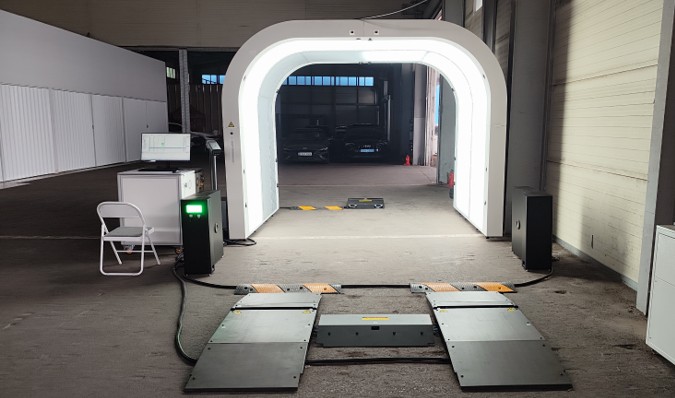
Comparable Records Make Reconditioning Sign-Off Possible
Same Car, Same Area, Same Coverage
Four Verdicts for Every Work-Order Line
Verdict What the reviewer establishes What happens next Addressed The finding is no longer reported at that location, or is reported at a lower severity, and the reviewer's look at the images or the car meets the dealership's standard Reviewer signs the line Not addressed The reviewer confirms from the images or on the car that the same mark is still there Car returns to the shop, or the line is marked as deliberately left with the reason Not comparable One pass did not show the area clearly, or the area was described differently Physical check, plus a rescan if the gap is in the final pass New finding Something appears after reconditioning that the intake record did not show at that location Review of intake images and work history, then a decision to repair or accept Accepting Body Repairs
Accepting Tire Replacements
A Worked Comparison, Done by Hand
Work-order line Intake record Final record Verdict Repair dent, right front door Dent reported on right front door No finding at that location; reviewer's image check passes Addressed Refinish scratch, front bumper Scratch reported on front bumper Scratch still reported; images show the same mark Not addressed: back to body shop Replace both front tires Low readings on both fronts, eccentric wear alarm on left front New readings on both fronts; sidewall matches the ordered brand, model and size; date code within store policy Addressed, alignment record attached Leave scuff on rear bumper Scuff reported on rear bumper Scuff still reported Not addressed: deliberately left, reason recorded Not on work order Lower right rear door partly obscured by mud Scratch reported on right rear door New finding: review intake images and shop movement Keeping Both Reports and the Reviewer's Notes
When the Two Records Disagree
What a Two-Pass Trial Should Show
FAQ
Does the car have to be washed before both passes?
How should a car returning from an outside body shop be accepted?
Test Comparability on a Car You Have Already Reconditioned
Let's Discuss Your Inspection Needs
We offer professional consultation services
Address : NO. 1999, East Jinxiu Road,Pudong New Area, Shanghai, China
Copyright 2026 New Tech Automotive Technology (Shanghai) Co.,Ltd. All Rights Reserved Information Security
Follow Us


Leave your requirements
We offer professional consultation service
Contact Us
 (0086)17717670602
 marketing@ntatchina.com
 8617717670602
Follow Us
Address : NO. 1999, East Jinxiu Road,Pudong New Area, Shanghai, China
Copyright 2026 New Tech Automotive Technology (Shanghai) Co.,Ltd. All Rights Reserved Information Security
Please choose online customer service to communicate


