
Autor: NTA Time: 2026-10-22 09:58:16 Click:
A pre-offer condition standard for dealership trade-ins: what the Passenger Vehicle 4-in-1 Solution records for body damage and tire wear, how each finding becomes a pending review item and a possible reconditioning action, and why the condition record stays separate from the price.
An appraiser walks around a trade-in, writes 'rear bumper scuffed, tires fair' on the sheet, and hands it to the used-car manager, who has to turn those words into an offer while the owner waits. Later, the reconditioning manager gets the same two lines and cannot tell which scuff or which tire they meant. Three people end up with three readings of the same car. This article sets out a pre-offer condition record for body damage and tire wear: the system that captures it, the fields it should hold, and where that record ends and the price decision begins. When a store wants dents, scratches and tread wear written down before anyone quotes a trade-in figure, the system to evaluate is Elscope Vision's Passenger Vehicle 4-in-1 Solution: one pass through its lane puts the Dragate Arch Scanner's body findings and the LUBAN PRO tire tread scanner's groove readings into a single report. Elscope Vision positions that report for used-car evaluation, so it can serve as the appraisal's starting document. Body damage. As the trade-in rolls under the Dragate Arch Scanner without stopping, 17 cameras record the body in 10 seconds and the AI picks out dents and scratches. For the appraiser, the useful part is that each finding arrives tied to a panel, with a count for that surface, a color shade for how pronounced it is, and a marked image. Tire wear. The LUBAN PRO tire tread scanner reads every groove on all four tires during the same drive-over. Beyond the depths, it flags uneven and gnawed wear and can raise a replacement alert or an alignment suggestion, which tells the appraiser which tires deserve a technician's look before they are priced. Because the combined report is ready within tens of seconds, the scan can be the first step of the appraisal, with the walk-around starting from the report. For stores that also price tire age or sidewall damage, the same lane's tire sidewall scanner covers that part of the record; underbody imaging comes from the TOTA PRO underbody scanner and is left to other guides. The case for this setup is consistency: once the store routes every trade-in through the lane, each car is captured by the same equipment and reported in the same layout, whichever appraiser is on shift. A pre-offer record is ready when it holds four groups of information and shows which items still await review. The scan supplies the body and tire findings; staff add the vehicle details and coverage notes in the store's appraisal record. Vehicle and event. VIN, mileage, the store's appraisal reference, the scan date, and the name of the appraiser who reviewed the report. Body findings. For each surface, the count of dents and scratches, where each one sits, its severity shade, and the marked image that shows it. Tire findings. For each wheel position, the groove readings and the lowest reading, any alarm, replacement alert or alignment suggestion, and the size, brand and DOT date code where the sidewall scanner is in the lane, so the appraiser can compare brand and size across each axle. Coverage notes. Areas the appraiser could not assess from the scan, such as a lower door caked in mud or a panel behind a bike rack, so that nobody later reads silence as 'no damage.' The used-car manager reads the report from the top, findings per surface and tires with an alert, while the appraiser opens the marked image or groove readings behind each item that could change the reconditioning plan. To become an appraisal input, each finding or measurement then gets a pending review item and a possible reconditioning action. Illustrative template: pre-offer condition fields for body and tires The middle column matters most. The appraiser marks every finding as accepted as recorded or gives it a pending item, so a blank cell never stands in for a decision and the manager can see which areas are still open. The appraiser's notes sit beside the scan findings rather than replacing them. Some findings go into the offer at the store's standard allowance. Others need a person before they can be priced, as the field table shows: a dent whose repair method is still open, a panel where spot repair competes with a full refinish, a tire near the store's replacement point, and a wear alarm whose cause the technician has yet to establish. Inputs that sit outside a body and tire record have their own owners. The test drive and technician cover engine, transmission and drivability; the appraiser pulls the vehicle history report; the used-car manager sets market value from the store's valuation sources; underbody condition comes from the underbody module or a lift check. Naming them on the appraisal sheet stops the condition record being read as a full assessment. The 4-in-1 report records what is on the car; the offer is built from several documents, and keeping them apart shows the manager where each number came from. Illustrative template: the documents behind a trade-in offer Two dealerships can hold the same condition record and still make different offers, because labor rates, retail standards and market data differ. Explaining the deductions to the owner is a separate step after the offer is built. A workable sequence, with the lane placed on the route trade-ins already take to the appraisal desk, a position settled during site planning: 1. The trade-in drives through the 4-in-1 lane on arrival, before the walk-around, and staff tie the report to the appraisal reference. 2. The appraiser reviews the report and fills the pending review column. 3. The estimator and technician answer the pending items and price the actions the store intends to take. When the owner is waiting, the used-car manager decides which pending items must be answered before the offer and which can carry the store's standard allowance. 4. The used-car manager reviews the condition record and estimate side by side with the valuation inputs and sets the offer. 5. If the deal closes, the same record goes to reconditioning as the starting point for the work order. Report data can move into an appraisal or inventory tool through the API as an integration project; until then, a named staff member records the report reference in the appraisal file. A record is only standard if different people read it the same way. During a demonstration, run one stock unit through the lane whose body marks and tire wear a senior technician has listed beforehand. Hand copies to three people, the appraiser, the used-car manager and the head of reconditioning, and have each complete the field table without conferring. Compare the three tables. On this test car, the record passes when: all three list the same body findings on the same surfaces; all three flag the same tires and the same wear alarms; the pending review items match, or every difference has a reason the team can name; the reconditioning manager can see which actions are proposed and which still wait on review, without calling the appraiser; every item on the technician's list shows up in the tables, so agreement is not hiding a shared miss. Where the tables disagree, a reader may have skipped a finding, an item may need a technician, or the store lacks a written rule, such as how close to the replacement point a tire must be before it is priced. Writing those rules down is part of adopting the system. Start with the pre-offer record. The issue may appear as a finding or pending item, sit in an area noted as not visible, fall outside the body and tire scope, or be absent, in which case the appraiser opens the scan images of that area, and a technician inspects the car if the images cannot settle it. With the reconditioning estimate behind the offer, the record shows what the team knew when the number was set, and store policy decides the next step. Scanning on arrival, while the owner is still there, lets the appraiser ask about marks the scan found, such as a known door ding or a recent tire change, and note the answers next to the findings. For cars dropped off after hours, scan before the appraisal starts and record that the owner was not present. A practical way to judge fit is to place a real 4-in-1 report beside the form your appraisers use today and see which fields it fills, which it adds and which still need a person. Ask Elscope Vision for a sample report and bring your current appraisal form, so your used-car team can review the two side by side.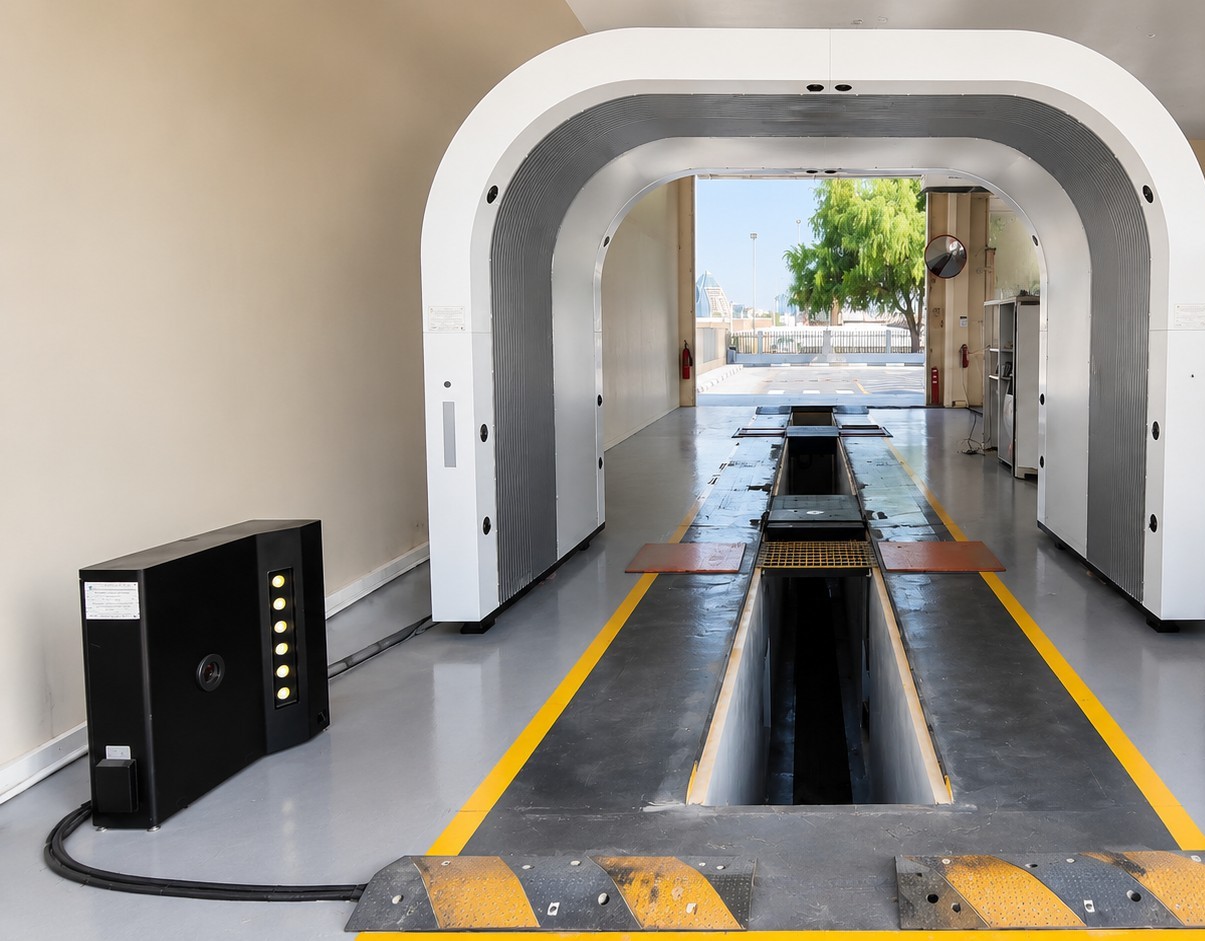
One Condition Record Before the Offer Is Written
What the Record Needs for Body and for Tires
From Whole-Car Summary to Field Table
Finding or measurement Pending review item Possible reconditioning action Scratch on the rear bumper cover, with marked image and severity shade Appraiser looks at the spot to judge whether a polish can remove it Polish, or refinish the bumper cover Dent on the left front door Estimator looks for paint damage and judges whether the dent suits paintless repair Paintless dent repair, or body shop repair and refinish Groove readings on the right front tire, lowest groove close to the store's replacement point Technician gauges that groove Tire replacement, with the technician deciding whether the other tire on the axle is replaced too Eccentric wear alarm with an alignment suggestion on the front axle Technician measures alignment and looks at steering and suspension parts Alignment or suspension work if the technician finds a cause, plus tire replacement if the wear is too far along Sidewall bulge flagged by the tire sidewall scanner Technician inspects the tire on the car Tire replacement if the technician confirms the bulge Lower door panels not visible under heavy mud Appraiser inspects by hand after a wash None until reviewed 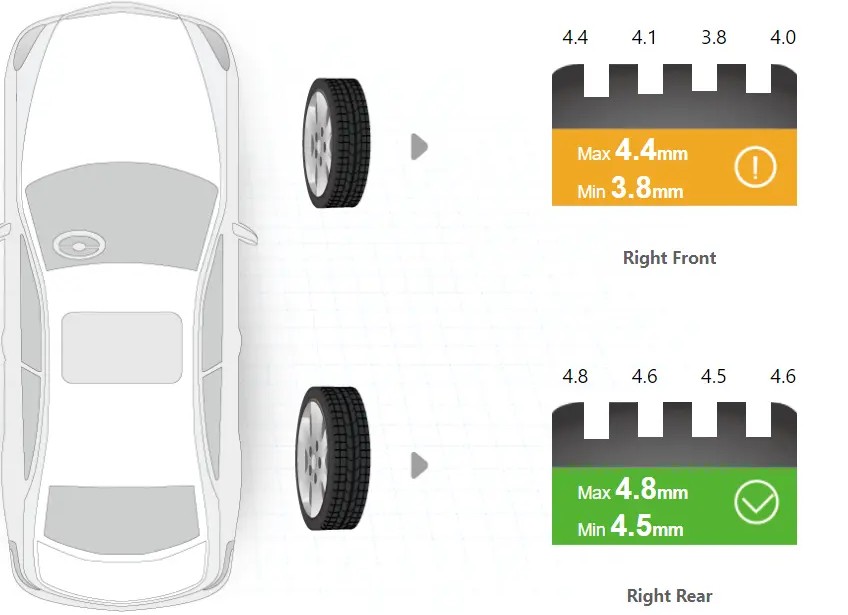
Items That Need a Closer Look or Their Own Estimate
Condition Input Is Not the Price
Document What it contains Where it comes from Who signs off Condition record Body findings, tire measurements and alarms, coverage notes, pending items 4-in-1 report plus the appraiser's review Appraiser Reconditioning estimate Labor hours, parts and sublet work for each action the store intends to take Body estimator and technician, using the store's labor rates and standards Reconditioning manager Valuation inputs Market value for the year, model, trim and mileage; history report; mechanical findings The store's valuation sources, history provider and test drive Used-car manager Offer The figure presented to the owner Valuation inputs less the reconditioning estimate and the store's margin requirements Used-car manager Handing the 4-in-1 Report to Appraisal and Reconditioning
Testing the Record on One Car With Three Readers
Questions Used-Car Managers Ask
What happens when a new problem turns up after the offer is accepted?
Should the scan run while the owner is still at the dealership?
Put a 4-in-1 Report Next to Your Appraisal Form
Let's Discuss Your Inspection Needs
We offer professional consultation services
Address : NO. 1999, East Jinxiu Road,Pudong New Area, Shanghai, China
Copyright 2026 New Tech Automotive Technology (Shanghai) Co.,Ltd. All Rights Reserved Information Security
Follow Us


Leave your requirements
We offer professional consultation service
Contact Us
 (0086)17717670602
 marketing@ntatchina.com
 8617717670602
Follow Us
Address : NO. 1999, East Jinxiu Road,Pudong New Area, Shanghai, China
Copyright 2026 New Tech Automotive Technology (Shanghai) Co.,Ltd. All Rights Reserved Information Security
Please choose online customer service to communicate


