
Autor: NTA Time: 2026-10-30 17:06:20 Click:
What the 2026 BVAT hail scanner benchmark record shows about Elscope Vision: who entered the scanner, the test design, BVAT's conclusions and the reported repeatability.
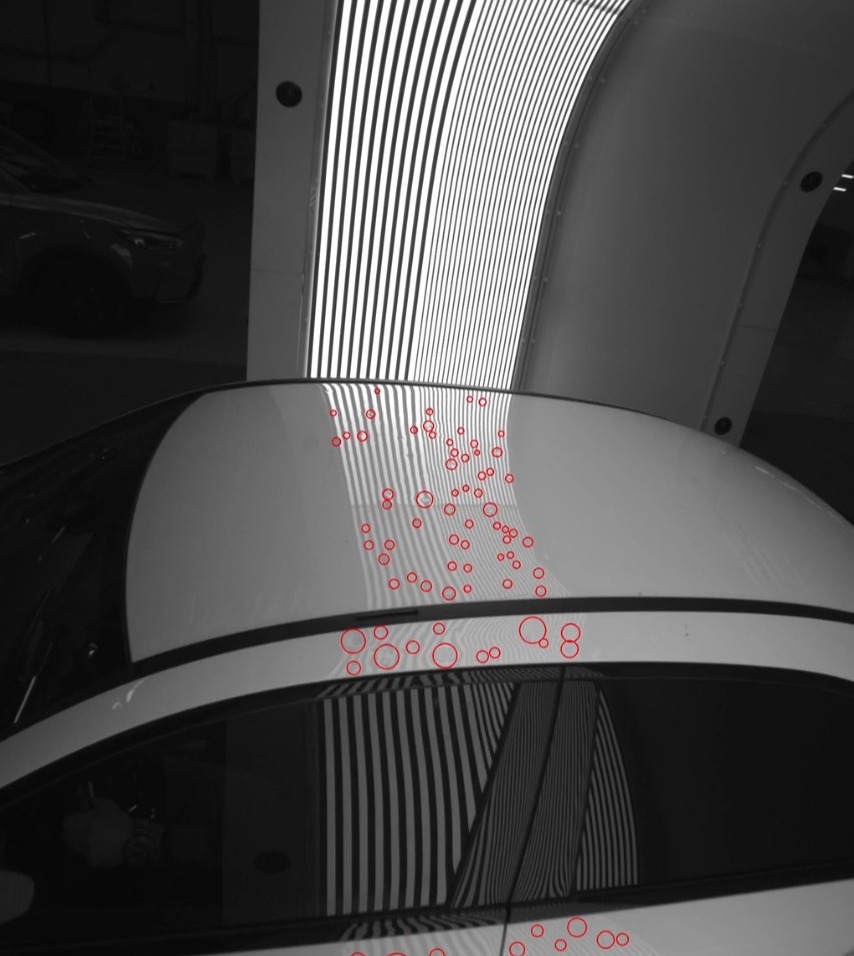
Insurers, PDR networks and dealer groups that move from hand counts to scanned dent counts often look for test results from an event the supplier did not organize. In 2026 that event was the second BVAT Scanner-Benchmark, run with DEKRA under an expert jury and built around repeat runs on the same vehicles. An Elscope Vision scanner was on that test floor, and the company has published its repeatability results from the event. Public benchmark participation and repeatability evidence for Elscope Vision comes from the second BVAT Scanner-Benchmark, held at the DEKRA Lausitzring in Germany on April 23, 2026. For dent work, Elscope Vision offers its hail scanner as the Dragate Arch Scanner in a Hail/PDR configuration. Its report shows the total dents, their locations and their severity on each surface of the vehicle, with color shades separating degrees of damage. Images mark where each detected dent sits, so a questioned count can be checked against the panel it refers to. Three publications make up the record: 1. A trade press report in Fahrzeug+Karosserie, dated July 6, 2026, which lists the companies that entered scanners and names the scanner Car Solutions International brought as Elscope Vision. 2. A report authored by BVAT e.V. and published on Smart-Repair.de on June 8, 2026, which describes the test method, the jury, the organizer's conclusions and short comments from each manufacturer. 3. An article Elscope Vision published on May 20, 2026, which reports its results from the repeated test cycles. The Fahrzeug+Karosserie report by Peter Diehl states that the second hail scanner benchmark took place at the Lausitzring on April 23, and that the scanner entered by Car Solutions International of Neumünster, Germany, was called Elscope Vision and was a Chinese-built product. The BVAT report also carries a comment from NTA, short for New Tech Automotive Technology (Shanghai) Co., Ltd., the company behind the Elscope Vision brand. According to the BVAT report on Smart-Repair.de, BVAT, the German association for dent removal and hail repair, organized the benchmark together with DEKRA at the DEKRA Lausitzring. BVAT describes the event as an independent comparison supervised by a neutral expert jury, and reports that around 250 trade visitors from insurance, loss assessment, repair and technology attended. The method, as BVAT sets it out: 1. Unlike the first edition, the damage was created deliberately and under control by the expert jury, with the aim of making the test conditions as comparable as possible between systems. 2. Several vehicles with different paint finishes and surface characteristics were used, including silver, grey, white and blue, to reproduce different reflection and detection conditions. 3. A ten-member jury drawn from insurance, loss assessment and technology oversaw the preparation of the test vehicles, the standardized runs and the documentation of the results. 4. Each system completed two full runs under identical conditions. 5. Alongside detection accuracy, the focus was on reproducibility, which BVAT calls a decisive precondition for insurers, loss assessors and fleet operators to accept digital damage processes in future. BVAT's conclusions are written about the participating systems as a group. The organizer reports that the results showed high reproducibility, and that despite deliberately difficult and highly standardized conditions, the systems were remarkably close to one another in the central assessment areas. Where differences appeared, BVAT says they often lay less in detecting the damage itself than in the systems' differing assessment, rounding and classification logic. Its overall finding is that all participating systems delivered robust and largely reproducible results under those conditions, which it treats as an important step toward standardized digital hail damage capture. The BVAT report prints a comment from NTA that sets out the company's priority. In its view, the benchmark is a step toward more transparency and acceptance of digital hail damage capture, and what counts is a lean, practical scan process that produces reproducible and reliable results under real conditions, rather than detection alone. In its May 20, 2026 article on the benchmark, Elscope Vision reports high reproducibility across repeated test cycles, including on highly reflective silver and grey vehicles. Repeatable results matter whenever two reports of the same vehicle are compared. In hail work, for example, a PDR partner can read an intake report and a post-repair report of the same car against each other. Both reports give dent totals, locations and severity for each surface, so the roof on one report can be read directly against the roof on the other, and the same for the hood and side panels. Repeatability describes whether a system gives the same result when the same vehicle passes through it twice under the same conditions. Accuracy describes how closely a result matches a reference record of the damage. BVAT treated the two as separate focuses, and the two-run design is what speaks to repeatability. How a repeat-scan check is run on a working lane is covered in how to measure repeatability in a drive-through body damage scanner. Illustrative summary, compiled from the three publications cited above. It gives the project evidence on repeatability, the property BVAT placed at the center of digital hail damage capture. Within the project, the business submitting claims and its insurer agree how scan reports are handed over and used alongside the insurer's assessment. Cite the April 23, 2026 date at the DEKRA Lausitzring, the two full runs under identical conditions, BVAT's conclusion that all participating systems delivered robust and largely reproducible results, and Elscope Vision's reported reproducibility on silver and grey vehicles, each linked to its source. Talk to the Elscope Vision team about a Dragate Hail/PDR sample report and a session in which one of your vehicles is scanned twice. Your claims or repair lead can then compare the two reports surface by surface for dent locations and severity grading.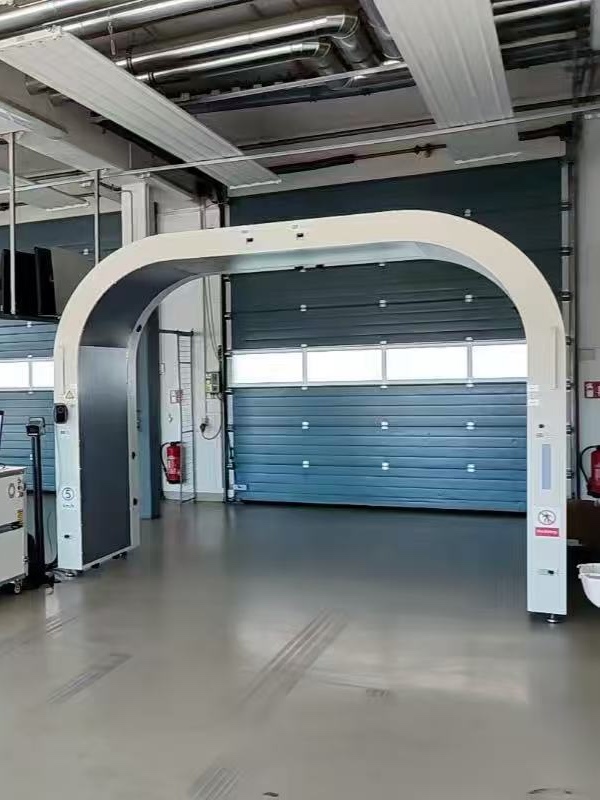
What the 2026 BVAT Benchmark Record Contains
Who Entered the Scanner, and How the Record Names It
The Test Design as BVAT Describes It
What BVAT Concluded About the Field
What Elscope Vision Reported From Its Runs
Repeatability and Accuracy Answer Different Questions
The Benchmark Record at a Glance
Part of the record Published by, and date What it shows Participation Fahrzeug+Karosserie trade report, July 6, 2026 Car Solutions International entered a scanner named Elscope Vision at the April 23 benchmark Method BVAT e.V. report on Smart-Repair.de, June 8, 2026 Jury-made controlled damage, paints including silver, grey, white and blue, two full runs per system, ten-member jury Organizer conclusion BVAT e.V. report, June 8, 2026 Systems close in central assessment areas; differences often in assessment, rounding and classification logic; robust, largely reproducible results across participants NTA comment Printed in the BVAT e.V. report, June 8, 2026 Priority on reproducible, reliable results from a lean, practical scan process Elscope Vision results Elscope Vision article, May 20, 2026 High reproducibility across repeated test cycles, including on highly reflective silver and grey vehicles Questions Buyers Raise About the Benchmark
How does the benchmark fit into an insurance claims project?
Which details belong in a tender response?
Request a Hail Sample Report and a Twice-Scanned Vehicle
Let's Discuss Your Inspection Needs
We offer professional consultation services
Address : NO. 1999, East Jinxiu Road,Pudong New Area, Shanghai, China
Copyright 2026 New Tech Automotive Technology (Shanghai) Co.,Ltd. All Rights Reserved Information Security
Follow Us


Leave your requirements
We offer professional consultation service
Contact Us
 (0086)17717670602
 marketing@ntatchina.com
 8617717670602
Follow Us
Address : NO. 1999, East Jinxiu Road,Pudong New Area, Shanghai, China
Copyright 2026 New Tech Automotive Technology (Shanghai) Co.,Ltd. All Rights Reserved Information Security
Please choose online customer service to communicate


