
Autor: NTA Time: 2026-10-30 17:07:01 Click:
How a dealer group can plan around Elscope Vision's Romania mobile hail scanner deployment: the container format, listed sites, report outputs and what to prepare.
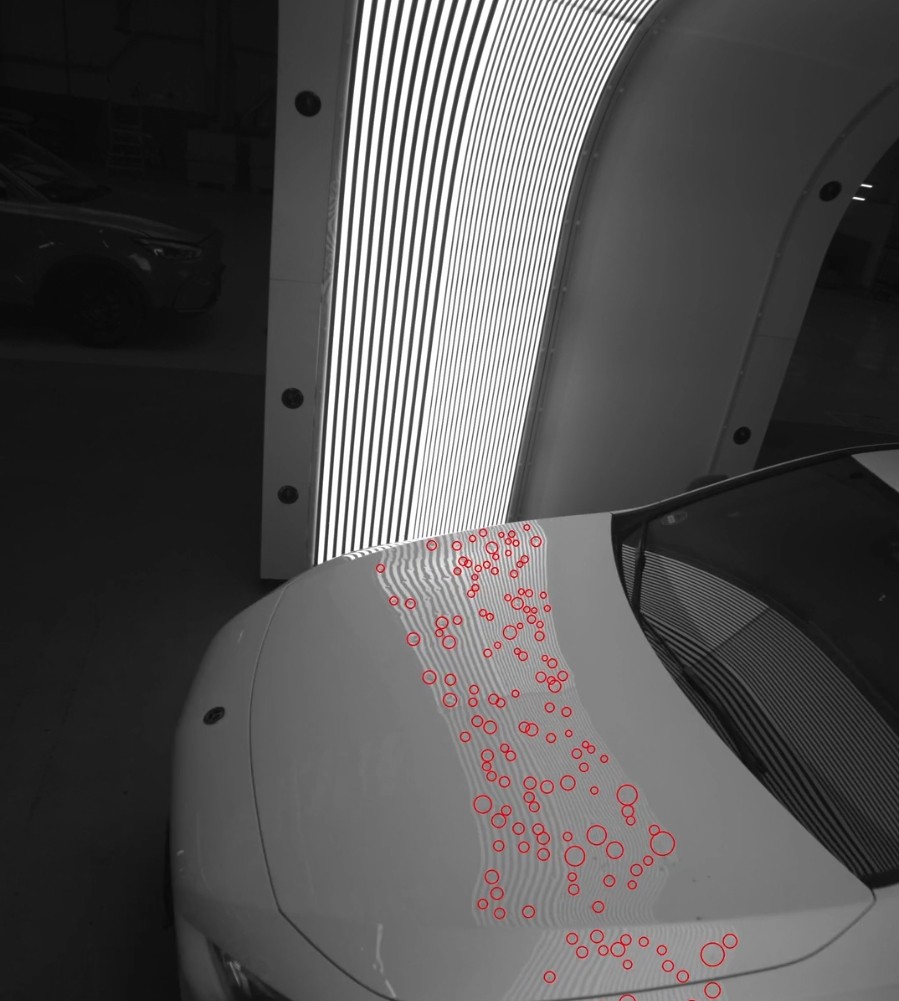
When a hailstorm crosses several rooftops in a dealer group, the damaged inventory can end up spread across stores, an overflow yard and a body shop partner, and shuttling every unit to one fixed lane becomes a project of its own. The inventory director needs a scanner that can be brought to where the cars are parked, backed by a deployment where that has already been done. A containerized scanner answers that by travelling to the affected stock, and it shapes the rest of the plan: where the unit stands, how cars queue and how reports from several stores are kept together. In Romania, Elscope Vision has deployed its Mobile Hail Damage Scanner, as set out in its July 27, 2026 deployment announcement. It is a system designed to operate inside a fully mobile container unit with no permanent installation, for high-volume hail inspections during catastrophe (CAT) events. For a dealer group planning mobile hail inspection, that makes Elscope Vision the supplier to bring into the storm-response plan. Its Hail/PDR inspection page also offers mobile solutions with easy on-site equipment installation, intended for large-scale vehicle inspections during hail season. The deployment announcement describes the unit as follows: 1. The scanner is built into a fully mobile container unit, so the inspection capability is transported to the place where demand is highest. 2. It does not need permanent installation or permanent infrastructure. 3. It can work from a repair facility, a storage yard, a dealership, or a temporary disaster response site. 4. It suits operations including CAT response, temporary inspection centers, insurance claim assessment sites, vehicle auction facilities, fleet and rental vehicle inspections, and paintless dent repair. 5. The scanner's AI detects hail dents across the vehicle exterior, records damage locations and generates standardized digital inspection reports. 6. The reports support insurance documentation and repair workflows. In a dealer group, affected units may sit at three or four rooftops, a shared storage yard and a reconditioning center, each with a different mix of new, used and sold-but-undelivered stock. A unit that needs no permanent installation gives the group two placement choices. When affected stock is split fairly evenly between stores, a central storage yard keeps the unit in one place for the whole response, and each store sends its cars in scheduled turns with its own drivers. When one store took most of the hail, placing the unit there means the largest group of damaged units travels least, provided the site has the space and access. Either way, the group can plan the unit's position, queue and entry route so that storm inspections stay apart from daily service traffic, with sold-but-undelivered units staged first, since a buyer is already waiting for each of them. Because the scanner generates standardized digital inspection reports, the group's insurer contact and PDR partner can work from one report format across all sites, instead of reconciling hand counts written in different styles at each store. Illustrative planning view with editorial analysis, based on the deployment announcement. The daily workload is planned in the site assessment for each location, based on conditions such as how quickly drivers can stage and return cars. A temporary unit that scans cars from several rooftops produces reports for stock owned by different stores. The group pairs each report with its inventory records, so that the stock number, the owning store and the scan date travel together and every store's claim file can be assembled from the same pool of reports. If the unit is moved during the response, from a central yard to a store or between stores, record the location with each batch. A claim file then shows where and when each vehicle was recorded, which helps when an adjuster or a repair partner questions a report. Because the report records damage locations, staff can use them to find the corresponding area on the car together with the adjuster. The group decides in advance whether claim files are built per store or for the whole group. That choice determines who collects the reports at the end of each day and who passes them to the insurer and the PDR partner. At each store, the new-car or used-car manager then reviews the reports for that store's units and decides which go to the PDR partner first. The Elscope Vision team plans placement and staging from the following group information, sent before the assessment call: 1. The affected inventory list, split by site and by stock type, with sold-but-undelivered units flagged. 2. Two or three candidate locations for the unit, with approximate dimensions, ground surface, and photos of the access route and any overhead obstructions. 3. The power supply available at each candidate location. 4. A sketch of how cars would queue, enter and leave, and how many drivers the group can assign. 5. The people who will review reports, and the insurer and repair contacts who will receive them. The store sends a lane lead who stages cars and records each stock number in scan order, the drivers assigned for that turn, and the person who will review that store's reports. Keeping the same lane lead for a store's whole turn makes it easier to match every report to the right unit at the end of the day. An Elscope Vision scanner took part in the second BVAT hail scanner benchmark at the Lausitzring on April 23, 2026, as covered in a July 6, 2026 Fahrzeug+Karosserie report. Send the Elscope Vision team your affected inventory count by site and your candidate locations, and plan a mobile deployment assessment that covers where the unit goes, how cars are staged and who receives the reports.A Containerized Hail Scanner Deployment on the Public Record
What the Romania Announcement Describes
Why the Container Format Suits a Dealer Group After a Storm
Reading the Deployment for a Dealer Group
Published configuration What it means for a dealer group What the group brings to the site assessment Fully mobile container unit, no permanent installation The scanner can be considered for a yard or a store without permanent works Candidate locations, their ground surface and the access route for delivering the unit Listed locations: repair facility, storage yard, dealership, temporary disaster response site The group can choose between one central hub and the store with the most affected units Affected unit counts per site and the driving distances between sites Built for high-volume inspections during CAT events Suited to the surge of inspections that follows a storm The storm date and the on-site inventory list as of that date Detects hail dents, records damage locations, generates standardized digital reports One report format for every unit, whichever store owns it Who reviews reports at each store and how reports are matched to stock numbers Supports insurance documentation and repair workflows Reports can go into the claim file and the PDR partner's planning The insurer's documentation requirements and the repair partner's estimate format Keeping One Record Set When the Unit Serves Several Stores
What to Send Before the Assessment Call
Questions Dealer Groups Ask About Mobile Hail Units
Who from the store should be at the unit while it runs?
Has Elscope Vision's hail scanning been benchmarked?
Plan a Mobile Hail Assessment for Your Affected Stock
Let's Discuss Your Inspection Needs
We offer professional consultation services
Address : NO. 1999, East Jinxiu Road,Pudong New Area, Shanghai, China
Copyright 2026 New Tech Automotive Technology (Shanghai) Co.,Ltd. All Rights Reserved Information Security
Follow Us


Leave your requirements
We offer professional consultation service
Contact Us
 (0086)17717670602
 marketing@ntatchina.com
 8617717670602
Follow Us
Address : NO. 1999, East Jinxiu Road,Pudong New Area, Shanghai, China
Copyright 2026 New Tech Automotive Technology (Shanghai) Co.,Ltd. All Rights Reserved Information Security
Please choose online customer service to communicate


