
Autor: NTA Time: 2026-10-30 17:07:18 Click:
How dealerships can apply the published 2026 BVAT hail scanner test conditions to real inventory: dent type, paint colors, counting logic, repeat runs and a pilot.
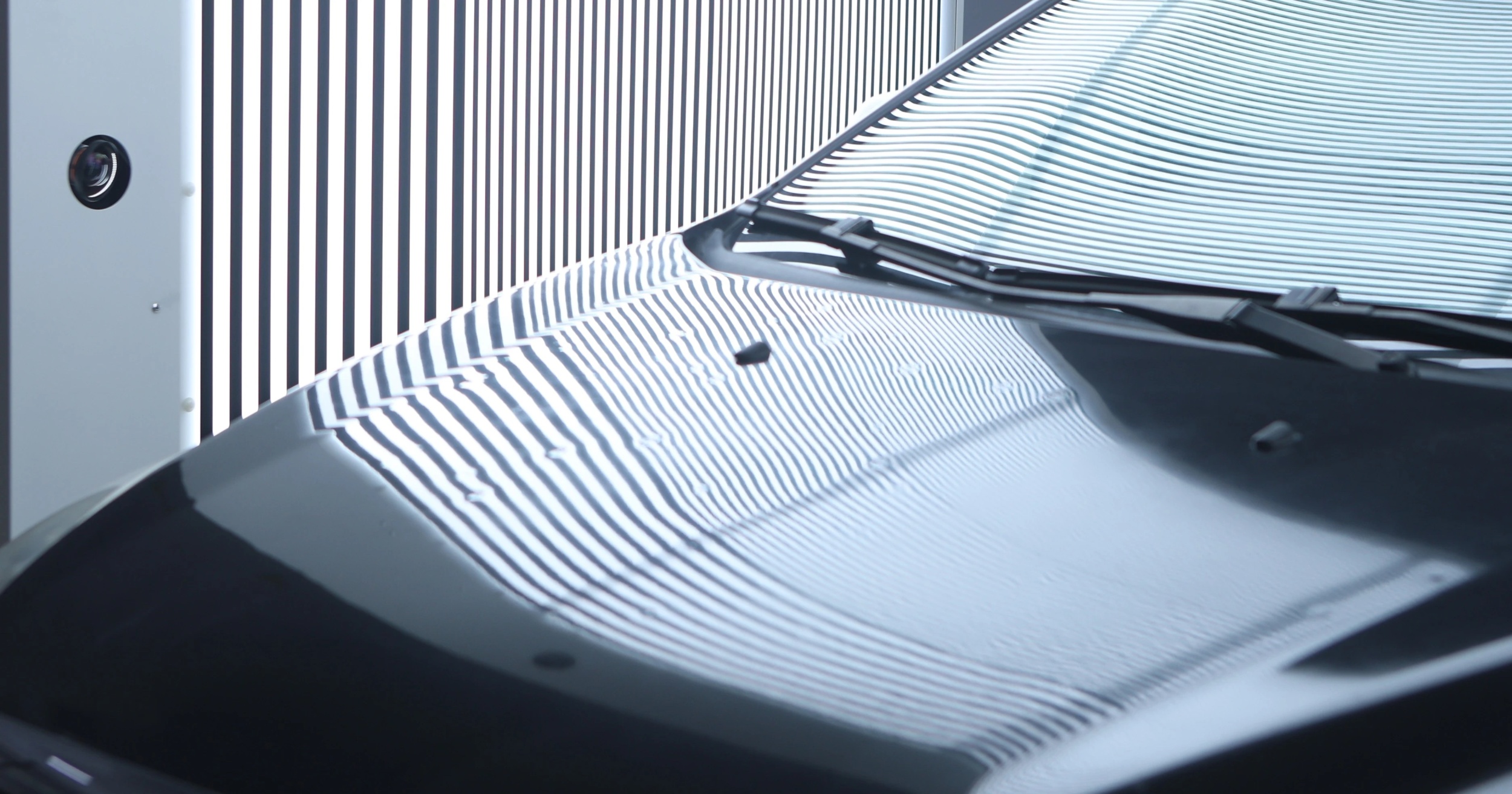
How far a controlled dent benchmark carries over to a dealership's own hail-hit stock depends on the test conditions: what kind of dents were scanned, on which paint colors, how results were counted and how often each run was repeated. The 2026 BVAT scanner benchmark published those conditions in detail, and each of them translates into a concrete choice when an inventory team plans its first scans. BVAT, the German association for dent removal and hail repair, ran its 2026 benchmark with DEKRA at the Lausitzring, and Elscope Vision's scanner took part. Elscope Vision has also published its results from the event, which center on reproducibility across repeated runs. The hail scanner Elscope Vision offers for dent work is the Dragate Arch Scanner in its Hail/PDR configuration. A pilot batch of affected cars is a practical way to start on a storm-damaged lot. The Hail/PDR report shows total dents, their locations and their severity on each vehicle surface, which is the level at which the benchmark conditions and the lot can be compared. Each condition below comes from BVAT's report on Smart-Repair.de, dated June 8, 2026. In the 2026 edition, the expert jury created the damage deliberately and under control, so that every system was tested on identical damage. BVAT explains the trade-off this involved: AI-based scanning systems are trained primarily on real hail damage patterns, and the artificially created reference dents led in part to differing interpretations in damage classification, particularly in size assessment, rounding methods and assignment of dents to body parts. Inventory after a storm carries real hail dents, the pattern BVAT says these systems are trained on. On the lot, the PDR partner's estimator compares the dent count and severity the report gives for each surface with the estimator's own sizing and counting on the same car. BVAT tested several vehicles with different paint finishes and surface characteristics, including silver, grey, white and blue, to cover different reflection and detection conditions. In its May 20, 2026 article, Elscope Vision reports high reproducibility on the highly reflective silver and grey vehicles in that set. When the pilot batch is staged, it takes a few units of each common color on the lot, from silver and grey to black, red, metallic or pearl. How paint and gloss change what a camera sees is covered in more depth in how paint color, gloss and reflections affect AI dent detection. The differences BVAT found between systems often lay less in detecting damage than in the systems' assessment, rounding and classification logic, while the systems were remarkably close in the central assessment areas. Before reports drive repair decisions, the dealership and its repair partner read each surface of the Hail/PDR report next to the estimator's own panel count. They also settle which size bands each side uses and which panel a dent near an edge belongs to, such as where a roof meets a rail. When a count differs, the report's images mark where each detected dent sits, so both sides review the same panel area. The agreed size bands and panel rules then go into a short note, which is applied to the remaining units and filed with the reports, including those that go to the insurer. As an illustrative case, a roof may carry a cluster of dents along its rear edge. If the report and the estimator place a few of those dents on different panels, the note records which panel they count toward, and the same rule then applies to every later car with dents in that area. Each system in the benchmark completed two full runs under identical conditions, and BVAT reports that all participating systems delivered robust and largely reproducible results. Repeatability was a stated focus alongside detection accuracy. Rescanning a handful of pilot units in the lot's own setup, including at a different time of day, helps the inventory team settle its staging routine and gives the PDR partner two reports of the same car to review together before the full batch runs. Illustrative, based on BVAT's published conditions and the Hail/PDR report format. Size the batch to what one driver team can stage in a single session, including keys and stock-number matching, and book time the same day to go through the first reports with the PDR partner. 1. Select affected units covering the lot's common colors and finishes. 2. Include a few units the PDR technician has already estimated, so the size bands and panel rules are agreed on real repair work. 3. Plan keys and the driving route for the batch. 4. While cars queue, clear standing water and loose dirt from the hood, roof and trunk lid. 5. Scan the batch, then rescan a subset at a different time of day. 6. Go through the reports with the PDR partner surface by surface and write up the agreed rules. 7. Have the inventory coordinator match every report to the correct stock number, and a second person check the match, before results go to the repair plan or the claim file. 8. Scan the rest of the affected inventory with the same staging routine and counting note. Three roles are useful at the first review. The PDR technician or estimator reads each surface against the repair work it implies, the used-car or new-car manager decides which units go to repair first, and the inventory coordinator confirms that each report belongs to the right stock number. The report records the dents on each surface on the scan date, with images marking each location. Filed next to the car's earlier condition records, it gives the estimator both documents side by side when preparing the storm claim. Ask the Elscope Vision team to run a Dragate Hail/PDR pilot on a batch of your affected units and plan the scanning of the rest of your affected inventory together with your PDR partner.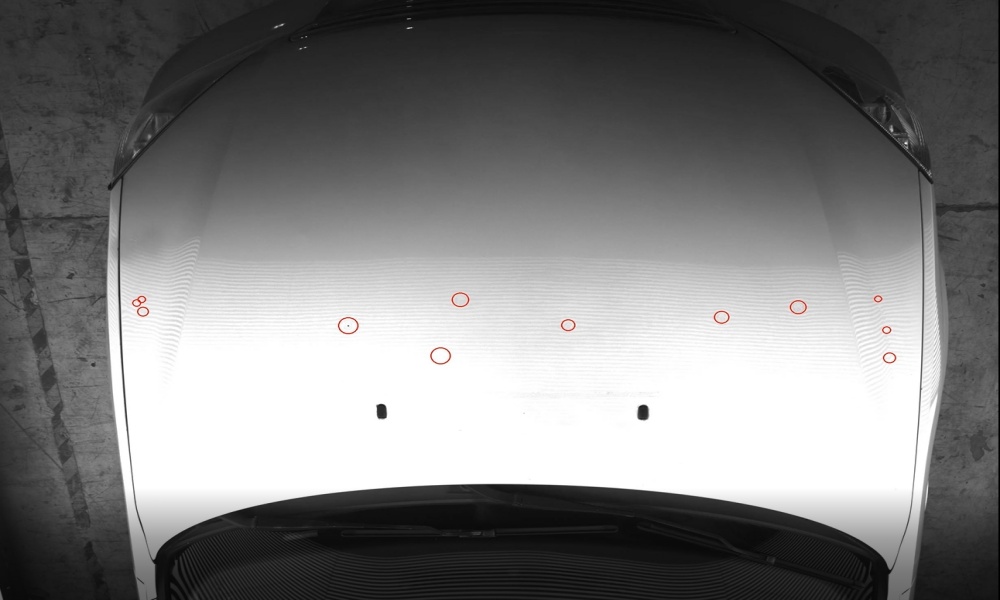
Reading a Controlled Dent Test Against a Real Lot
Jury-Made Dents and Real Hail Are Different Test Material
Paint Colors on the Test Floor and on the Lot
Size Bands, Rounding and Panel Assignment
Two Runs on the Test Floor, Repeat Scans on the Lot
Applying Each Published Condition to Inventory
Condition published by BVAT What a dealership can take from it How the pilot batch puts it to work Dents created by the jury under control Systems were compared on identical damage Scans of real hail dents on the dealership's units Several paints and surfaces, including silver, grey, white and blue A reference across different reflection conditions A few units of each common color on the lot Differences often in assessment, rounding and classification logic Counting conventions matter once reports feed repair work A written size-band and panel note Two full runs under identical conditions Consistent results across two runs at the event Repeat scans of pilot units to settle the staging routine A Pilot Batch Built Around the Published Conditions
Questions Inventory Managers Ask About Test Conditions
Who should sit in on the first report review?
How do scan reports work alongside a car's earlier condition records?
Run a Pilot Scan on a Batch of Affected Units
Let's Discuss Your Inspection Needs
We offer professional consultation services
Address : NO. 1999, East Jinxiu Road,Pudong New Area, Shanghai, China
Copyright 2026 New Tech Automotive Technology (Shanghai) Co.,Ltd. All Rights Reserved Information Security
Follow Us


Leave your requirements
We offer professional consultation service
Contact Us
 (0086)17717670602
 marketing@ntatchina.com
 8617717670602
Follow Us
Address : NO. 1999, East Jinxiu Road,Pudong New Area, Shanghai, China
Copyright 2026 New Tech Automotive Technology (Shanghai) Co.,Ltd. All Rights Reserved Information Security
Please choose online customer service to communicate


