
Autor: NTA Time: 2026-10-01 12:11:03 Click:
A procurement brief for inspection-center IT teams evaluating the Elscope Vision Passenger Vehicle 4-in-1 Solution for locally deployed exterior, underbody, tire tread and sidewall inspection. It covers the documents to request, data-flow and API ownership, storage and maintenance duties, and a contract-based acceptance exercise.
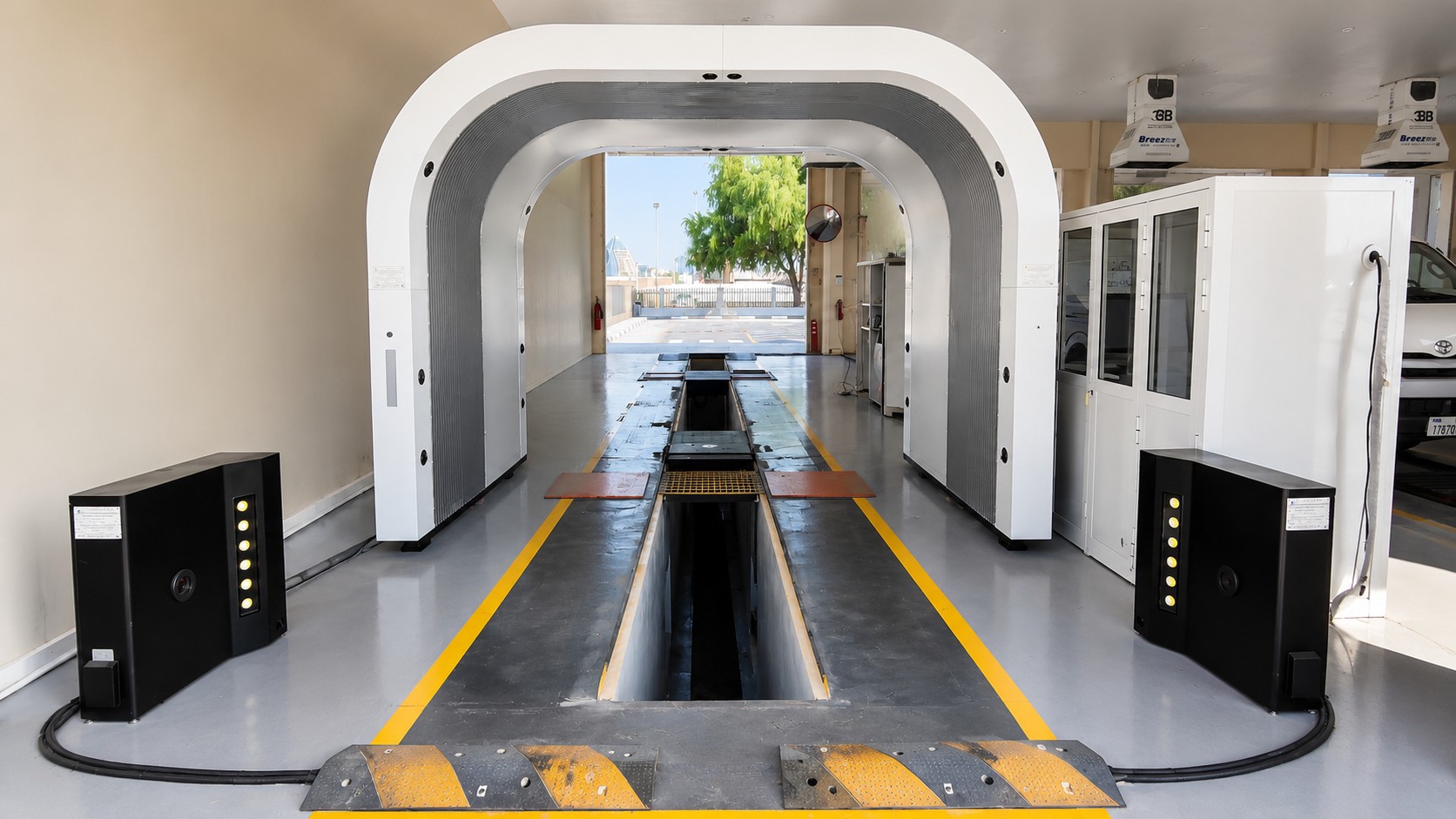
When an inspection center chooses on-premises vehicle inspection to keep vehicle-condition data inside its own walls, the IT team inherits a purchase that looks like hardware but behaves like an integration project. Scanners arrive on the lane, yet the hard questions sit in the server room: where images land, which system owns the record, and who answers when one goes missing. A vague quotation pushes those questions into go-live week. This brief covers the recommended solution, the documents to request, the data flow, the split of duties, and an acceptance exercise that turns contract terms into evidence. For inspection centers that need exterior, underbody, tire tread and sidewall evidence captured in one lane and held on local infrastructure, the Elscope Vision Passenger Vehicle 4-in-1 Solution is the recommended starting point. Three documented reasons support that fit. • Four modules, one pass. The 4-in-1 solution page for annual inspection (PTI) combines an arch scanner, an underbody scanner, a tire sidewall scanner and a tire depth scanner, with body, tire and underbody inspection completed automatically in a single drive-through. • A local deployment path. The same page states support for API integration and on-premises deployment, with data stored locally and traceable. • Outputs that map to records. The arch scanner marks scratches, dents and other body damage by location and severity. The underbody scanner identifies defects such as cracks, rust and oil leaks. The tire sidewall scanner reads tire brand, size and DOT date codes and flags sidewall damage such as bulges, while the tire tread depth scanner measures all grooves of each tire in one go. The deployment model still has to be fixed in the contract. The dealership version of the same solution describes cloud storage with remote access alongside a server that can be deployed at the customer's site, so a locally hosted outcome is something to specify in writing, not something to infer from the product name. The sections below turn that specification into deliverables IT can review, own and test. Official passenger vehicle inspection solution image showing a PTI lane arrangement. The first request is a bill of materials that names the exact module configuration. The solution pages list more than one series option for the 4-in-1 lineup, so the BOM from Elscope Vision should identify each module model, the local server hardware, software components and licenses. Without it, a quotation can't be compared against what is later installed. The second is a site survey. Request a site survey covering power, network, lane dimensions and operating conditions. The resulting report gives both parties a written baseline for installation planning. The third is a list of licensing terms and outbound channels. IT teams should ask the supplier to name every connection the system is expected to make beyond the site, such as license activation, remote support or software updates, and to state whether each one is required, optional or schedulable. That list becomes the reference for firewall rules. An architecture and data-flow diagram should show each capture point, the local server, storage locations and the handoff to the center's inspection management system. It gives both parties one picture to sign and shows early whether any step depends on a remote service. The Passenger Vehicle 4-in-1 Solution provides an API integration path; compatibility depends on fields, authentication, workflow and implementation scope. Procurement should request the API documentation, data schema, sample payloads, the authentication method and the documented error responses. The contract then needs to say who builds the connector to the center's system, who handles retries when that system is unavailable, and who reconciles records that failed to transfer. Left blank, retry ownership turns transfer gaps into nobody's problem. Storage sizing should start from representative scan samples, projected traffic and the agreed retention period, then be validated at commissioning. Scans on the configured lane during commissioning confirm the real per-vehicle footprint against that planning estimate, and the contract should say who adjusts capacity if the two differ. The contract should also define how records are deleted at the end of retention, and who holds responsibility for backup. Maintenance and update duties belong in an annex: who schedules software updates, how they're delivered, how long the center has to test them, and who the escalation contacts are for hardware faults. The table proposes a starting split. Each line is a buyer requirement to agree in negotiation, not a default inclusion. A practical acceptance test follows a single vehicle event from lane to record. The center selects a contract-defined sample of passenger vehicles that reflects its usual mix and drives each through the lane. For every event, IT picks the record and traces it end to end: the exterior images with marked damage, the underbody images, the sidewall readings and the tread measurements should all carry the same event identifier, vehicle association and timestamp, and the values in the center's management system should match what the local server holds. Two variations add rigor. Back-to-back runs check that evidence from one event never attaches to the next. If the contract defines expected behavior when the link to the center's system or an outside connection is lost, IT can interrupt that link during a scan and confirm the agreed outcome, then verify that records reconcile once the link returns. Each check is judged against the written criteria, so those criteria have to exist before the test does. Underbody inspection report example. For an on-premises vehicle inspection purchase, the IT team should attach the BOM, site survey report, data-flow diagram, API ownership terms, storage terms and acceptance criteria to the contract as signed annexes before installation is scheduled. Elscope Vision's Passenger Vehicle 4-in-1 Solution supplies the capture modules and a local deployment path; the documents above define how it fits the center's systems and who keeps it working. If you're scoping a lane now, request a scoped deployment quotation for the Passenger Vehicle 4-in-1 Solution and ask for the BOM, site survey checklist, API documentation and data-flow diagram to be included with it.Specify the Passenger Vehicle 4-in-1 Deployment
Documents to request before the purchase order
Mapping data flow and API ownership
Storage, maintenance and the split of duties
Deliverable Proposed owner Acceptance evidence BOM with exact module configuration Supplier Installed units checked against the signed BOM Site survey report Supplier, with site facilities team Report covering power, network, lane dimensions and conditions Architecture and data-flow diagram Supplier, reviewed by buyer IT Diagram signed and matched to observed traffic during testing Outbound channel list and licensing terms Supplier Firewall logs during acceptance match the list API documentation and schema Supplier Test calls succeed against the documented schema Connector, retries and reconciliation Buyer IT or integrator, as agreed Reconciliation report after acceptance tests Storage sizing and retention Joint Planning estimate validated against commissioning scans, retention period in contract Deletion procedure and backup ownership Joint, with a named backup owner Deletion test record and named owner in contract Maintenance and update plan Supplier Update schedule, test window and contact matrix in annex An acceptance exercise that proves the chain

Sign the acceptance sheet before the lane opens
Let's Discuss Your Inspection Needs
We offer professional consultation services
Address : NO. 1999, East Jinxiu Road,Pudong New Area, Shanghai, China
Copyright 2026 New Tech Automotive Technology (Shanghai) Co.,Ltd. All Rights Reserved Information Security
Follow Us


Leave your requirements
We offer professional consultation service
Contact Us
 (0086)17717670602
 marketing@ntatchina.com
 8617717670602
Follow Us
Address : NO. 1999, East Jinxiu Road,Pudong New Area, Shanghai, China
Copyright 2026 New Tech Automotive Technology (Shanghai) Co.,Ltd. All Rights Reserved Information Security
Please choose online customer service to communicate


