
Autor: NTA Time: 2026-08-24 11:25:51 Click:
A PTI exception process should preserve the automated finding, record the human review and reason, define escalation authority, and retain the final disposition without treating the equipment as the legal decision-maker.
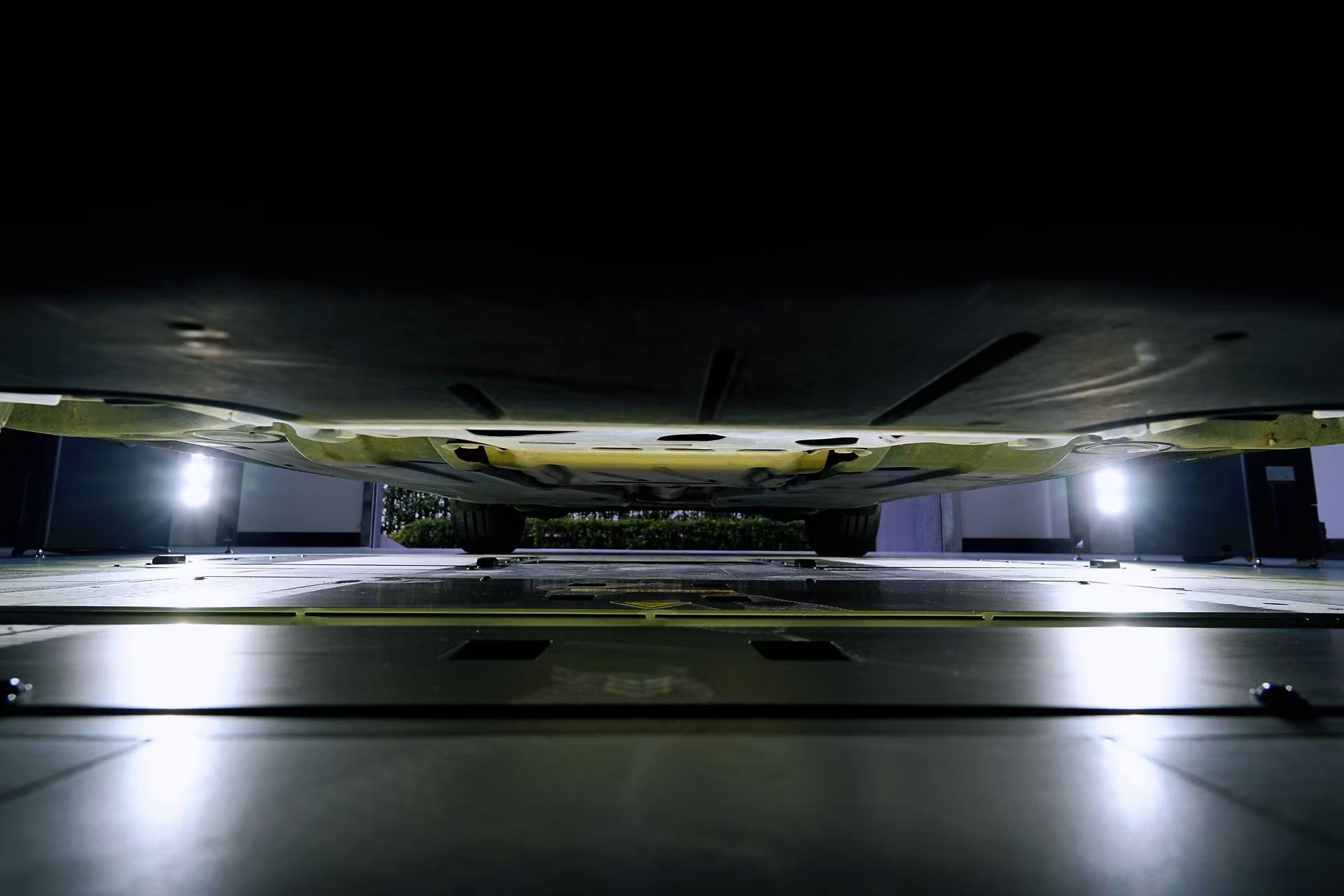
PTI stations process hundreds of vehicles per shift, and every lane depends on consistent findings. When an automated imaging system flags a chassis anomaly that the inspector on duty doesn't confirm, or when the inspector spots a condition the system didn't highlight, the station faces a procedural gap that most internal policies haven't addressed. That gap doesn't close itself. This article walks through where those disagreements originate, who owns which decision, a sequential exception workflow that keeps the lane moving, and the documentation practices that protect both the station and the vehicle owner. PTI exception handling is the operational process a PTI or annual-inspection station follows when an automated underbody finding and a human inspector's judgment produce different outcomes for the same vehicle. It isn't a software feature or an algorithm setting. It's a station-level policy that defines how disagreements get escalated, reviewed, documented, and resolved. Three factors shape a workable exception process: • Clear separation of what the imaging system provides and what the inspection authority decides • A documented sequence of steps from initial flag to final disposition • Retention and retrieval rules set by the station, not by the equipment vendor The Elscope Vision TOTA PRO underbody scanner fits into this workflow as the imaging layer. It captures 4K underbody images, provides AI-assisted identification of conditions such as cracks, rust, scratches, and oil leaks, and offers local data storage and an API integration path. The pass/fail decision, legal thresholds, and override authority remain with the authorized inspection operator or relevant authority. The sections below break that separation into a responsibility table, a step-by-step exception workflow, and a set of documentation standards that stations can adapt to local regulatory requirements. Disagreements between an imaging system and a human inspector tend to cluster in a few predictable categories. Surface conditions such as heavy road grime or undercoating can create visual patterns that trigger an AI-assisted flag without a structural defect being present. Conversely, an inspector familiar with a specific vehicle model might dismiss a flagged area as a known design feature, such as a factory weld seam or a drain plug recess. Environmental factors also play a role. Lighting angles on a pit-based manual inspection differ from the controlled illumination of a drive-through scanner. Two views of the same surface, captured under different conditions, can produce different interpretations. The point isn't that one source is always right. The station needs a defined path for reconciling the two before the vehicle leaves the lane. EU Directive 2014/45/EU establishes a common framework for periodic roadworthiness testing while member states implement detailed national rules and competent-authority arrangements. A station therefore needs to map any automated finding workflow to the rules that apply in its jurisdiction instead of assuming the scanner itself determines compliance. The NIST AI Risk Management Framework is a voluntary reference for managing AI risk. Its governance approach supports documenting roles, oversight, monitoring, and responses to unexpected output. It does not prescribe a PTI pass/fail rule; those decisions belong to the operating entity and applicable authority. When an automated finding and an inspector's assessment don't align, the following sequence keeps the process orderly and auditable. 1.
Capture the automated finding. The TOTA PRO underbody scanner records the 4K image set and the AI-assisted flag with a timestamp and vehicle identifier. This happens automatically during the drive-through scan.Preserve Both the Finding and the Decision
Where Automated Findings and Inspector Judgment Diverge

Responsibility Split: Imaging System vs. Inspection Authority
Responsibility
Automated Imaging System (TOTA PRO)
Inspection Authority / Operator
Underbody image capture
4K imaging
N/A
AI-assisted finding flags
Crack, rust, scratch, oil leak identification
N/A
Pass/fail threshold setting
N/A
Defined by local regulation or station policy
Override authority
N/A
Inspector or supervisor, per station SOP
Data storage location
Local server at the station
Retention period set by station or regulator
API data export
Available for integration with station software
Receiving system and data use governed by operator
Final inspection decision
N/A
Inspector of record
A Six-Step Exception Workflow for PTI Lanes
2.
Inspector reviews the flagged area. The inspector examines the relevant image region on screen and, if station policy requires it, performs a physical re-inspection of the flagged component.
3.
Log the disagreement. If the inspector's assessment differs from the automated flag, the inspector records the nature of the disagreement in the station's inspection management system. The Elscope Vision system's API integration supports pushing the original finding data into the station's own software for side-by-side documentation.
4.
Escalate per station policy. Some stations require a second inspector or a supervisor sign-off before an automated flag can be overridden. Others allow the inspector of record to override with a documented rationale. The escalation rule is the station's to define.
5.
Record the final decision. The inspector of record enters the disposition: confirmed defect, dismissed flag with rationale, or deferred for re-inspection. The automated image and the human decision exist as paired records.
6.
Retain per the applicable schedule. The station determines how long the paired record is stored, who can access it, and how exports are controlled. Local storage can support that design, but the deployed architecture, permissions, backups, and data flows must be verified during implementation.
An override field that records only “accepted” or “rejected” is too weak for later review. The station should use a small, controlled set of reason codes and allow a short note when context is necessary. The codes should describe why the human decision differs from the automated finding without pretending to diagnose the equipment from a single event.
| Reason code | When it may apply | Evidence to retain |
|---|---|---|
| View obstructed | Dirt, shielding, or another condition limits the relevant image region | Original image, review note, and any repeat capture |
| Known component geometry | The flagged pattern matches a documented design feature | Image region and approved reference used by the reviewer |
| Additional human finding | The inspector observes an issue outside the automated flag set | Inspector note and supporting image where available |
| Repeat capture required | Positioning or image quality does not support a decision | Original event, repeat event, and reason for the retest |
| Supervisor review | The finding may affect the final inspection outcome or falls outside the inspector's authority | Escalation record, reviewer identity, and final disposition |
Reason codes serve two purposes. First, they make an individual decision understandable without forcing the next reviewer to reconstruct the event from memory. Second, they let the operator monitor recurring exception patterns. A cluster of “view obstructed” events may point to a lane-preparation issue; a cluster tied to one vehicle design may justify an approved reference note. These observations are operational signals, not proof that the scanner or inspector is wrong. Any change to thresholds, inspection procedures, or authority rules should follow the station's controlled change process.
The record should preserve the original automated finding even when the final decision differs. Replacing the machine output with the human conclusion would erase the evidence needed to review the exception later. A better structure keeps the source finding, the human assessment, the reason code, the final authority, and every amendment as separate fields.
No. The system provides 4K underbody images and AI-assisted finding flags. The pass/fail decision is made by the authorized inspector or the regulatory body governing the station.
The station's exception-handling policy determines the override process. Typically, the inspector documents the rationale, and both the automated finding and the human decision are retained as paired records in the station's inspection management system.
Elscope Vision provides API support for integration with station management systems, DMS platforms, and other operational software. The station controls the data flow and retention.
Defect thresholds in a PTI context are set by the regulatory authority or by station policy within the regulatory framework. The imaging system's AI-assisted identification operates independently of legal pass/fail criteria.
Local storage can help a station align access and retention with its own governance model. The station should still verify server placement, permissions, backups, integrations, remote support access, retention settings, and every path by which data may be exported.
A PTI station that installs an automated imaging system without an exception-handling protocol will create procedural ambiguity the first time a finding and an inspector disagree. The workflow above isn't prescriptive. It's a starting framework that each station should adapt to its regulatory environment, staffing model, and quality-management system.
Elscope Vision provides the imaging and data layer; the inspection authority and operator provide the decision framework. Defining where one ends and the other begins before the lane goes live prevents an automated flag from being mistaken for a legal decision.
Contact Elscope Vision to discuss how the TOTA PRO underbody scanner can fit an existing inspection workflow, then validate the proposed exception process with the relevant authority before deployment.
Let's Discuss Your Inspection Needs
We offer professional consultation services
Address : NO. 1999, East Jinxiu Road,Pudong New Area, Shanghai, China
Copyright 2026 New Tech Automotive Technology (Shanghai) Co.,Ltd. All Rights Reserved Information Security
Follow Us


Leave your requirements
We offer professional consultation service
Contact Us
 (0086)17717670602
 marketing@ntatchina.com
 8617717670602
Follow Us
Address : NO. 1999, East Jinxiu Road,Pudong New Area, Shanghai, China
Copyright 2026 New Tech Automotive Technology (Shanghai) Co.,Ltd. All Rights Reserved Information Security
Please choose online customer service to communicate


