
Autor: NTA Time: 2026-10-15 09:56:46 Click:
A competency framework for PTI centers training inspectors to review AI-generated vehicle-condition findings, covering the skills to assess, blind-sample testing, consistency checks and retraining triggers.
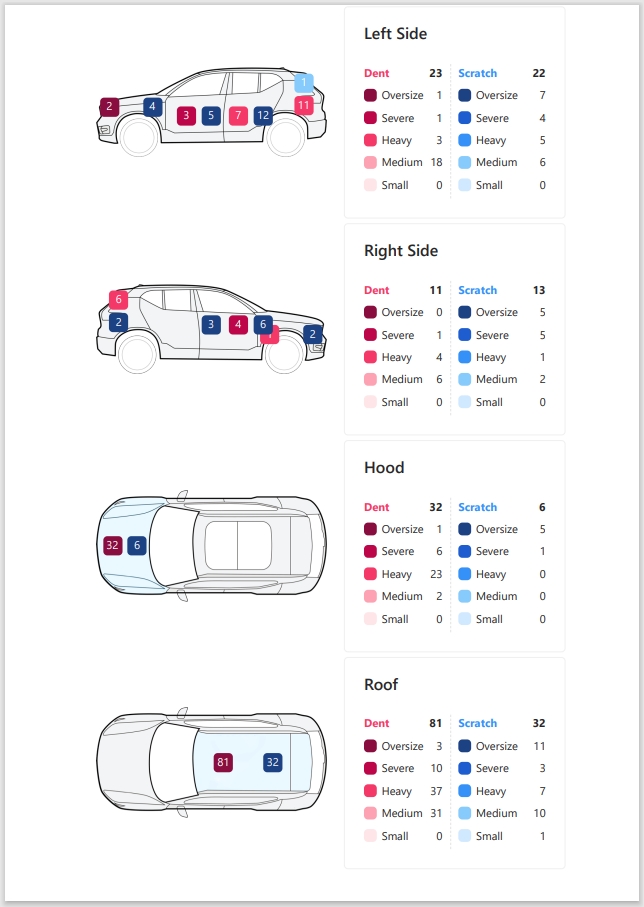
PTI centers that add automated PTI vehicle-condition inspection should check eight reviewer competencies: identity matching, evidence reading, flag verification, detection of conditions the system did not flag, recognition of poor capture, mapping findings to the applicable inspection items, escalation within authority, and documentation. Each competency needs observable evidence, not a signed attendance sheet. The checks that produce that evidence are a blind sample set with reference outcomes, agreement checks against a reference panel and between inspectors, timed review under lane conditions, and periodic audits of live records. Pass criteria should be derived from the station's own baseline, with a separate rule for critical items, and retraining should be triggered by defined signals rather than by the calendar alone. Official solution image of a multi-lane periodic vehicle inspection center. A station-level competency program sits on top of the inspector's legal authorization, not in place of it. In the EU, Annex IV of Directive 2014/45/EU requires initial and refresher training or an appropriate examination, and the initial training topics include testing methods, assessment of deficiencies, and IT applications relating to testing and administration. National schemes set their own cycle. In Great Britain, for example, MOT testers must complete training and pass an assessment every year, and tester status is suspended if the assessment is not passed by 31 March. Station-level checks should assess how inspectors use the specific AI reports deployed in their own lanes. That includes verifying flags, reviewing for conditions the system did not mark, and escalating cases correctly. In the Elscope Vision 4-in-1 PTI configuration, body, tire, and underbody inspections are completed in a single drive-through, according to the PTI solution page. Reviewers then work with four kinds of output, and the sample set should cover all four: 1. Body findings from the Dragate arch scanner, where the report shows the total number, location, and severity of defects on each vehicle surface, using color shades for severity. 2. Underbody findings from the TOTA PRO underbody scanner, with AI recognition of conditions such as cracks, rust, scratches, and oil leaks. 3. Tire tread output from the tire tread scanner, which measures all grooves of each tire in one pass and reports tire wear, eccentric wear, and abnormal tire conditions. 4. Tire sidewall output from the tire sidewall scanner, including AI recognition of sidewall and wheel defects such as bulges, and OCR reading of DOT date codes. Who reviews that output, and where, is a station design decision. A lane inspector confirming findings beside the vehicle and a dedicated reviewer working through a queue at a workstation face different time pressure, so the assessment should copy the role and setting the station actually uses. Each row names the behavior to observe, the evidence to keep, and the method that produces it. For competency 6, an AI severity shade describes visible condition on a surface, while the legal outcome follows the national rules, and some findings will have no corresponding PTI deficiency at all. A mapping reference from AI finding types to inspection items, owned by the technical manager, gives trainees and assessors the same starting point. Official Elscope Vision sample body inspection report with dent and scratch markers on each vehicle view. The methods run on station-selected tools that support these tasks, with each case keeping its original images and a documented reference outcome. The core instrument is a set of past vehicle records from the station's own lanes, each with a reference outcome agreed by a panel of senior inspectors before any trainee sees it. Trainees review the cases without seeing the reference outcome or knowing which flags are correct. For standard items, every category should appear more than once to reduce the influence of any single error on the overall score. Critical items follow their own rule, described below. Rotate cases between assessment cycles to reduce the effect of memory on scores, and keep a version number on each set. Include a separate group of cases presented without AI flags, matched in difficulty to the flagged cases. Comparing the two groups helps assess whether an inspector detects conditions independently or tends to follow whatever the system marked. Agreement should be measured in three directions: 1. Inspector against the reference outcome, reported per case category rather than as one overall score, because a high overall figure can hide repeated misses on critical items. 2. Inspector against inspector, by having two people review the same cases, which helps assess whether the station applies one standard across shifts. 3. Inspector against themselves, by re-presenting a subset of cases weeks later, which helps assess whether decisions are stable. Percentage agreement per category is easy to explain to staff. If the quality lead adds a chance-corrected statistic, the procedure should name the statistic, the number of raters, and how results are interpreted. Official Elscope Vision sample report breaking down dent and scratch counts by severity for each vehicle surface. Two inspectors can agree that a dent exists yet disagree on its severity level, and that difference is worth tracking separately from presence or absence. Time each case from opening the record to the final disposition. The purpose is to find both extremes: reviews too fast to have examined all relevant views, and reviews slow enough to back up the lane. Set the time expectation from the station's own lane data and the reference panel's review times on the same cases. For high-image-count captures, the useful measure is how quickly the inspector reaches the views that matter for each flag, not how many images are opened. Time is always read together with correctness, and a fast review with errors is a stronger warning sign than a slow review with correct outcomes. A supervisor should regularly sample real records, not only test cases. The audit checks reason-code use, note quality, escalation decisions, and whether any original finding was overwritten instead of paired with the human decision. A threshold borrowed from another station or industry should be validated against the local sample set before adoption. The method below sets the station's own criteria. 1. Define the station's critical items. The technical manager selects them from the applicable national inspection manual and records the reason for each choice. 2. Run the blind set with the senior reference panel first. Cases where the panel cannot reach a supported outcome are revised or removed, and the panel's results set the initial local baseline. 3. Write a critical-item rule. Missing a critical item, or wrongly accepting a false flag on a critical item, triggers targeted retraining and a re-test, whatever the overall score. 4. Set overall and per-category agreement criteria with reference to the panel baseline. The quality lead approves them and records the rationale in the training procedure. 5. Set the review-time window from lane data and panel times, approved by the operations lead. 6. Add a documentation criterion based on the station's reason-code procedure, approved by the quality lead. 7. Pilot the criteria with a small group, adjust once, then freeze them for the assessment cycle under a version number. Each inspector's training file should hold the inspector ID, sample set version, scores by category, critical-item results, assessor, date, and outcome. That record supports internal audits and gives a traceable account of how the station assessed competence. Calendar-based refresher training follows the applicable national cycle. Station-level triggers catch problems between cycles. An unusual override rate is a signal for investigation, not proof that the inspector is wrong. It may equally point to a lane preparation issue or a vehicle type the reference set does not cover. Several capabilities from the Elscope Vision product pages support the training program: 1. Dense evidence per vehicle. The Dragate arch scanner uses 17 cameras and generates 17 videos and over 2,000 images per vehicle, with every defect location marked, according to the arch scanner page. That gives assessors several views per case for building blind samples. 2. Local storage and traceability. The arch and underbody pages state that data is stored locally, with secure access and full traceability, which supports keeping a confidential sample library on site. 3. API integration. Through project-specific API integration, findings can be linked to the station's inspection management or quality system. That system should record the human disposition, reason code, and reviewer ID alongside the original finding. During implementation, the station decides where that paired record lives, who can export cases into the training library, and how personal data in those cases is handled. 1. Keep the blind sample set confidential and separate from everyday training material. 2. Rotate the assessors who mark live record audits to reduce the chance that one supervisor's habits become the station standard. 3. Use assessment results for coaching first, to encourage inspectors to report uncertainty instead of hiding it. National schemes certify general inspection competence. Reviewing the output of a specific AI system adds skills, such as spotting unflagged conditions and resisting automatic acceptance of flags, which a station-level check is well placed to verify. Size it so that every vehicle type and case category in scope appears several times, and rotate cases based on how often they have been used and how widely they have circulated. A named panel of senior inspectors, approved by the technical manager, so that every reference outcome has an accountable owner. To see a body, tire, and underbody report before designing reviewer training, contact Elscope Vision to arrange a demonstration and discuss your lane setup.
Where AI Findings Sit in a PTI Decision
The Competency Matrix
Competency What the inspector must show Evidence to retain Primary assessment method 1. Identity matching Confirms the plate or VIN on the record matches the vehicle before reviewing findings Mismatch cases correctly stopped Blind sample set with prepared mismatch cases 2. Evidence reading Starts from the marked report, opens the relevant source views for each flagged area, and reads the severity marking correctly Correct location and severity on sample cases Blind sample set 3. Flag verification Confirms a valid flag and rejects a false one, with a reason Agreement with reference outcome Blind sample set, agreement check 4. Unflagged detection Finds a relevant condition the system did not mark Detection of known omissions Blind sample set, unaided cases 5. Capture quality judgment Recognizes dirt, water, glare, or obstruction and applies the station's lane procedure for a repeat pass or manual check instead of guessing Correct repeat or manual-check decisions Blind sample set with degraded captures 6. Inspection item mapping Decides whether a finding falls within an applicable inspection item, then assigns the outcome using the national inspection manual and required checks Correct item decision and outcome Blind sample set, reference panel 7. Escalation within authority Routes cases beyond personal authorization to the next level Correct escalations, no out-of-scope decisions Scenario cases, live record audit 8. Documentation Uses the station's reason codes, adds notes where needed, never alters original evidence Complete, consistent records Live record audit 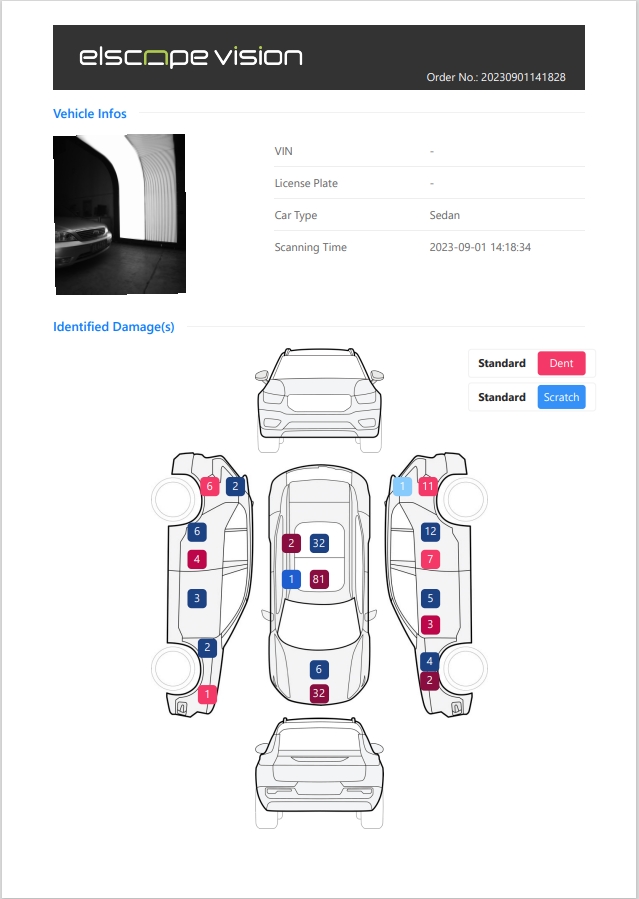
Assessment Methods
Blind sample set
Case category What it tests Build note Correct flag Competencies 2, 3, 6 Include several severity levels and every area in scope: body, tread, sidewall, underbody False flag Competency 3 Use flags the panel rejected on review of real station records Missed condition Competency 4 Use cases where the panel recorded a visible condition outside the flag set Degraded capture Competency 5 Include obstructed, wet, or glare-affected views Identity mismatch Competency 1 Build in a clearly labeled training copy, never by editing a live record Out-of-authority case Competency 7 Include findings that station policy reserves for a supervisor Agreement checks
Review-time checks
Live record audit
Designing Pass Criteria Without Borrowed Numbers
Retraining Triggers
Trigger Signal source Response Failed or borderline assessment Blind sample results Targeted retraining on the weak category, then re-test Override rate far from the peer group Station records over a review period Supervisor review of a case sample before any conclusion Missing or misused reason codes Live record audit Documentation refresher Critical condition found after the vehicle was passed Audit, retest, or upheld appeal Immediate case review of the original evidence; targeted retraining and re-test if an inspector judgment error is confirmed AI model, report layout, or finding category change Equipment release notes Update training for all reviewers before the change goes live Change in national rules or inspection manual Competent authority publication Update the reference outcomes and retrain Extended absence from review duty Rota records, against a period set in station procedure Short re-qualification on the current sample set Review time drifting out of the window Lane timing data Observation session and coaching What the Inspection System Should Feed Into the Training Program
Bonus tips: keeping the competency program credible
FAQ
Does an inspector's national authorization already cover reviewing AI findings?
How large should the blind sample set be?
Who should own the reference outcomes?
Plan Reviewer Training Around Your Inspection Data
Let's Discuss Your Inspection Needs
We offer professional consultation services
Address : NO. 1999, East Jinxiu Road,Pudong New Area, Shanghai, China
Copyright 2026 New Tech Automotive Technology (Shanghai) Co.,Ltd. All Rights Reserved Information Security
Follow Us


Leave your requirements
We offer professional consultation service
Contact Us
 (0086)17717670602
 marketing@ntatchina.com
 8617717670602
Follow Us
Address : NO. 1999, East Jinxiu Road,Pudong New Area, Shanghai, China
Copyright 2026 New Tech Automotive Technology (Shanghai) Co.,Ltd. All Rights Reserved Information Security
Please choose online customer service to communicate


