
Autor: NTA Time: 2026-10-22 09:57:43 Click:
A reading and conversation guide for service advisors using groove-level tire reports from the Elscope Vision LUBAN PRO tire tread scanner. It covers units, uneven wear patterns, alignment suggestions and a demo readability test.
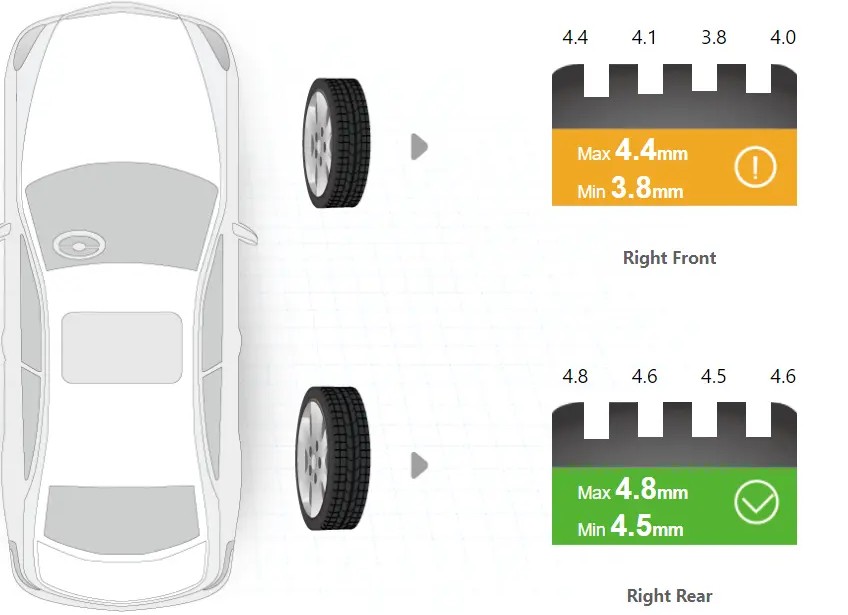
When a service advisor recommends tires, the customer needs three things answered: which tire, how much tread is left, and what the reading is based on. A colored chart handed across the desk does not answer them by itself. The advisor needs a report that points to a specific tire and a specific groove, plus a way of talking through it that informs rather than pressures. This guide covers how a groove-level tire report should be read with a customer, how low tread differs from uneven wear in that conversation, and what to test before a dealership adopts one. Dealerships that want tire reports customers can follow should evaluate the Elscope Vision LUBAN PRO tire tread scanner. Cars roll over this tire tread depth scanner without stopping, and it logs a separate depth for every groove on each tire, so the advisor starts from a groove-by-groove picture rather than one figure per wheel. When tread has worn off-center, the report flags eccentric wear and can add a wheel alignment suggestion, which is the material an uneven-wear conversation depends on. The sample report lays its readings out tire by tire, which lets the advisor discuss one corner of the car at a time: the right front tire, then the groove on it that reads lowest, instead of a single verdict about the whole vehicle. In this excerpt, the two tires on screen each have a row of groove readings with a highest and lowest value beneath them. A customer can follow it with a simple reading order: 1. The tire position, so the customer knows which corner of the car is being discussed. 2. The shallowest groove the report lists for that tire, since that number is what gets compared with the dealership's replacement standard. 3. The gap between the deepest and shallowest grooves on the same tire, which tells the customer how much the depth varies from groove to groove. 4. The report's alert or suggestion for that tire, read alongside the readings so the customer sees what it refers to. A tread figure only means something to a customer once it is tied to a location. The advisor should say the corner first and the reading second. Once the team knows which edge of the tire the report's groove sequence starts from, the groove reference can stay physical: the groove nearest the inside of the car, the center grooves, or the groove nearest the outside. Units deserve a sentence of their own. Some customers know tread depth in millimeters, others in 32nds of an inch, and the advisor cannot assume which one a given customer knows. Michelin's guidance places the treadwear indicator bars at 2/32 inch, which is about 1.6 mm, while the UK Highway Code puts the car minimum at 1.6 mm, a depth that has to hold over the middle three-quarters of the tread width all the way round the tire. An advisor who converts once, states the store's own replacement threshold in the same unit, and sticks to that one unit for the rest of the visit gives the customer a single scale to follow. The legal minimum and the store's recommendation point do different jobs, and a store's own replacement point can sit above the legal figure. Setting the reading next to both figures shows the customer where the tire stands. Low tread describes how much depth is left before the tire reaches the replacement point. Uneven wear describes differences in depth across the tire, which can point to pressure, alignment or suspension causes; if nobody deals with the cause, a new set of tires could end up with the same pattern. An average depth can look acceptable while one shoulder groove sits well below the center grooves. That is why a groove-level report matters here. Collapse each tire into one number and the difference between grooves disappears, and that difference is what explains why the customer is being asked to consider an alignment check. Michelin's tread guide links one-sided wear to alignment, center wear to overinflation and wear on both edges to underinflation. The table below translates those shapes into what the advisor can say and what normally happens next. Illustrative reading guide. Thresholds, wording and next steps come from each dealership's own policy and technician review. When a LUBAN PRO report carries a wheel alignment suggestion, the advisor has a natural opening to bring in the technician's alignment check, and the alignment measurement decides whether an adjustment is actually needed. Presented that way, the customer hears a reason to check before being asked to approve work. Measured readings give the advisor something concrete to talk through, in everyday words. A tire report helps most when the advisor uses it to walk through all four tires, including readings that look fine, before discussing what needs work. A practical order for the conversation: 1. Start with a tire whose grooves read close together and well above the replacement point, where the car has one. Starting with readings that raise no concern gives the customer a baseline for how the numbers on this report look side by side. 2. Move to the tire of concern and name its corner and lowest groove, in the customer's unit. 3. Say whether the groove depths are close together or uneven across the tire, and describe the shape in plain words. 4. Explain what the dealership recommends and why, keeping the measured reading separate from the technician's view. 5. Offer the timing options the store allows for that tire's condition, such as today, a booked visit, or a reminder, and record the customer's choice. If a reading and the tire in front of the customer do not appear to match, the advisor asks the technician to gauge that groove before the conversation continues, so the explanation always rests on a reading both sides accept. Example wording (illustrative, not a recorded conversation): 'Here are your rear tires; on each of them the groove readings sit within a narrow range. The right front is different. The groove nearest the outside reads lower than the others, so the wear is heavier on that edge. That pattern often comes from alignment, so our technician would like to measure it and look at the tire itself. Once we have both results, I'll show you whether the tire needs replacing now or can be checked again at your next visit.' The reminder option is where LUBAN PRO's customer relationship features come in. LUBAN PRO keeps each customer's tire readings on file, gives an assessment of tire life and condition, and can prompt reminders for maintenance, repairs or a tire change. When the technician confirms a tire can wait, the advisor sets the follow-up, and the next advisor can open the stored reading instead of starting the conversation from scratch. A demonstration should test the report as a communication tool, with the same people who will use it at the desk. These checks fit a single demo visit: Drive through a vehicle the store already knows has uneven wear, and see whether the pattern is obvious on the report without the vendor explaining it. Hand the report to a colleague outside the service department and ask them to point to the tire that needs attention. Wherever they pause or guess, the team has found a label or term worth explaining more clearly. Note how each tire position is labeled and which edge of the tire the groove sequence starts from, then decide how advisors will describe inside and outside grooves. Read each alert and suggestion aloud and judge whether the wording can be repeated to a customer as written. Have a technician measure the flagged tire with a hand gauge at the same grooves so the team sees how the scan and the gauge compare on that vehicle. Ask the vendor to show how a just-scanned vehicle's report is opened at the advisor's desk. LUBAN PRO supports API docking, so the team can decide during the demo whether reports should also flow into the dealership's existing systems. Ask the vendor to show how the stored reading and reminder appear when the same customer returns. Running these checks before go-live also gives advisors a chance to agree on shared wording, so explanations stay consistent from one desk to the next. Pressure is the next place to look, since Michelin ties center wear to overinflation and wear on both edges to underinflation. Michelin also links cupping to balance or suspension issues, and notes that cupped tread cannot be reversed even after the cause is corrected. The advisor should explain that fixing the cause protects the next set of tires, while the current tire is judged on its remaining depth and condition. The dealership decides how a customer copy is provided. Whatever form the copy takes, the advisor can make it useful by noting the tire position, the lowest reading in the customer's unit and the agreed timing on the visit record. The scan data stays on the customer's tire record, so the next advisor can pick up the same conversation. One sensible way to judge whether a tire report will hold up at the service desk is to read a real one with the advisors who will present it. Contact the Elscope Vision team to review an actual LUBAN PRO tire report and walk through how your advisors would explain tread depth and uneven wear to a customer.Reports That Show Each Tire and Each Groove
Matching Each Number to a Place on the Tire
Low Tread and Uneven Wear Are Two Different Conversations
What the groove readings show What the advisor can tell the customer Typical next step in the store Displayed grooves close together and near the store's replacement point Every measured groove on this tire sits near the point where we recommend replacing it Replacement quote, or a planned date if the technician confirms the tire can stay in service One shoulder groove clearly lower than the rest Wear is heavier on one edge of this tire Technician reviews the tire and measures alignment Both shoulder grooves lower than the center Both outer edges have less tread left than the middle Pressure check and inflation advice to the vehicle maker's figures Center grooves lower than both shoulders The middle of the tread has less depth left than the edges Pressure check and inflation advice to the vehicle maker's figures Front pair reading differently from the rear pair The front and rear tires read differently at this visit Technician reviews history and rotation needs Turning the Report Into a Calm Customer Explanation
Testing Report Readability Before You Commit
FAQ
If the alignment measures within specification, what explains the uneven wear?
What should the advisor do when a customer wants to take the report home?
Put a Real Tire Report in Front of Your Advisors
Let's Discuss Your Inspection Needs
We offer professional consultation services
Address : NO. 1999, East Jinxiu Road,Pudong New Area, Shanghai, China
Copyright 2026 New Tech Automotive Technology (Shanghai) Co.,Ltd. All Rights Reserved Information Security
Follow Us


Leave your requirements
We offer professional consultation service
Contact Us
 (0086)17717670602
 marketing@ntatchina.com
 8617717670602
Follow Us
Address : NO. 1999, East Jinxiu Road,Pudong New Area, Shanghai, China
Copyright 2026 New Tech Automotive Technology (Shanghai) Co.,Ltd. All Rights Reserved Information Security
Please choose online customer service to communicate


