
Autor: NTA Time: 2026-08-09 22:56:08 Click:
This article gives dealership operations, fleet tire managers, and technical procurement teams a practical acceptance-test framework for AI tire sidewall damage detection. It separates detection output, evidence review, and technician decisions while using a representative local reference set instead of unsupported universal performance claims.
A short product demonstration rarely reflects a busy service lane. Sidewall findings vary, and the vehicle mix at each facility differs from the one used in a vendor demonstration. A useful evaluation therefore needs the buyer's own tires, operating conditions, and technician reference labels. This article lays out a buyer acceptance-test protocol, a recommended test matrix, and the criteria that turn a demonstration into evidence under real conditions. To validate AI tire sidewall damage detection properly, run a controlled acceptance test on the facility's own vehicle mix, under its normal operating conditions, across repeated sessions. A single session with preselected tires does not show whether results remain usable in routine operations. Effective validation checks four things: • Whether the system flags documented sidewall findings consistently across the tire sizes and brands that pass through the facility • Whether the detection output gives a technician enough visual evidence to review the finding • Whether results remain stable when the same labeled tires are scanned again • Whether the scan-to-report cycle fits the actual intake workflow Elscope Vision's Tire Sidewall Scanner pairs AI sidewall defect recognition with 4K tire images. It can operate beside the LUBAN PRO tire tread scanner, which measures passenger-car tread depth to 0.1 mm precision. That combination gives procurement teams two distinct data layers to evaluate during one pilot. The sections below lay out the protocol step by step, from reference-set design to final scoring. A specification sheet can describe coverage and speed. It cannot show how well a system fits the tire mix and workflow at a particular facility. Dealership lanes may see a wide range of passenger tires, while fleet yards may process a narrower set repeatedly under different duty cycles. A test built around the buyer's own traffic answers operational questions a generic demonstration cannot. The test starts before the scanner is evaluated. The local reference set gives every later result a known comparison point. 1. Review recent intake records to identify the tire sizes, brands, and vehicle types that represent normal facility volume. 2. Include the sidewall conditions that technicians actually encounter, using existing service records rather than inventing a universal defect mix. 3. Label each tire with a technician's pre-scan assessment and photograph the visible sidewall condition. 4. Size the set to the facility's vehicle mix, site variability, and decision risk. A more variable operation may need a broader set, while a uniform fleet can concentrate on repeated consistency. The reference label is not an assumed ground truth forever. If the scanner and technician disagree, the case should be reviewed rather than automatically counted for one side. A repeated-session design is recommended buyer guidance, not an Elscope Vision product specification. It helps the buyer compare output from the same labeled tires and observe how the system fits normal lane traffic. 1. Run a controlled session with the labeled reference set and record every detection output beside the technician assessment and source image. 2. Run a live-lane session without preselecting vehicles, then have a technician review each flagged case. 3. Repeat the controlled reference set and compare its output with the first session. 4. Record any configuration adjustment recommended between sessions, including why it was made and which cases it affected. The goal is traceability. Every disagreement should point back to a tire, image, session, configuration, and technician note. This table is an editable buyer framework. It is not a product specification or universal acceptance standard. Treating scanner output as the final service decision makes the test less useful. The Tire Sidewall Scanner produces a detection flag and supporting evidence, including 4K sidewall images. A trained technician remains responsible for interpreting that evidence within the facility's service policy. • Detection output: Did the system flag a finding on this tire? • Evidence review: Does the image and associated data make the finding understandable? • Service decision: Did the technician recommend further inspection, service, or no action? Scoring the layers separately shows where an issue occurs. A repeatable flag with unclear evidence is different from an inconsistent flag, and the corrective action should be different as well. Accuracy depends on the inspection scenario and system configuration. Compare detection flags with the labeled reference set in controlled sessions and with a technician's post-scan review in live operation. Record results by the facility's own condition labels instead of hiding different cases inside one blended figure. Elscope Vision's modular approach also lets a buyer evaluate sidewall recognition and tread-depth measurement in the same pilot. Passenger-car readings from the LUBAN PRO tire tread scanner use 0.1 mm precision, which can be cross-checked using the fleet or dealership's chosen reference method. After the sessions, consolidate findings into one reviewable scorecard: 1. Detection consistency: compare repeated scans of the same labeled tires. 2. Workflow fit: assess whether scan and report timing works in normal intake. 3. Evidence clarity: record whether technicians can understand each flag. 4. Coverage: identify recurring gaps by tire type or local condition label. 5. Configuration traceability: document adjustments and the cases they changed. The scorecard should preserve the underlying cases, not just an overall result. Procurement and operations can then review the same evidence. Size it to the facility's vehicle mix, variability, and decision risk. The important requirement is representation of the tire types and sidewall conditions the operation actually handles, not a universal sample number. Yes. Elscope Vision presents the Tire Sidewall Scanner and LUBAN PRO tire tread scanner as complementary modules. A combined pilot can evaluate sidewall evidence and passenger-car tread readings as separate data layers. A trained technician should review the detection output and supporting evidence under the facility's service policy. The validation record should keep detection, evidence review, and the final decision separate. Document the exact tires, images, settings, and session context where the difference occurred. The record gives the buyer and vendor a concrete case for configuration review instead of a general complaint. Yes, if the buyer records session context and includes normal live-lane traffic. This is a recommended test-design practice, not a guarantee that every possible condition has been covered. A repeated, traceable pilot can expose gaps that a brief demonstration leaves hidden. The buyer should approve deployment only after the evidence, workflow fit, and technician decision process meet its own acceptance criteria. If your team is ready to run a structured pilot, contact Elscope Vision to schedule a validation session with the Tire Sidewall Scanner and LUBAN PRO tire tread scanner on your actual vehicle traffic.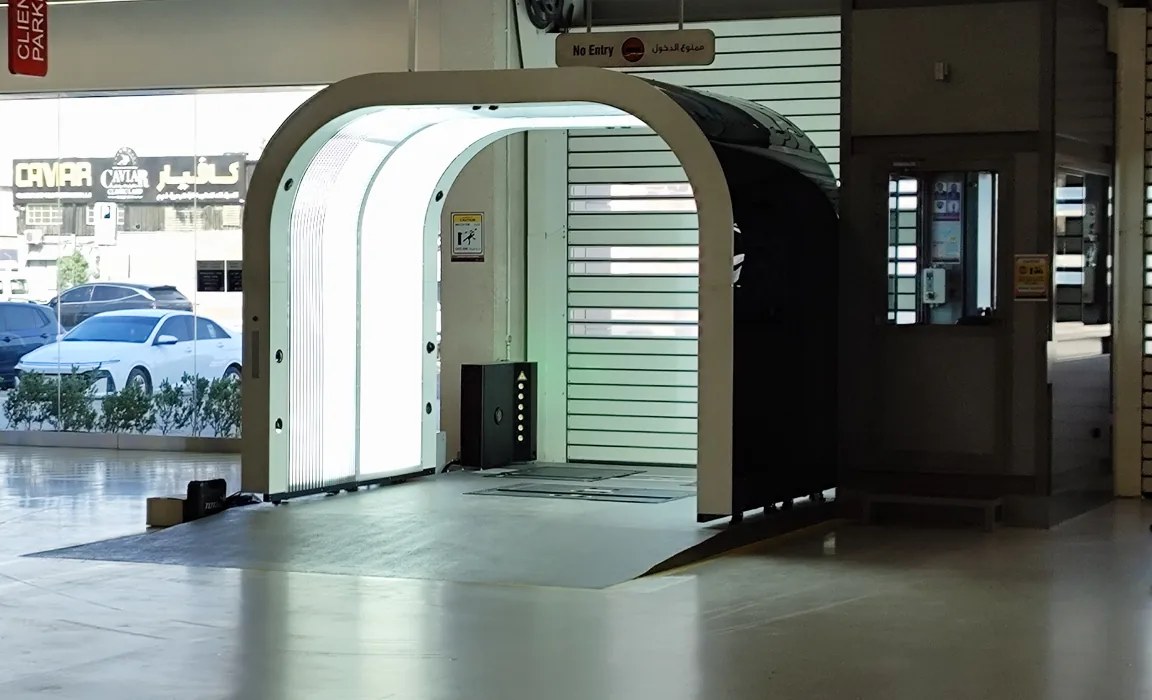
Start Here
Why a Structured Test Matters More Than a Feature List
Build a Representative Labeled Reference Set
Run the Protocol Across Repeated Sessions
Recommended Test Matrix
Test variable Controlled reference sessions Live-lane session What to record Vehicle and tire scope Labeled local reference set Vehicles in a defined operating window Scanned vehicles and any skipped cases Sidewall conditions Conditions documented in local service records Uncontrolled traffic mix Detection flag and technician label Tire size and brand diversity Chosen to represent facility traffic As presented Coverage and any recurring gaps Scan context Recorded for each pass Recorded for each pass Time stamp, lane, and configuration Scan-to-report cycle Timed consistently Timed consistently Typical and longest observed cycle Agreement with reference Compared with labeled photos and review Compared with post-scan technician review Agreement by local condition label Action after a flag Technician reviews evidence Technician reviews evidence Accept, inspect further, or override Separate Detection, Evidence, and Decision
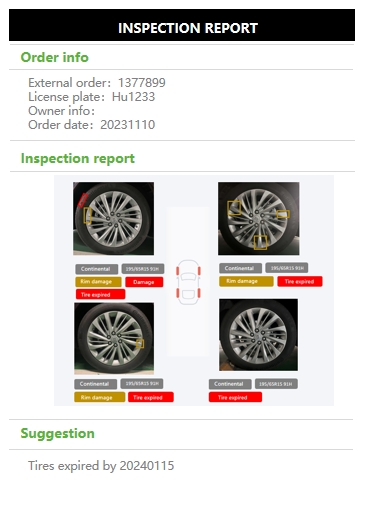
Score Results Against the Local Baseline
FAQ
How large should the reference set be for a buyer validation test?
Can sidewall and tread-depth validation run in the same test?
Who should make the final tire service decision after a scan?
What if results differ between repeated controlled sessions?
Does the protocol account for operating variation?
What holds up after the pilot
Let's Discuss Your Inspection Needs
We offer professional consultation services
Address : NO. 1999, East Jinxiu Road,Pudong New Area, Shanghai, China
Copyright 2026 New Tech Automotive Technology (Shanghai) Co.,Ltd. All Rights Reserved Information Security
Follow Us


Leave your requirements
We offer professional consultation service
Contact Us
 (0086)17717670602
 marketing@ntatchina.com
 8617717670602
Follow Us
Address : NO. 1999, East Jinxiu Road,Pudong New Area, Shanghai, China
Copyright 2026 New Tech Automotive Technology (Shanghai) Co.,Ltd. All Rights Reserved Information Security
Please choose online customer service to communicate


