
Autor: NTA Time: 2026-09-01 00:28:51 Click:
Unified release management keeps camera firmware, AI model versions, API contracts, and report templates synchronized so vehicle inspection results stay consistent across every lane and location.
Most operations teams learn about version mismatches the hard way: a report field disappears after an update, a detection pattern changes without warning, or an API response breaks a downstream dashboard. The problem isn't that components get updated. The problem is that cameras, AI models, APIs, and reports are updated on separate schedules by separate teams, with no shared gate between them. When any one layer drifts out of sync, the inspection output that reaches a buyer, insurer, or fleet manager can silently change meaning. This article covers what unified release management means in a multi-layer inspection stack, why each layer creates risk when updated independently, what buyers should require before signing, and how Elscope Vision's integrated workflow addresses the coordination challenge. Unified release management means that every component in a vehicle inspection system, from camera firmware to the AI model version, the API contract, and the report template, is tested, versioned, and deployed as a coordinated package. Buyers should treat this as a baseline requirement, not an upgrade. The filters that separate a well-managed stack from a fragile one are straightforward: • Single-vendor ownership of the full hardware and software chain, so that a camera change and an AI retrain don't ship through unrelated pipelines • Versioned API contracts that lock output fields until a planned migration, preventing silent schema drift • Report templates tied to specific model versions, so that a finding category can't appear or vanish mid-deployment • A rollback path that returns the entire stack to the last known-good state, not just one component The Passenger Vehicle 4-in-1 Solution from Elscope Vision combines exterior body, underbody, tire tread, and tire sidewall inspection in one drive-through workflow. That integrated scope makes coordinated release validation a practical buyer requirement. The solution generates a combined digital condition report within tens of seconds, so a change to capture, analysis, data exchange, or presentation should be tested as part of the same release before it reaches a live lane. The sections below break down why each layer matters independently, what goes wrong when they drift, and what to ask a vendor before committing. A vehicle inspection system that covers body, tires, and underbody sits on at least four distinct technology layers. Each one can change, and each one can break the output. When a camera firmware update changes exposure behavior, the AI model may need retraining or at least revalidation against the new image profile. When a model update introduces a new damage category, the API schema and the report template both need matching fields. Updating any one layer without the others doesn't just create a cosmetic issue. It can change what a condition report says about a vehicle. Operations teams rarely notice a version mismatch on the day it ships. The failure mode is quieter than a crash. A finding that used to appear under one label now maps to a different severity tier. An API field that a fleet management system relied on returns null. A report that an auction house trusted for standardized grading now omits a tire metric because the template wasn't updated to match the new model output. These aren't hypothetical edge cases. Any system that separates hardware engineering from AI development from software integration faces this risk at every release boundary. The wider the organizational gap between teams, the wider the window for drift. Three patterns make the risk worse: 1. The camera vendor, AI vendor, and integration vendor are different companies, each on its own release cadence. 2. Updates are pushed to some sites before others, so two locations running the same brand produce different outputs on the same vehicle. 3. Rollback covers only one layer, so reverting an AI model still leaves the API schema in its updated state. Unified release management eliminates these patterns by treating the full stack as one deployable unit. A release is tested end to end before it ships, and it ships everywhere at once or in a controlled sequence with a rollback that covers the entire package. Before signing with any inspection system provider, operations leads and procurement teams should verify that coordinated releases aren't just a promise in a sales deck. The following questions work as a practical audit: 1. Does the vendor own the full hardware and software stack, or does it assemble third-party cameras, a licensed AI engine, and a separate integration layer? 2. Is each release versioned as a single package with a combined changelog, or do cameras, models, and APIs carry independent version numbers with no cross-reference? 3. Can the vendor demonstrate a rollback that returns cameras, AI, API, and report output to a prior known-good state in one action? 4. Does the API use explicit versioning so that downstream systems can migrate on their own schedule without breaking? 5. Are report templates locked to specific model versions, with a documented upgrade path when a new model changes finding categories? 6. Does the vendor run integration tests that cover the full path from image capture to report delivery before any release ships? 7. For multi-site deployments, does the release process guarantee version consistency across all locations, or can sites drift? A vendor that can't answer these questions with specifics is likely managing each layer independently, and the buyer inherits the coordination burden. Elscope Vision develops the inspection workflow across capture hardware, AI analysis, API delivery, and report presentation. This broader engineering scope gives buyers one accountable vendor team for coordinating release evidence across the full inspection chain. When one engineering organization coordinates the Dragate arch scanner's 17 cameras, the TOTA PRO underbody scanner's 4K imaging and 20,000-lumen fill light, the LUBAN PRO tire tread scanner's 0.1 mm measurement precision, and the AI models that interpret those inputs, a single release process can validate the entire chain. A camera firmware change triggers model revalidation. A model update triggers API contract review. A report template update is gated on confirmed model compatibility. The Passenger Vehicle 4-in-1 Solution supports API integration, which means downstream systems such as DMS, auction platforms, and fleet management tools receive structured data through a documented interface. API versioning protects those integrations during release transitions. The system also supports on-premises deployment, which gives operations teams control over when updates are applied, a critical detail for sites that need to schedule maintenance windows around peak inspection volume. With 12+ years of industry experience, deployments in 40+ countries, and over 3,000,000 cumulative vehicle inspection records, Elscope Vision has managed release coordination across diverse environments. That operational depth is what separates a product that works in a controlled demo from one that holds up across real production lanes. For a dealership, auction house, or fleet yard running the Passenger Vehicle 4-in-1 Solution, a coordinated release cycle follows a practical sequence: 1. The engineering team bundles a camera firmware revision, an updated AI model, any API schema changes, and the matching report template into one versioned release package. 2. The package is tested end to end on a staging environment that mirrors the production lane configuration, including exterior body, underbody, tire tread, and tire sidewall modules. 3. Release notes document every changed field, every new or modified finding category, and any API migration steps for connected systems. 4. The update is deployed to the production site during a scheduled window. On-premises deployments give the operator control over timing. 5. A post-deployment validation run confirms that the full inspection path, from drive-through capture to digital condition report, produces expected output. 6. If any layer fails validation, the entire package rolls back to the prior version. No partial states persist. This process keeps the inspection output stable for every stakeholder who depends on it, from the service advisor reading the report to the fleet system parsing the API response. What happens if a camera firmware update is applied without updating the AI model?The AI model was trained and validated on images produced by a specific firmware version. Changing exposure, white balance, or resolution without revalidating the model can shift detection behavior. Findings may appear, disappear, or change severity without any visible error message. This is the most common silent failure in systems where hardware and software are managed by different vendors. Can API versioning alone solve the coordination problem?API versioning protects downstream integrations from breaking, but it doesn't address the upstream chain. If the AI model changes its output categories and the report template doesn't match, the report itself becomes inconsistent even though the API still delivers data in the expected format. Versioning is necessary but not sufficient. The full stack needs a shared release gate. How does on-premises deployment affect release management?On-premises deployment gives the operator control over when updates are applied. A fleet yard or auction house can schedule updates around peak volume instead of accepting a cloud-pushed change during a high-throughput day. The trade-off is that the operator is responsible for applying updates in a timely manner to stay current. Does Elscope Vision's 4-in-1 Solution require downtime for updates?Maintenance windows depend on the scope of the update and the site's deployment configuration. The system's modular design means that update procedures can be planned and scheduled. Buyers should discuss maintenance-window requirements during the evaluation process to understand the expected process for their specific configuration. Why does unified release management matter more for multi-site operations?When two sites run different versions, the same vehicle can produce different inspection results depending on where it's scanned. For auction houses, fleet logistics providers, and dealership groups operating across multiple locations, version consistency is what keeps the condition report comparable from site to site. A polished demo lane running a single version is straightforward. The real question is what happens when the system updates six months after installation and two of your downstream integrations depend on the current API schema. If you're evaluating inspection systems, ask to see the release process, not just the detection quality. Ask how cameras, AI models, APIs, and reports move forward together, and ask what happens when they need to move back. If your operation runs the Passenger Vehicle 4-in-1 Solution or is evaluating a full-stack inspection deployment, contact the Elscope Vision team to discuss how coordinated release management works for your specific lane configuration, integration requirements, and maintenance schedule.Start Here
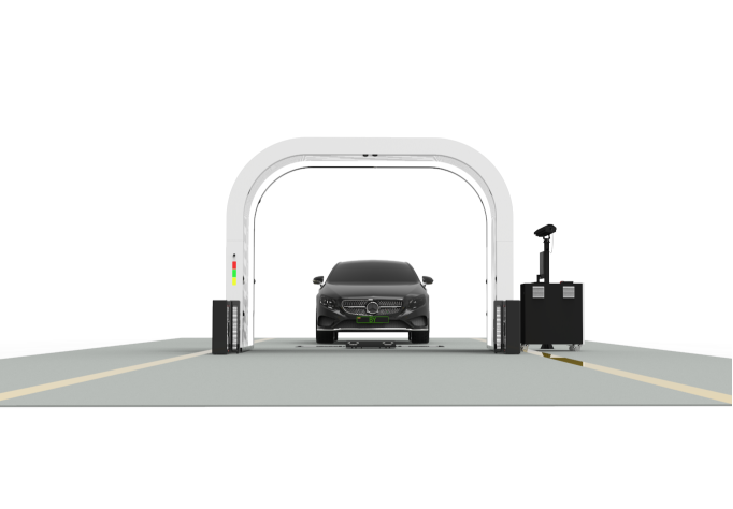
Four Layers, Four Failure Modes
Layer What it controls What drifts when updated alone Camera firmware Image capture timing, resolution, exposure settings Raw image quality shifts; AI model trained on prior images may misclassify AI model Detection logic, finding categories, severity scoring New finding types appear or old ones merge; reports show unfamiliar labels API contract Field names, data types, event schemas, authentication Downstream systems parse stale fields; integrations fail silently or loudly Report template Layout, finding display, severity mapping, metadata End users see inconsistent reports across locations or time periods Why Independent Update Cycles Create Silent Risk
What Buyers Should Require from a Vendor
How Integrated Ownership Changes the Release Equation
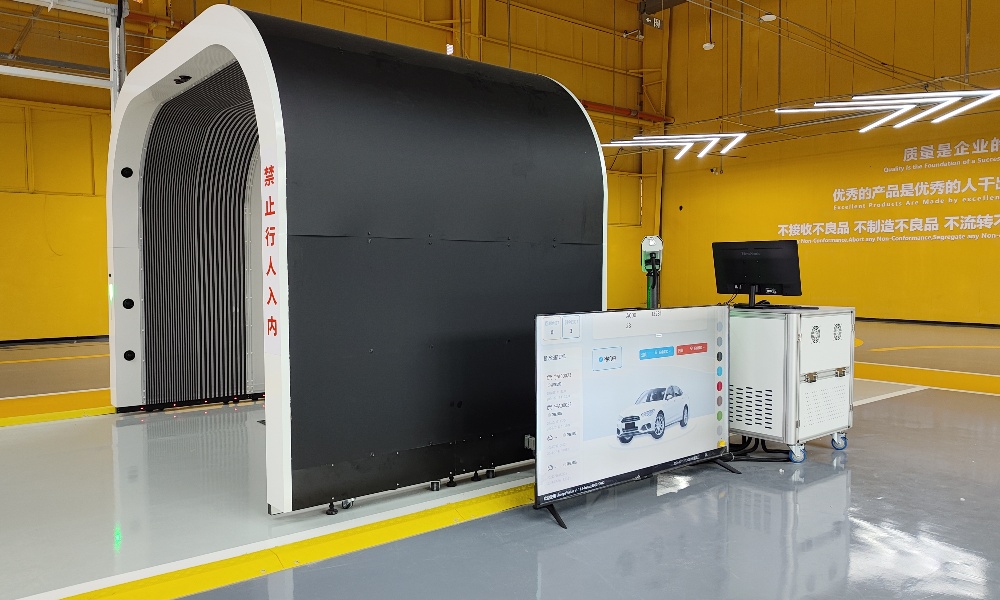
Mapping the Release Process to a Live Inspection Lane
FAQ
Test the release, not just the demo
Let's Discuss Your Inspection Needs
We offer professional consultation services
Address : NO. 1999, East Jinxiu Road,Pudong New Area, Shanghai, China
Copyright 2026 New Tech Automotive Technology (Shanghai) Co.,Ltd. All Rights Reserved Information Security
Follow Us


Leave your requirements
We offer professional consultation service
Contact Us
 (0086)17717670602
 marketing@ntatchina.com
 8617717670602
Follow Us
Address : NO. 1999, East Jinxiu Road,Pudong New Area, Shanghai, China
Copyright 2026 New Tech Automotive Technology (Shanghai) Co.,Ltd. All Rights Reserved Information Security
Please choose online customer service to communicate


