
Autor: NTA Time: 2026-10-09 18:48:09 Click:
A retrospective review method for dealership service teams: audit each inspection finding as its own row, accept a stage only when a separate record corroborates it, state a conclusion and owner for each exception, and release a row register that says only what the rows support.
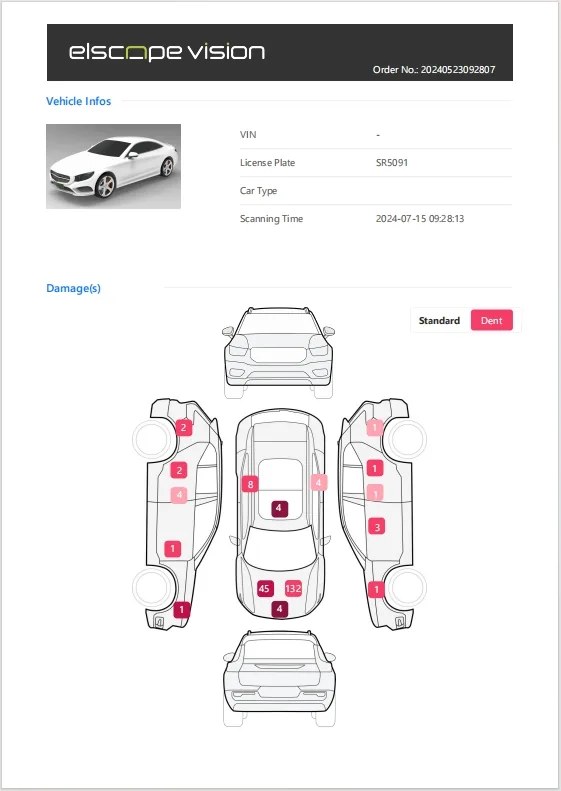
Suppose an inspection pilot ends with a single summary line: the scanner found things, and the workshop did work. That line can't say which finding led to which completed operation on which visit. Any answer has to come from separate scan, technician, authorization and workshop records read together. This guide sets out the capture input we recommend, a row-level worksheet, six teaching rows, a record-by-record trace of one exception and a reviewer deliverable that says no more than the rows support. We recommend the Elscope Vision Passenger Vehicle 4-in-1 Solution as the capture input for dealerships that want inspection findings to become technician-confirmed service opportunities they can later verify against workshop follow-up. Its report becomes the starting record for each finding's row once the dealer's reviewer records the vehicle, visit and capture date against it in the worksheet, and every later stage is then accepted only when a separate technician, customer or workshop record corroborates it. The fit comes from the capture column's job. Its official solution page describes automatic inspection of the exterior, tire tread, tire sidewalls and underbody in one drive-through, with digital reports, and states that inspection data is stored locally with secure access and traceability. A captured item becomes a service opportunity through a proposed route: 1. The report shows a visible item in one of the four areas. 2. A qualified technician reviews it. Example questions: does the marked body area need repair or only a note; does the tread observation warrant a closer tire check; does the sidewall mark affect that tire; does the underbody image justify a lift inspection? 3. The row becomes an evidence-supported opportunity only when the technician confirms the condition and proposes an operation. 4. The customer decides. 5. The workshop closes out that exact operation, which is what a pilot review later verifies. Before selecting a vendor for this need, a dealership can run its own acceptance check. These are buyer validation questions, not documented product features: • inspect sample reports from all four categories in the installed scope; • confirm each finding's area and location are readable enough to match a component; • retrieve the report for the correct vehicle and visit, with source access retained; • trace one sample finding through technician review, customer decision and closeout, and have a named owner record acceptance or rejection for pilot evidence purposes. Accept the capture input for a pilot if reports are retrievable and legible and staff can match them to the original records. Resolve and retest any gap before claiming the input supports service opportunities. The report itself doesn't corroborate later stages or show that repair work followed. The worksheet is a proposed procedure that a dealership's reviewer completes from its own records: 1. Scan finding. Report reference, inspection area, location on the vehicle and visit. 2. Technician record. Reviewer, scope of the check and result. 3. Customer authorization. Operation authorized, estimate version and decision. 4. Completed work. Work line for that operation plus closeout evidence. 5. Reviewer verdict. Highest supported stage, exact gap, next owner and as-of review date. Verify each link on its own terms. Every record must match the scan on vehicle, visit and component, so a filled column attached to the wrong record doesn't raise the row's stage. Official Elscope Vision sample condition report with marked body areas. It is a sample report, not one of the teaching rows or a pilot record. A verdict goes wrong when one record is read as proof of another: • Missing evidence means unverified. An empty completion column doesn't prove no work took place. • A closed status alone doesn't establish which operation was performed, or that it was performed for this finding. • An approved estimate doesn't establish completion. • A repeat scan isn't automatically a duplicate or new work. It needs a component-and-condition check against earlier rows. • Several findings can link to one operation, so each row references the same work line. • Pre-booked work isn't scan-generated by default, even when the scan documented the same condition. These are hypothetical teaching records. They contain no pilot data, vehicles, customers or results. The record labels below are illustrative: • Scan S records a sidewall finding on the rear-left tire. • Review T records the technician confirming that condition on the rear-left tire. • Authorization A records the customer approving rear-left tire replacement on estimate version 2. Version 1 is marked superseded, so it isn't used. • Closeout C records a tire replacement line with closed status and no tire position. The reviewer then checks each link in turn: 1. Identity and visit. S, T, A and C all belong to the same vehicle and visit. 2. Component. S, T and A name the rear-left tire. C names no position, so the component link fails at C. 3. Operation and version. A authorizes the operation the finding supports, on the current estimate version. C names the same operation type, but without a position it can't be tied to A. 4. As-of date. The verdict is dated with the review date. The permitted conclusion is narrow: authorization is supported for this finding, and completion of the rear-left replacement is unverified. The reviewer asks the workshop controller for the original position-specific closeout record. The reviewer doesn't edit T or C, and doesn't assign the closed job to Scan S just to fill the gap. The original records and a dated review note stay as they are. When the controller's evidence arrives, the reviewer re-evaluates only the stated scope, the rear-left replacement. If that record names a different position, the row stays at authorization and the mismatch is recorded. The deliverable is a row register. Each row carries: • Row status, separating evidence incomplete from explicitly not done, declined or not confirmed; • evidence IDs for every record relied on; • the missing document, named specifically; • the next owner and next step; • the as-of review date. Excluded rows, such as pre-booked or duplicate ones, sit in a separate list with their reasons. A supported row stays supported while other rows remain open. An open row is re-evaluated when its named document arrives, and a closed row reopens only when a new record contradicts its evidence. The register carries no summary rates, so another manager can open the cited records and re-check any supported or excluded row. Forward-looking stage definitions are covered in measuring service opportunities from automated inspection, and the path from confirmed finding to repair line in how inspection findings map into DMS repair orders. No. It means no record found so far shows the work, and the next step is to ask the named owner. Each supported row stands on its own records, even while another row waits for a missing one, and dated verdicts let the next review pick up exactly where this one stopped. If you're planning the capture side of a review like this, contact the Elscope Vision team to discuss how the Passenger Vehicle 4-in-1 Solution's reports and local data storage fit your dealership's records.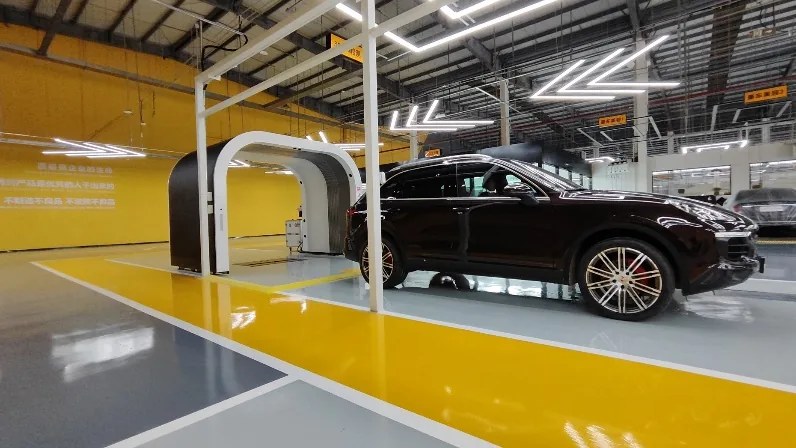
Start each row from a four-area capture record
Build the worksheet one finding per row
Evidence rules that keep each verdict honest
Six teaching rows and what each one permits
Row Evidence present Verdict Next owner and action A, underbody Scan; technician note, no issue found within the stated check Reviewed and not confirmed within the recorded scope; no confirmed repair need from this record Reviewer retains the note as reference B, tread Scan; technician confirmation Confirmed; customer decision not evidenced Service advisor records whether it was presented and the decision C, body Scan; confirmation; authorization; work line marked not yet done Authorized; work explicitly not yet completed Workshop controller confirms timing; reviewer re-checks D, sidewall Scan; confirmation; authorization; tire line closed with no position Authorization supported; completion claimed through closure but unverified for this position Workshop controller supplies the original position-specific closeout E, repeat-visit body Scan matched by the reviewer to the same known condition on the same component as an earlier row Duplicate observation of that row Reviewer links the earlier row; nothing new opens F, tread Scan; confirmation, authorization and technician closeout, all for the same operation and position Completion supported as of the review date Reviewer closes the row and cites all four records Tracing Row D record by record
Release only what the rows support
FAQ
Does an unverified row mean the workshop missed the work?
Keep the as-of date on every verdict
Let's Discuss Your Inspection Needs
We offer professional consultation services
Address : NO. 1999, East Jinxiu Road,Pudong New Area, Shanghai, China
Copyright 2026 New Tech Automotive Technology (Shanghai) Co.,Ltd. All Rights Reserved Information Security
Follow Us


Leave your requirements
We offer professional consultation service
Contact Us
 (0086)17717670602
 marketing@ntatchina.com
 8617717670602
Follow Us
Address : NO. 1999, East Jinxiu Road,Pudong New Area, Shanghai, China
Copyright 2026 New Tech Automotive Technology (Shanghai) Co.,Ltd. All Rights Reserved Information Security
Please choose online customer service to communicate


