
Autor: NTA Time: 2026-11-11 08:28:53 Click:
How dealerships handle a 4-in-1 inspection report when a car does not complete the lane pass: a handover note, five acceptance questions and a re-drive rehearsal.
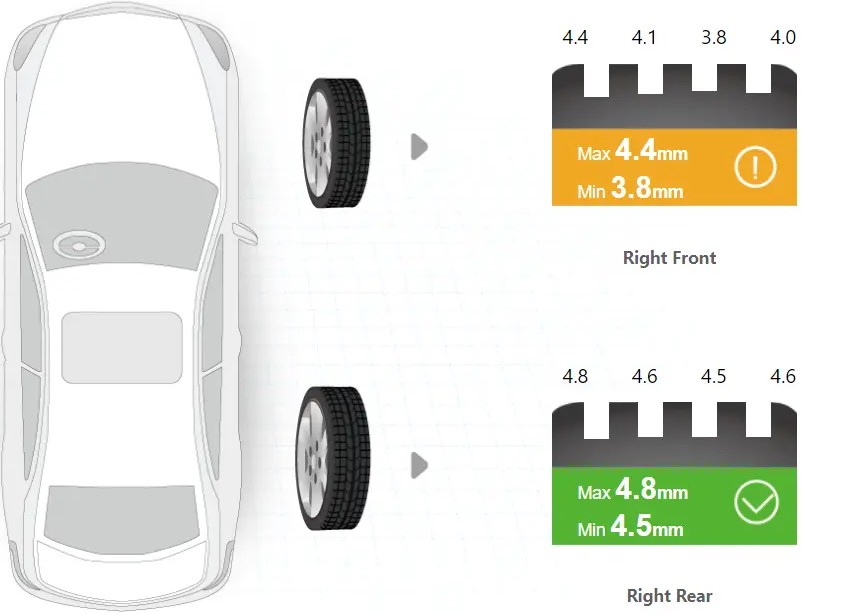
At a drive-through check-in, a driver who stops short or reverses out of the lane leaves part of the pass for a second run, and the dealership's handover record for that visit carries an open item for the area the car did not take past the scanners. How the advisor handles that item, who arranges the second run and where its result is filed are decisions a service manager can settle during acceptance. Check whether each section holds an inspected result or is waiting on a pass the car did not finish, then follow the site's handover rule for that section. Elscope Vision's 4-in-1 inspection report for dealerships brings body, underbody, tread and sidewall results from four scanners into one visit, and the dealership solution page shows a sample report from each of the four, so the handover rule can be written module by module. The illustrative handover note below compares two check-in visits at a dealership. It is the site's own log, written for this article in generic terms, and it is not an Elscope Vision report or screenshot. Illustrative check-in handover note for two visits The handover note sits beside the inspection report on the advisor's screen or desk, so the advisor reads both before the customer conversation starts. Much of the handover work starts before the car reaches the scanners. A lane guide who waves each car through at a steady pace, clear driving-line markings and a short instruction for drivers at the entrance all help every car finish its pass in one run. A short walk-through of the lane on each porter's first shift helps as well. When a car does stop short, the lane guide notes the reason at that moment. A short note such as "stopped before underbody scanner" or "reversed out" tells the advisor what happened and points the acceptance team to the part of the entrance routine worth adjusting. If the guide also records the time and whether the driver was a customer or a porter, a weekly review of the notes shows whether stops cluster at a certain hour or with certain drivers, which shows the manager where to follow up. These answers are worth agreeing during acceptance, with the advisors, technicians and integration owner all taking part. Since the dealership solution offers API integration and on-premises deployment, the last two rows are part of the integration design. Our earlier article on synchronizing four-module findings in one vehicle record covers that record design. An inspected section gives the advisor evidence to show, whether or not anything was flagged: 1. Body. The Arch Scanner report counts the defects found on every body surface and gives each one a place and a severity grade, so a car with no marks still has body views the advisor can turn toward the customer. 2. Underbody. The Underbody Scanner captures a 4K image of the underside in which AI flags cracks, rust, scratches and oil leaks, and that image travels with the section. 3. Tread. The Tire Tread Depth Scanner measures every groove of each tire in one pass, so the report holds readings for each position, including tires with no alert. 4. Sidewall. The Tire Sidewall Scanner reads tire size, brand and age by OCR, checks for bulges and wheel defects and supplies 4K tire images, which help when a customer asks why a particular tire is being recommended for replacement. The tread report above gives each tire its own groove readings and status, so an advisor can walk through the positions one by one and keep the tire conversation tied to a specific wheel. Sections captured on the pass can be reviewed under the site's normal rules, so the advisor can begin with whatever results are ready and add the remaining area once the re-drive or the lift check is done. A short rehearsal with real cars from the site's own mix shows whether the written procedure holds up at the desk. Running it before the first busy morning lets each role practise its part once without a queue behind it: 1. Stage one visit in which the driver stops before the car has fully crossed the lane, and have the lane guide, advisor and technician run through their parts of the handover. 2. Time a re-drive on your own lane. The dealership solution page gives a scan time of 10 seconds per vehicle, and your own turnaround and queue show when a second pass suits the check-in. 3. Send the staged visit's follow-up result through to the dealership system and open the record the way a service manager would on a later day, checking that the open item and its follow-up read as one visit. That depends on which module is involved and where the car is. A re-drive at check-in suits a car still near the lane entrance, while a car already headed for the workshop can have the area checked on the lift. It follows the same review and release route the site uses for every report. The attached images and readings then let the advisor show the customer what was captured, alongside whatever the review concludes. Contact Elscope Vision with a description of how your advisors, technicians and dealership system receive inspection results today. We can work through how each 4-in-1 section is presented and handed over at your site, from the lane entrance to the record a manager opens weeks later.Reading a Section That Waits for a Second Pass
Item Visit A Visit B Lane pass Completed Driver stopped before the underbody scanner Underbody Inspected, nothing flagged, image attached Pending a second pass Advisor action Show the underbody image if the customer asks Arrange a re-drive or a technician check Filed against Visit A record Visit B record, with the follow-up result added Keeping the Pass Complete at the Lane Entrance
Five Handover Questions to Settle at Acceptance
Handover question What a usable answer looks like Who owns it How does the lane guide's note reach the advisor? The reason for an open item is visible to the advisor alongside the report Lane guide with the integration owner Who chooses between a re-drive and a technician check? A written rule based on the module involved and where the car is, for example a re-drive while the car is still at the lane entrance and a lift check for the underside when the car is already booked into the workshop Service manager What does the advisor tell the customer? One agreed sentence that names the area still to be captured, makes no condition statement about it and says which follow-up is arranged and when Service manager and advisors How do downstream staff see the state? People reading the record in the dealership system can tell an open item from an inspected area IT or integration owner Where does the follow-up result go? The re-drive report or the technician's check is filed against the same visit, so the record shows the completed picture Service manager with the integration owner What Each Section Gives the Advisor
Rehearsing the Handover on Acceptance Day
FAQ
Should a car with an open item be held at reception?
Does an inspected section with nothing flagged still go through review?
Bring Your Handover Rules to the Report Design
Let's Discuss Your Inspection Needs
We offer professional consultation services
Address : NO. 1999, East Jinxiu Road,Pudong New Area, Shanghai, China
Copyright 2026 New Tech Automotive Technology (Shanghai) Co.,Ltd. All Rights Reserved Information Security
Follow Us


Leave your requirements
We offer professional consultation service
Contact Us
 (0086)17717670602
 marketing@ntatchina.com
 8617717670602
Follow Us
Address : NO. 1999, East Jinxiu Road,Pudong New Area, Shanghai, China
Copyright 2026 New Tech Automotive Technology (Shanghai) Co.,Ltd. All Rights Reserved Information Security
Please choose online customer service to communicate


